North Korea fire ballistic missile over Japan
Wia dis foto come from, Getty Images
- Author, Jean Mackenzie, Rupert Wingfield-Hayes & Yvette Tan
- Role, BBC News
- Published
North Korea don fire suspected missile over Japan, inside wetin appear to be a deliberate escalation to get di attention of Tokyo and Washington.
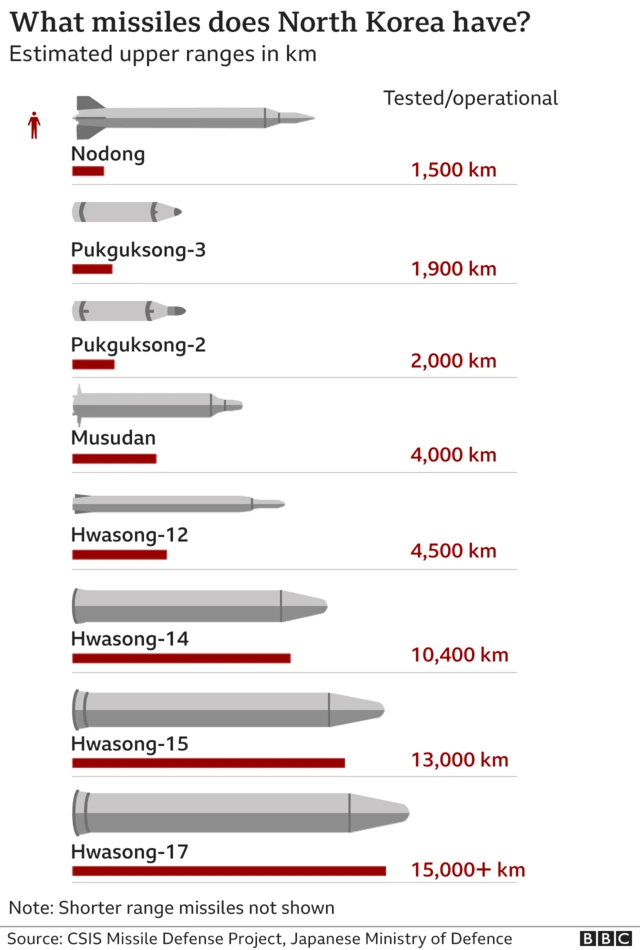
Di ballistic missile travel about 4,500km (2,800 miles) before e fall inside di Pacific Ocean - far enough to hit US island of Guam if to say e take anoda path.
Na di first North Korean missile launch over Japan since 2017.
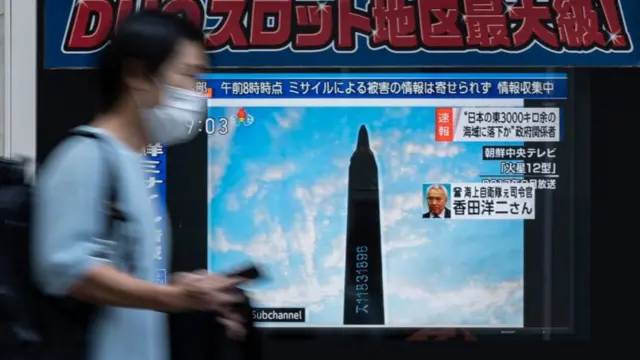
Di launch make Japan to issue alert wey no common to some citizens to take cover.
UN forbid North Korea from testing ballistic and nuclear weapons. Flying missiles towards or over oda kontries without any pre-warning or consultation - e also go against international norms.
Most kontries dey avoid to do am completely as e fit easily dey mistaken for attack. While e no dey as big as a nuclear test - wey fit be next, - e fit dey considered as sometin wey dey hugely provocative.
According to reports, pipo for di north of Japan, including Hokkaido island, wake up to di noise of loud sirens and text alerts wey say: "North Korea appear to don launch missile. Please evacuate enta buildings or underground."
As di missile fly pass, dem warn dem to look out for falling tins.


End of Di one wey oda users dey read well well
Officials later say di intermediate-range ballistic missile fall enta di Pacific Ocean far from Japan, and dem no get any report of injuries.
E bin don cover di longest distance ever travelled by a North Korean missile, and reach a height of around 1000km - higher dan di International Space Station.
Japan Prime Minister Fumio Kishida describe di launch as "violent behaviour", while defence minister Yasukazu Hamada say Japan no go rule out any options to strengthen dia defences including "counterattack capabilities".
US National Security Council spokesperson Adrienne Watson call am "dangerous and reckless decision" wey dey "destabilising" to di region.
Di launch dey comesas Japan, di US and South Korea bin don dey work togeda to strengthen dia defences, in response to di growing threat wey dey posed by di North.
Last week, di three countries do naval exercises togeda for di first time since 2017. Such drills for long time dey worry Pyongyang leader Kim Jong-un, wey view dem as proof say im enemies dey prepare for war.
Following di combined exercises for 2017, North Korea fire two missiles over Japan in response. One week later, e conduct one nuclear test.
Recent intelligence don suggest say North Korea dey get ready to test anoda nuclear weapon.
Many expect say North Korea go only do so until afta China - im main ally - hold im Communist party congress later dis month.
But experts believe say Tuesday launch show say North Korea now dey prepare di ground for a nuclear test, with some wey dey ask if e fit come sooner dan expected.
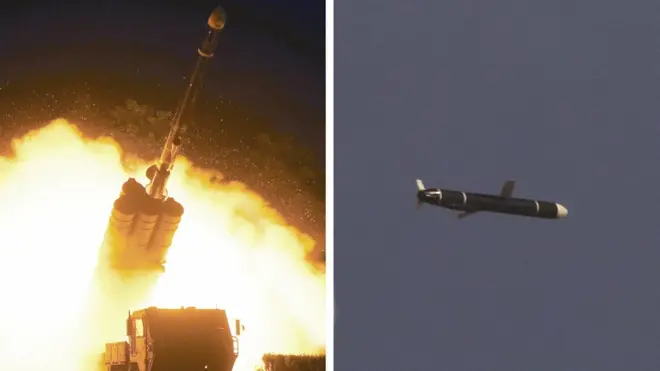
Di missile launch na di fifth wey dey carried out by Pyongyang in a week. On Saturday, two rockets come down inside water outside Japan exclusive economic zone.
Dem dey conduct many of North Korea' missile tests on a high flight path - wey reach a high altitude, avoiding flights over im neighbours.
But firing over or past Japan allow North Korean scientists to test missiles under circumstances "wey dey more representative of di conditions dem go endure in real-world use", analyst Ankit Panda tell news agency Reuters.
Dis actions don contribute to enduring tensions between North Korea and Japan, rooted in Japan previous colonisation of Korea from 1910 to 1945 and di North abduction of Japanese citizens in di past.
Earlier dis month, North Korea pass law declaring imsef to be a nuclear weapons state, with leader Kim Jong-un ruling out di possibility of toks on denuclearisation.
Pyongyang conduct six nuclear tests between 2006 and 2017, incurring widespread sanctions.
Di East Asian state regularly dey bone di ban on nuclear and missile tests, say e need to ginger im defences.
Additional reporting by Nathan Williams.