How social media dey put women genital health at risk
- Author, Ozge Ozdemir
- Role, BBC News Turkish
- Read am in 6 mins
Subbed by Selin Girit, Europe Hub
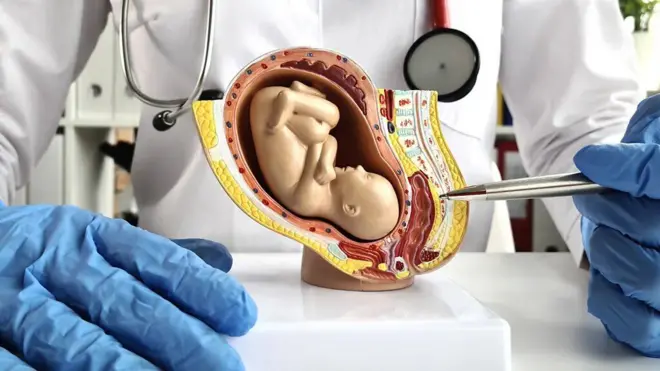
Wia dis foto come from, Getty Images
Pipo from all over di world dey discuss on top social media about wetin ‘perfect vagina’ suppose look or smell like.
Some of dis online posts and videos wey millions of pipo don see bin even suggest make women use products to change di smell and appearance of dia private part.
Gynaecologists dey warn against dis products, wey dem say dey scata di pH level of di vagina and cause infections.
Di vagina and vulva get dia own flora and balance, and any chemicals wey dem put dia, fit scata dia structure, gynaecologist Mujdegul Zayifoglu Karaca warn.
“When I bin first hear about ‘vagina perfume’, fear catch me. Why dem no get perfume for penis but just for vagina?” she ask.
Di vulva na di general name for all di outer part of woman private part or gender-diverse pesin.
Di vagina na muscular canal wey join di cervix to outside of di body.
Eylul Gulce Kara, na college student for Istanbul, she don tire wit di pressure wey women dey face on social media.
“E be like say we always gatz do sometin to comply wit society demands,” she tok.
“Abi our vagina colour don dey too dark now?”
‘No perfect vulva’
Medical experts don draw women ear say, e no get anytin like ‘ideal’ or ‘perfect’ vulva.
“Di vulva dey unique to every woman,”, one doctor wey dey registered wit Royal College of Obstetricians and Gynaecologists for London, Berrin Tezcan, say.
“No woman vulva dey like anoda woman own for shape, size, colour or appearance.
“Wen my patients visit me wit fear say sometin no normal wit dia vulva, and wen I tell dem say e dey perfectly normal and say notin dey wrong wit dia body, 90% of dem dey feel relieved.”
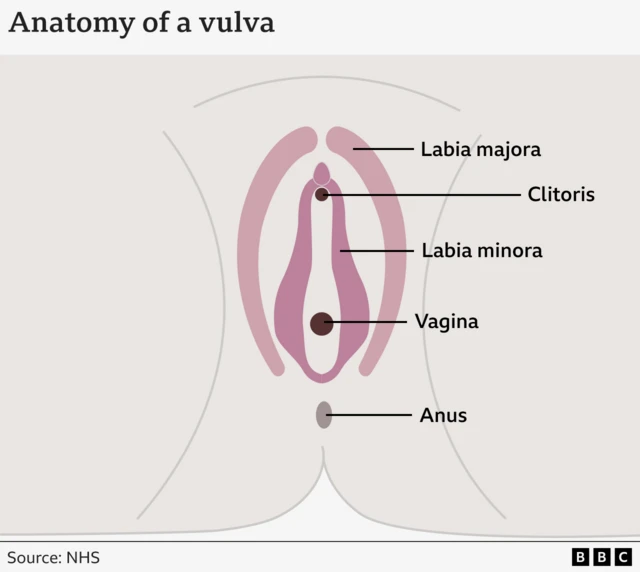
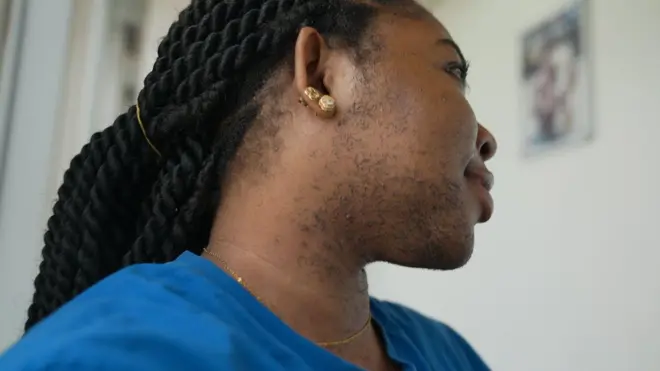
Wia dis foto come from, BBC
But for some kontris, women no get access to reliable gynaecologist wey go advise dem.
For Iran, for instance, dem dey still consider female health as taboo, and dis one make discussions on mata of female private part shameful to women.
Some social media users dey even complain about doctors demsef wey dey make women uncomfortable by body shaming.
“One of my friends bin get labiaplasty, and we ask her why she go do am, as na very uncomfortable surgery,” one post for social media platform X, formerly Twitter.
“She tell me: ‘Becos my gynaecologist continue to ask me why my labia bin look so awful? [Im go say] Why your labia dey so big and ugly? Why di vaginal opening dey so wide? Na natural birth you do? Dat na why I go do di surgery.’”
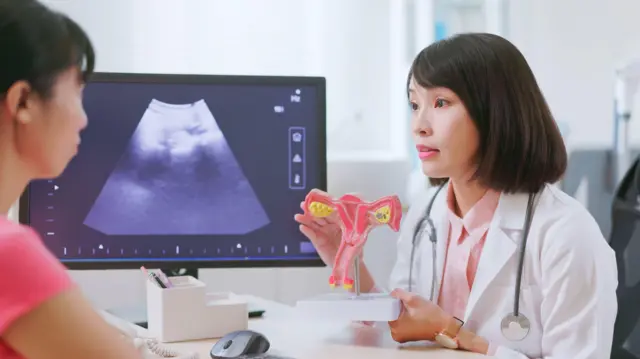
Wia dis foto come from, Getty Images
Labiaplasty na di most common type of female genital cosmetic surgery and na one of di fastest growing cosmetic procedures among young pipo all ova di world.
E dey reshape di labia minora and/or labia minora – dat na di folds of skin on both either side of di vaginal opening, dem dey commonly refer to am as vaginal lips.
Young girls wey dey younger dan 18 years no suppose do dis surgery becos di labia dey continue to develop even afta puberty, enta early adulthood.
E fit be treatment for women and gender-diverse pipo wey get concerns about hygiene, difficulties during sexual intercourse, or discomfort wen dem dey exercise.
However, more and more pipo wan do di surgery out of concerns about dia private part appearance.
Labiaplasty dey increase
For Australia, more dan half a million pipo don do, or dey consider to do labiaplasty, one recent report show.
Di Labia Diversity report wey Women’s Health Victoria publish for June bin include data from one survey of 1,030 women and pipo wey get labia between age 18 to 50.
Di report find say “pornography and social media na dem dey make more and more pipo to do or consider to do labia surgery, wit images and videos wey dey misrepresent wetin pipo tink about wetin di female private part suppose look like”.
According to di International Society of Aesthetic Plastic Surgery (ISAPS), labiaplasty bin increase worldwide by 14.8% for 2023 compare to 2019.
Di annual global survey wey ISAPS do show say Brazil na di leading kontri for labiaplasty, wit over 28,000 pipo wey dey don do di procedure.
“Brazil women dey worry about dia look and dem dey culturally more inclined to do plastic surgery,” plastic surgeon Renata Magalhães, wey be member of Brazil Society of Plastic Surgery, tok.
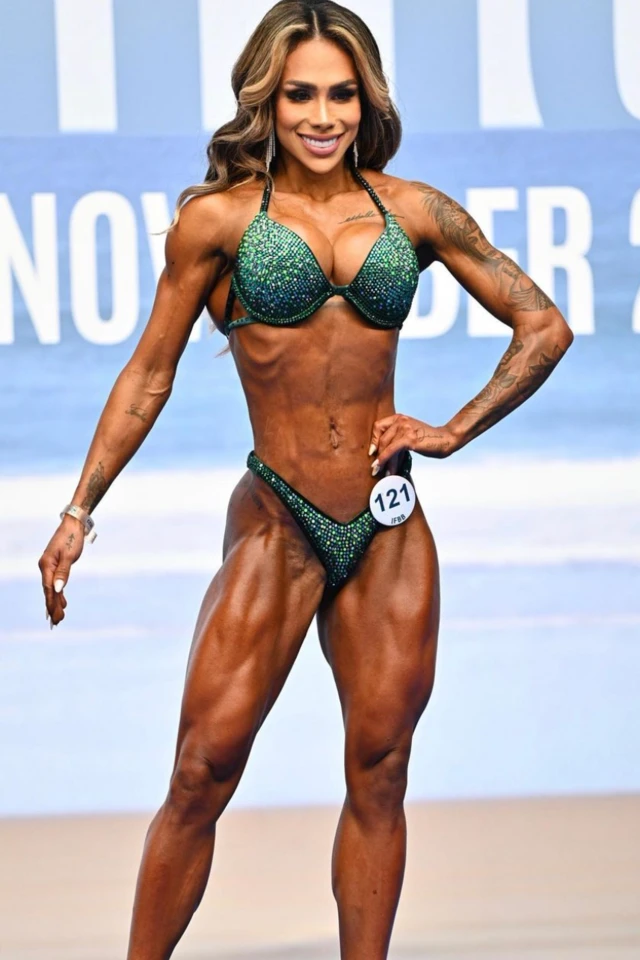
Wia dis foto come from, Instagram.com/valsantanafitt
Val Santana, na 27-year-old Brazil bodybuilding athlete wey decide to do labiaplasty last year.
“Di decision to do dis surgery come from my experience six years ago wen I bin start body building and use anabolic steroids,” she tell BBC News Brazil.
“One of di side effects of using drugs like boldenone and oxandrolone na di enlargement of my clitoris.”
For her, di main di main concern na how come too dey conscious of hersef during sexual intercourse.
Sharing her surgery experience for social media platform Instagram, Santana say di procedure improved her confidence and quality of life.
Different kind of risks
Di National Health Service (NHS) for UK dey advise say to do labiaplasty na big decision wey pesin suppose tink about carefully.
“E fit dey expensive and e carry plenty risks. E also no get guarantee say you go get di result wey you bin dey expect, and e no go necessarily make you feel beta about your body,” NHS tok.
E also warn say labiaplasty fit occasionally result in bleeding, infection, scarring of tissue, reduced sensitivity for di vagina and dat kain operation also carry small risk of blood clot for vein or allergic reaction to di anaesthetic.
“Some women want labiaplasty becos dem no like how dia libia look. But e dey completely normal to get noticeable skin folds around di opening of your vagina,” NHS tok.
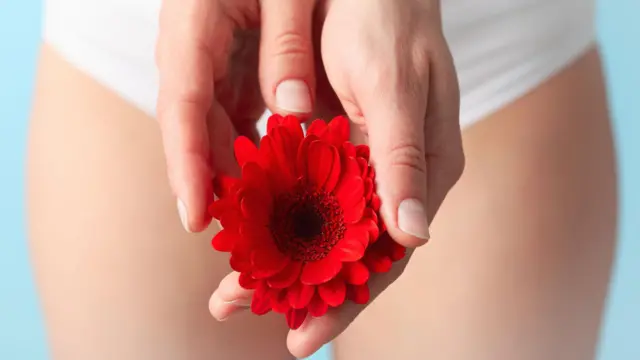
Wia dis foto come from, Getty Images
Gynaecologist Müjdegül Zayıfoğlu Karaca point out say e necessary for women to learn more about dia private part and make peace wit dia own bodies before considering any surgical procedures.
University student Eylül Gülce Kara agree.
“We gatz use social media increase consciousness about women sexual health, against contents wey dey promote surgeries or creams, we gatz create content wey go give freedom to relieve di pressure on women,” she tok.
Additional reporting by BBC News Brazil reporter Giulia Granchi.