News study say hair straightening chemicals and relaxers fit increase di risk of uterine cancer
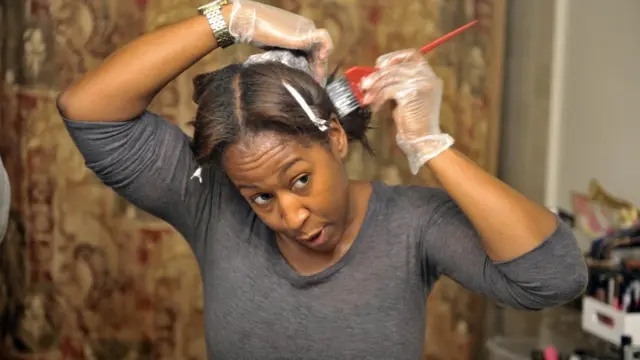
Wia dis foto come from, Getty Images
Women wey dey use chemical hair straightening products and relaxers get higher risk of getting uterine (womb) cancer compare to women wey no dey use these products.
Dis na according to one new study from researchers from di US National Institutes of Health (NIH).
Di sabi pipo wey carry out di research believe say Black women dey more at risk as na dem dey use hair straightening products pass.
Dem publish di findings of di study for October 17 2022, for di Journal of di National Cancer Institute.
Dis article contain content wey X provide. We ask for una permission before anytin dey loaded, as dem fit dey use cookies and oda technologies. You fit wan read di X cookie policy and privacy policy before accepting. To view dis content choose 'accept and continue'.
End of X post
Details of di study
Di study includes data of 33,497 U.S. women wey fall within di ages of 35-74 and dey participate for di Sister Study, one study wey di National Institute of Environmental Health Sciences (NIEHS) dey lead. Wetin NIH dey try find na to identify risk factors for breast cancer and oda health conditions.
Dem study these women for almost 11 years and during dat time, dem diagnose 378 uterine cancer cases.
Di researchers discover say women wey use dis hair straightening products for more dan four times for one year, get more chances of developing uterine cancer compared to those wey no use these products.
“We estimate say 1.64% of women wey no use hair straighteners go later develop uterine cancer by di age of 70; but for women wey dey use am well-well, di risk don go up to 4.05%,” Alexandra White, Ph.D., head of di NIEHS Environment and Cancer Epidemiology group and lead author on di new study tok.




End of Di one wey oda users dey read well well
“Dis doubling rate na of concern. However, e dey important to put dis information into context - uterine cancer na relatively rare type of cancer.” She tok.
Wetin be Uterine cancer?
Uterine cancer na di sixth most commonly diagnosed cancer for women around di world and e dey occur for di uterus.
Di uterus na di female organ for reproduction. Anoda name for uterus na womb.
Di uterine cancer dey affect di womb. Di womb na wia pikin dey grow during pregnancy.
Most womb cancer dey usually start from di lining of di womb (endometrium), dis also dey known as endometrial cancer.
Symptoms of Uterine cancer?
Symptoms of uterine cancer include:
- Unusual bleeding between menstrual cycles or afta menopause
- Pelvic pain
- Fatigue
- Nausea
- To dey feel heaviness for di pelvic area
- Weight loss
Wetin be di connection between hair products and cancer risk

According to Dr. Alexandra White, wey be di head of the National Institute of Environmental Health Sciences (NIEHS) Environment and Cancer Epidemiology group — and lead author of dis study, hair products like dye and chemical straighteners contain different kain chemicals wey fit act as carcinogens or important for cancer risk.
“Dem discover say straighteners in particular get chemicals like Phthalates, Parabens, Cyclosiloxanes and metals and e fit release formaldeyhyde wen e dey heated, she tell Medical News Today.
“Previous research don also suggest say hair dye and chemical straighteners dey related to oda hormone-sensitive cancers, like breast and ovarian cancer, but no previous study don consider how dem relate to uterine cancer risk,” Dr. White tok.
Di result show say Black women dey more affected
For di current study, about 60% of di women wey dey use straighteners identify as Black women.
While di study no find any link between straightener use and uterine cancer risk dey different by race, di effects fit dey greater for Black women because na dem dey use these products.
“Because na Black women dey use hair straightening or relaxer pass and dem dey begin use am at earlier ages dan oda races and ethnicities, these findings fit dey even more relevant for dem,” Che-Jung Chang, PhD, one of di authors of di study tok for one press release wey announce di study results.