Wetin be Pre-eclampsia - Di deadly pregnancy condition wey scientists no fit solve
Wia dis foto come from, Getty images
- Author, By David Cox
- Role, BBC News
- Read am in 9 mins
Wia dis foto come from, Getty Images
Di condition dey cause more dan 70,000 maternal deaths every year – but scientists neva still sabi wetin dey cause am.
Afta successful track and field career wey see her clear seven Olympic gold medals and 14 world championship golds, Allyson Felix bin tink say pregnancy go dey smooth like her trademark running style.
"All my life, I don take care of my body, my body na my tool, and no ever don really fail me," Felix tok.
"I don train and put demands on my body, and e dey always perform. [So] I bin dey tink [of having] like a beautiful natural birth, I don go do hypnobirthing, and all these things," she tok.
But wen Felix bin attend one routine check-up wen her pregnancy dey 32 weeks, she bin dey shocked wen dem tell her say she get severe pre-eclampsia, one pregnancy complication wey dey cause dangerously high blood pressure levels and organ damage, plus say she go need immediate hospitalisation.
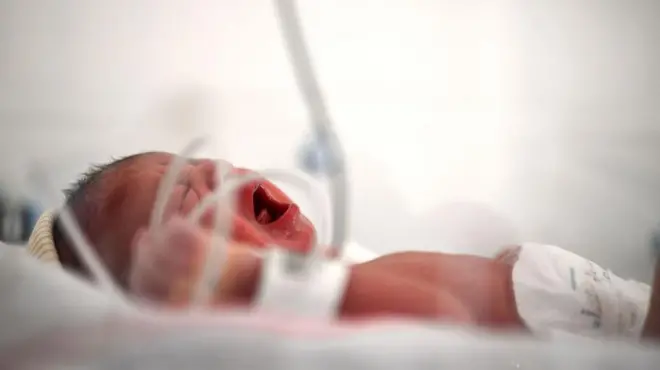
Di following day, doctors bin perform one emergency C-section, and she born her daughter Camryn two months early, di baby bin spend di first month of her life for di neonatal intensive care unit.
Until then, di only small signs wey show for Felix and her unborn baby, na say her feet dey swell. "Dat one no too shock me, but I see say I dey spill protein and all these things about my blood pressure. Di tn fear me. But our family gatz go house," she tok.
While Camryn now na healthy five year old, stories like dis no dey new to Felix as some don result to far more tragic ending.
For April 2023, her long-time team-mate Tori Bowie, one former world 100m champion and relay gold medallist for di Rio 2016 Olympics, bin die from childbirth complications wey dem link to pre-eclampsia. She be just 32.
"We bin dey on plenty relay teams togeda, we dey compete steady against each oda, wit each oda, and dat dey extremely shocking," Felix tok. "Someone wey I don spend so much time wit, e dey really devastating."
Unravelling a deadly enigma
Worldwide, sabi pipo reason say pre-eclampsia dey responsible for more dan 70,000 maternal deaths and 500,000 foetal deaths every year, wit many fatalities wey result from stroke or prolonged fitting sake of di elevated blood pressure.
E fit happun without warning at any time during pregnancy. Some women dey develop early-onset pre-eclampsia bifor 34 weeks, and odas dey experience am late during dia pregnancy.
Women fit even suffer from postpartum pre-eclampsia in di six weeks afta dem born.
Wetin be pre-eclampsia and who dey at risk?
Wia dis foto come from, Getty Images
Scientists don find few clues on why dis dey happun. Excessive inflammation, wey dey start for di uterus, dey disturb di delicate communication patterns wey dey take place between di mama body and di foetus.
In particular, e dey affect di reshaping of blood vessels within di uterus to form di placenta, di organ wey dey created to provide di foetus wit di nutrients and oxygen e need.
Becos di flow of blood through di placenta dey abnormal, e ultimately dey interfere wit how di mama body dey control blood pressure, wey gradually dey lead to hypertension and ultimately pre-eclampsia.
"Wen woman carry belle, her heart gatz pump extra for di baby and di placenta," Ian Wilkinson, clinical pharmacologist and professor of therapeutics for di University of Cambridge, wey dey lead one UK-based population study of pre-eclampsia called Poppy tok "Di amount of blood she dey pump each minute go go up one-and-a-half to two times [in normal pregnancy]."
Women wey get existing autoimmune disorders, those wey don pass 40 and women wey get larger body mass index dey known to be at greater risk, maybe becos dem no fit adapt well to di physical toll wey pregnancy dey put on woman body.
But plenty mysteries still dey about why some women dey develop pre-eclampsia, often without warning, and why e no dey happun to odas. Di rates dey 60% higher in black women, wey also dey more likely to experience severe forms of di condition.
Some researchers believe say di latter fit dey linked to poorer access to good nutrition and health insurance.
"Structural racism dey, where certain patients and communities no get di same access to early interventions, detection screening, primarily becos of where dem get dia healthcare," Garima Sharma, director of cardio-obstetrics and cardiovascular women health for di healthcare company Inova Health System for Fairfax, Virginia tok.
At di same time, Sharma say dis no explain exactly why di condition start in di first place.
While doctors still dey rely heavily on clinical risk factors like age, ethnicity and medical history to assess who fit develop pre-eclampsia, di accuracy of predictions based on these factors dey very poor.
But wit newer and improved diagnostics beginning to emerge, scientists soon fit dey able to shed more light on who dey at risk and why.
Predicting pre-eclampsia
Wia dis foto come from, Getty Images
While specialists wey dey treat oda diseases like cancer or chronic infections fit often take biopsy of a patient internal tissues for further analysis, no easy way dey to study di changes wey dey occur for pregnant woman uterus.
"We no fit just routinely go in and collect sample of placenta [from a pregnant woman], becos dat fit really increase di risk of miscarriage," Lana McClements, associate professor for di University of Technology Sydney tok.
"And animals actually no dey develop pre-eclampsia, so rodent models, for example, dey very difficult to create."
Instead, researchers bin don try pick up abnormal levels of certain molecules for di blood, as way of detecting say something fit dey go wrong. In particular, studies don show say for women wit high levels of inflammation for di uterus, placental cells dey respond to di impaired blood supply by releasing a protein known as soluble fms-like tyrosine kinase 1 (sFlt-1).
Once e dey di bloodstream, excess levels of dis protein get toxic impact, wey dey increase di sensitivity of di fragile barrier between di mother and foetus to inflammation.
Last year, di life science and clinical research company Thermo Fisher Scientific from di US Food and Drug Administration (FDA) regulator for one new diagnostic for pre-eclampsia.
Di process dey help fast-track di development of medical technologies wey dey treat or diagnose serious conditions. For dis case, di diagnostic tool involve looking for high sFlt-1 levels in comparison to low levels of anoda protein, placental growth factor, wey represent normal placental development.
Clinically, dem go use di test to quickly predict weda pregnant woman wey dey hospitalised wit signs of hypertension go develop severe pre-eclampsia within di next two weeks.
One study for 2022 bin examine more dan 700 pregnant women across 18 different hospitals, where patients wey test positive bin receive enhanced surveillance and accelerated care dia symptoms get worse.
While e dey expected say a new diagnostic technique go save lives, Cindy Anderson, professor of maternal infant health for Ohio State University College of Nursing, feel say need dey for more advanced diagnostics wey go fit detect warning signs of pre-eclampsia at a much earlier stage in pregnancy.
To try and enable dis, one group of scientists dey turn to new technology, one wey go evolve for rapid pace within the last few years.
Placenta on-a-chip
For one lab for Sydney, McClements and her team dey assemble layers of living placental cells, wey dey connected wit supporting gels, to create natural tissue-like structures.
Dia idea na to model some of di processes wey fit take place for di earliest stages of pre-eclampsia, outside of di human body, something wey dem neva do bifor.
Di team don affectionally dub di technology "placenta on-a-chip".
According to McClements, di hope na say one day dis research go yield new biomarkers wey fit form di basis of future blood tests for newly pregnant mothers. But having a more realistic model of pre-eclampsia fit also make am easier for researchers to test potential therapies, ones wey fit actually alter di course of di disease.
"Two-out-of-three women wey don go through pre-eclampsia for pregnancy go die prematurely from heart attacks and cardiovascular disease," McClements tok. "So real need dey to find new treatments to prevent both pregnancy and post-pregnancy disease."
To date, di only recommended therapy for pregnant women wey dem tok say dey at high risk of pre-eclampsia na low dose aspirin from 12 weeks until birth.
Studies don show say an estimated 60% of women wey begin aspirin therapy before week 16, no develop any symptoms of pre-eclampsia.
But dis still leave 40% of patients wey remain vulnerable, along wit many wey no receive am at all becos dia doctors no suspect say dem go dey vulnerable to pre-eclampsia.
According to McClements, di hope na say one day dis research go yield new biomarkers wey fit form di basis of future blood tests for newly pregnant mothers. But having a more realistic model of pre-eclampsia fit also make am easier for researchers to test potential therapies, ones wey fit actually alter di course of di disease.
"Two-out-of-three women wey don go through pre-eclampsia for pregnancy go die prematurely from heart attacks and cardiovascular disease," McClements tok. "So real need dey to find new treatments to prevent both pregnancy and post-pregnancy disease."
To date, di only recommended therapy for pregnant women wey dem tok say dey at high risk of pre-eclampsia na low dose aspirin from 12 weeks until birth.
Studies don show say an estimated 60% of women wey begin aspirin therapy before week 16, no develop any symptoms of pre-eclampsia.
But dis still leave 40% of patients wey remain vulnerable, along wit many wey no receive am at all becos dia doctors no suspect say dem go dey vulnerable to pre-eclampsia.
McClements explain say drug repurposing, di process of finding new uses for existing or abandoned medications wey dey known to be safe for pregnant women, get great potential for improving pre-eclampsia care, one process wey dem fit accelerate by testing such medicines on bioprinted placental cells.
Sabi pipo tink say Proton pump inhibitors, drugs wey dem dey widely use treat indigestion, heartburn or stomach ulcers, fit reverse some of di damaging inflammatory processes wey dey drive di initial stages of pre-eclampsia.
Researchers don also suggest say eculizumab, one monoclonal antibody dem dey use treat one form of blood disease, fit dey able to reduce di risk of pre-eclampsia development if dem administer am for di beginning of pregnancy.
"Currently we dey work on metformin, one diabetes drug wey dey come up as a potential treatment," McClements tok. "One ogbonge study, dey wey show say metformin fit actually delay delivery of di baby in early severe pre-eclampsia, so e fit potentially prevent preterm birth."
Anoda approach na to try stop di condition in its tracks by preventing di production of sFlt1 for di placenta.
Last year, di FDA bin clear one new investigational drug dem call CBP-4888, wey one Massachusetts-based company wey dey called Comanche Biopharma develop for testing in clinical trials.
Di drug dey known as a small interfering RNA (siRNA), short pieces of genetic code wey dem fit put for various parts of di body where dem fit regulate gene expression and cellular function to halt production of a particular protein, for dis case sFlt1.
"One of di remarkable things about these molecules na dia longevity, Mello, wey dey work as scientific advisor to Comanche BioPharma tok. "A single dose fit last for periods of six months to a year. So we go expect say one dose go dey enough."
So far, di company don test di safety of di drug for female volunteers of childbearing age. If all go well, dem dey hope to test am inside one further trial of 50 pregnant women wey get pre-eclampsia, potentially followed by wider studies for di US and possibly even for UK, Germany, Ghana, Kenya and South Africa.