Four eye-opening facts about women for politics
Wia dis foto come from, Getty Images
- Author, Luis Barrucho
- Role, BBC World Service
- Read am in 6 mins
Women don make big political progress ova di last century, gaining voting rights and winning parliamentary seats for nearly all kontris.
However, dem remain under-represented, especially for highest offices.
Here na four eye-opening facts about women for politics.
1. Women gain di right to vote nearly evriwia
Until di 20th Century few women get di right to vote, but by di end of di century evritin don change, and few women no get di right to vote.
Some kontris continue to try to catch up in dis century, wit di last to do so, Saudi Arabia, grant women voting rights in local elections for 2015. (Di kontri no dey hold national elections).
According to di UN, e mean say women in evri kontri get di legal right to vote.
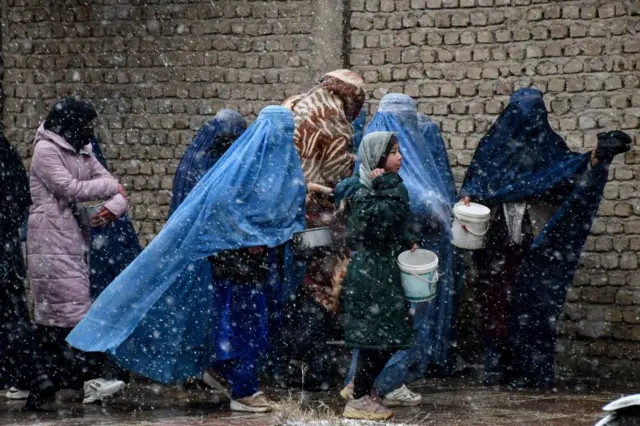
However, Afghanistan, under Taliban rule, don recently strip women of dia political rights.
"Afghan women gain di right to vote more dan one century ago, yet today, under Taliban rule, dem don dey remove dem from public life," UN Women tok, di UN agency dedicated to gender equality and di empowerment of women.
"No Afghan woman dey hold any significant political position at di national or provincial level."
Until di mid-19th Century, universal right to vote dey rare for men too, but as dem gain voting rights for some kontris, dem exclude women. New Zealand na di first kontri to grant women full voting rights for 1893. (Even though na British colony, e bin don already dey govern itsef).
By di start of World War II, men get voting rights for one-third of kontris, while women get for only one-sixth, according to Bastian Herre, project lead for di UK-based NGO, Global Change Data Lab.
"Di gap close in di decades afta World War II, wen di voting-rights discrimination against women end for many kontris, and both women and men gain di right to vote for many odas," Herre tok.
For many African kontris, dem introduce voting rights for women afta independence. For some oda kontris, restrictions remain for surprisingly long time: dem deny many black women (and men) in di US until 1965, not until 1971 bifor dem allow women to vote for federal election for Switzerland. Dem allow Black women for South Africa to first vote for 1993.
Wia dis foto come from, Getty Images
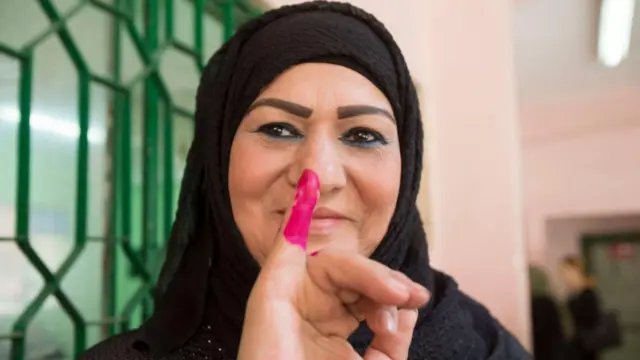
But you get voting rights for paper and ability to use dis rights na different tins.
"For some kontris or regions, women get di legal right to vote, but societal norms, harassment and violence for di polls, or pressure from dia husbands, dey prevent dem from doing so," independent NGO World Population Review tok.
Dem point out say Egypt get seemingly common-sense" rule wey require voters to show dia ID. But e dey less like make women get valid ID dan men, and if dem do e dey liable say na dia husband go hold am, wey get di power to control weda dem fit vote or not.
2. Women only form majority in parliament for three kontris
Until di early 20th Century, dem completely exclude women from national parliaments, according to di Sweden-based Varieties of Democracy project (V-Dem).
Finland na di first kontri in di world to elect female members of parliament, for 1907.
Worldwide, women involvement for politics dey move slowly afta dat, but di rate of progress increase for di late 20th and early 21st Centuries.
For 2008, Rwanda parliament become di first in di world to get female majority.
Today, only three out of 193 UN member states - Rwanda, Cuba, and Nicaragua - get parliaments wia women hold more dan 50% of seats, according to di Women Power Index, run by di Women and Foreign Policy programme at di US think tank, di Council on Foreign Relations (CFR).
According to di index, anoda three kontris - Mexico, Andorra, and the UAE - don achieve 50/50 gender split for dia legislatures.
"Of dis top six kontris, five get some legal quota wey dem implement to promote higher participation of women in dia single/lower houses," Noël James of di CFR's Women's Power Index tok. Na only Cuba not get am.
According to James, Rwanda success in achieving gender parity dey rooted in di aftermath of di 1994 genocide, wen women become di majority of di population and dem include dem in di effort to rebuild di kontri. Good access to education for girls na contributing factor, James tok.
While di UAE parliament must by law consist of 50% women, half of dem na by election and half na by appointment - and only about half of di kontri citizens dey entitled to vote for di last election.
UN Women say women wey seek election dey face challenges for many kontris.
"Harmful norms and gender-based violence dey hinder women political rights, and stereotypes for media perpetuate di idea say women dey less legitimate and capable leaders dan men," e tok.
Political parties dey avoid to select women as candidates, di agency tok. Dem also tok say women dey lack access to "financial networks and political patronage", wey fit exclude dem from politics, dem tok, particularly for developing kontris.
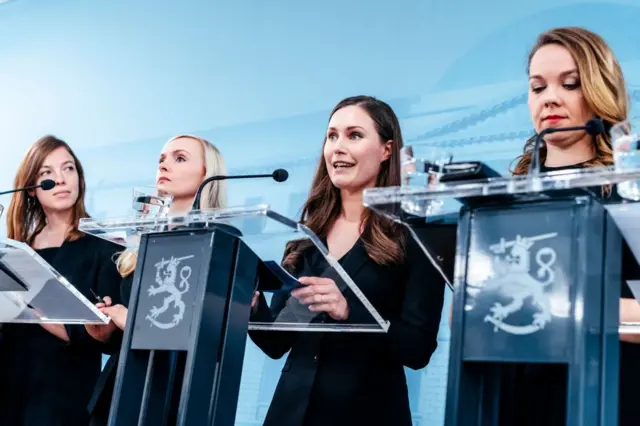
Currently, eight kontri no get women in dia national legislature at all: Afghanistan, Azerbaijan, Saudi Arabia, Hungary, Papua New Guinea, Vanuatu, Yemen, and Tuvalu.
Wia dis foto come from, Getty Images
3. Fewer dan 15% of nations around di world get woman as dia leader
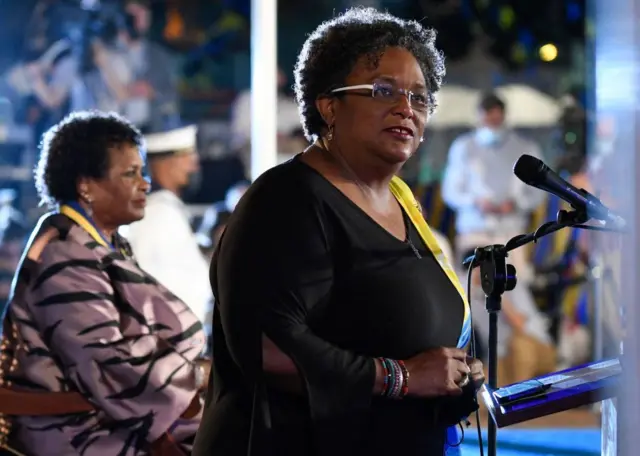
As of 1 December 2024, only 26 out of 193 kontris get female head of state or goment, wey dey less dan 15% of di world nations, according to di Women's Power Index.
And na only 15 kontris women account for half or more of positions in goment.
Wia dis foto come from, Getty Images
4. Since 1946, 80 kontris don get woman in charge
Since 1946, 80 kontris - roughly 40% - bin get female head of state or goment, according to di Women's Power Index.
All of dem na monarchs wey inherit di power until Sri Lanka Sirimavo Bandaranaike become di world first democratically elected female prime minister for 1960.
"Since den, many more kontris get woman as chief executive, na democracy dey drive dis trend," Herre tok.
However, women remain largely outnumbered by men for highest offices. "At any point in time, almost all political chief executives na men," Herre tok.
Why women representation mata
Studies show say more women for political office bring positive changes. One 2021 University of Colorado Boulder study show say wen women become more influential for national legislatures, kontris go invest more in education and healthcare.
Similarly, one 2020 Cambridge University study link di rising number of women in sub-Saharan African legislatures to increase healthcare spending and lower child and infant mortality. And for 2019, researchers for Curtin University, Australia, suggest say parliaments wey get more women get stronger climate policies.
However, James from di CFR Women Power Index warn say electing women no guarantee dis outcomes. She argue say women no be homogenous group - no be all go champion gender equality, peace, or co-operation.