Grenfell path to disaster: How chain of failures and dishonesty lead to 72 deaths
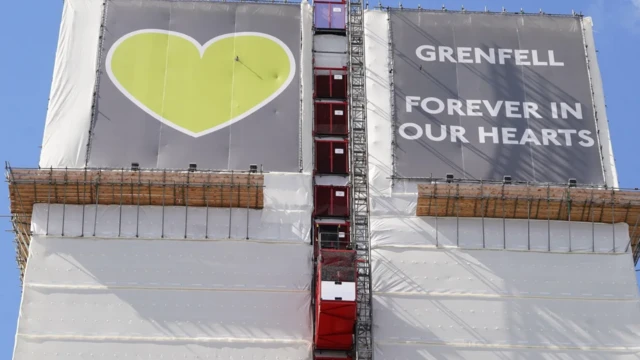
Wia dis foto come from, PA
Di Grenfell Tower fire wey kill 72 pipo for 2017 na di result of failures by goment, "dishonest" companies and lack of strategy by di fire service, di final report of di six-year public inquiry don conclude.
Di report set out a "path to disaster" for Grenfell wey stretch back to di early 1990s ova how fire safety for buildings wey high dey managed and regulated.
Di coalition and conservative goment bin “ignore, delay or disregard” concerns about di safety of industry practices, according to wetin di inquiry tok.
One manufacturer wey dey do products wey dem dey use cover surface “deliberately conceal” (hide) di fire risks wey dem fit cause, di report add.
Among di recommendations wey dey laid out for di 1,700-page report na di introduction of one single construction regulator, one College of Fire and Rescue wey go improve di training of firefighters and change di way wey materials dey tested for fire safety.
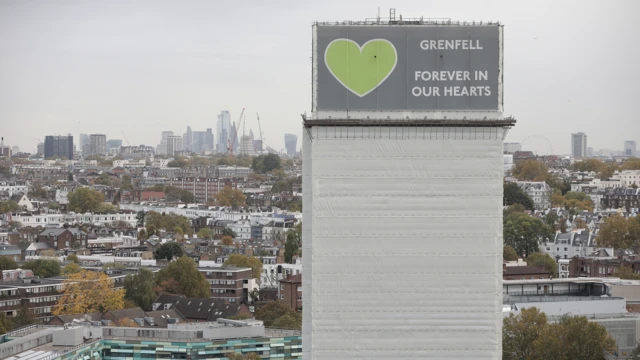
Di report publication dey come more dan seven years afta di fire take hold and spread through di layer wey dey di west London tower block.
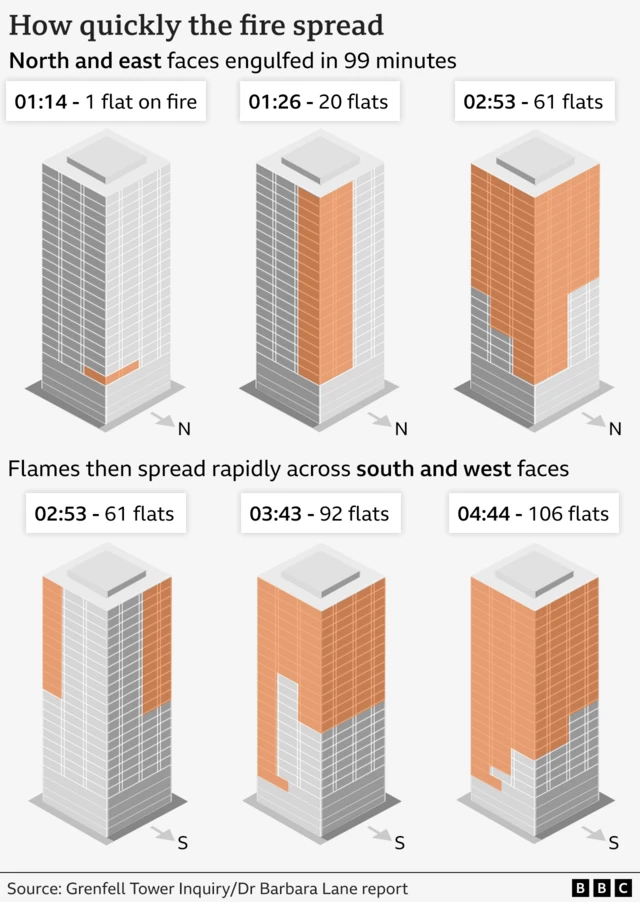
Di fire bin start for one fridge on di fourth floor and spread to di layer through a window bifor e rise go up di sides of di building.
Many residents dey trapped on higher floors as e spread.




End of Di one wey oda users dey read well well
Di layer dey made of highly flammable polyethylene wey dey added to di sides of Grenfell Tower in a disastrous renovation for 2016.
Di inquiry find fault and incompetence among almost evri company wey dey involved for di renovation.
Di inquiry find fault and incompetence almost among every company wey bin dey involved for di renovation.
Dis na di key findings of di report:
- "Systematic dishonesty" by di manufacturers of cladding and insulation
- US firm Arconic, manufacturer of di Reynobond 55 cladding wey experts for di inquiry say na "by far na di largest contributor" to di fire, dem knowingly hide di true extent of di danger of using dia product
- Manufacturers bin make "false and misleading claims" ova di safety and suitability of insulation to di company wey bin installed am for Grenfell
- Failures for London Fire Brigade training and a lack of a strategy to evacuate di building
- Successive goments bin miss opportunities to act
- Di local council and di Tenant Management Organisation dey "no show concern to fire safety, particularly the safety of vulnerable people"
- How dem dey manage building safety for England and Wales get “serious comma”
Di inquiry chair Sir Martin Moore-Bick wey speak afta dem publish di report, read the names of di 72 people who died at Grenfell.
Police and prosecutors say di investigators go need until di end of 2025 to complete dia inquiry, wit di final decisions on potential criminal charges by di end of 2026.
Wia dis foto come from, Getty Images
“Corrupt” manufacturers
Di inquiry examine di roles of three companies wey make cladding and insulation wey dem use for di renovation of Grenfell Tower.
For one key passage dem conclude say:
“One very significant reason why dem clad Grenfell Tower in combustible materials na systematic dishonesty on di part of those wey dey make and sell di rainscreen cladding… and insulation."
Dem dey engage in “deliberate and sustained strategies to manipulate di testing processes, misrepresent data and mislead di market,” di report find.
Arconic produce panels of Reynobond PE cladding, wey dey formed from metal sheets wit one plastic layer. Dis dey “extremely dangerous” wen dem fold am into box shapes, dem dey use dis style well- well for di cladding industry, di inquiry conclude.
Di cladding na “by far di largest contributor” to di Grenfell fire, according to new research by two inquiry experts.
But from 2005 until afta di Grenfell Tower fire, Arconic “deliberately hide dis aspect from di market di true extent of di danger of using Reynobond 55 PE in cassette form, particularly on high-rise buildings”. Dem allow customers to kotinu to buy di product.
Arconic commission fire tests wey reveal very poor ratings for cladding wey dem install as folded cassettes but cover dis from di BBA, one British private certification company wey bin attempt to keep di construction industry up to date about safety risks.
Dis “cause BBA to make statements wey Arconic know say dey ‘false and misleading'”, di report tok.
Among di customers for UK customers wey dem deceive na, Harley Facades, di company wey install Grenfell cladding.
Di inquiry also find fault wit both Celotex and Kingspan, di two of dem make insulation, wey also dey part of a cladding system.
Celotex bin make “false and misleading claims” and present dia product to Harley Facades say e dey safe and suitable for Grenfell although "dem bin know say dat no be di case”.
Dem use magnesium oxide boards, wey no dey burn, during testing and e no reveal dis for di marketing literature.
Kingspan, wey dey ahead for gaining market share for insulation industry onto say dem dey sell dia product for tall buildings “bin mislead di market” sake of say dem no reveal di limitations of di product, dem use for small section of Grenfell Tower.
Di renovation of Grenfell Tower na Tenant Management Organisation wey dey run social housing for the Royal Borough of Kensington and Chelsea (RBKC).
Di relationship between di TMO and dia own residents many describe am by “distrust, dislike, personal antagonism and anger”. To allow di relationship to deteriorate na “serious failure on dia part to observe dia basic responsibilities”, di inquiry tok.
Di inquiry find out say one 2011 project to replace fire doors for Grenfell bin leave di building wit doors wey no meet di correct standard becos di TMO fail to specify di correct one wen dem bin order dem.
Dem design fire doors to withstand flames and smoke for thirty minutes to improve residents’ chance of rescue.
Wen dem torchlight di role of the architects Studio E, project manager Rydon and cladding contractor Harley Facades di report most often describe dem as incompetent.
Studio E fail to recognise say di cladding and insulation bin dey combustible and dem“bears a very significant degree of responsibility for di disaster”, in di words of di inquiry report.
Harley Facades “bear significant responsibility. Dem no worry themselves wit fire safety at any stage”.
Rydon, also bear “considerable responsibility” as project manager wey “see dia role as di conductor of a large and varied orchestra”.
But “dem fail to establish clearly who dey responsible for what, including who bin dey responsible to ensure say di designs follow statutory requirements. Wey eventually result in di unedifying 'merry go round of buck passing'".
While dem dey add cladding to older buildings to make them warmer and drier, di inquiry find out say di initial plan to clad Grenfell na for "visual appearance".
Residents for di area bin always allege say di reason why dem renovate Grenfell na becos e for look one kind sake of say e dey next door to di new Kensington Academy and Leisure centre.
Goment failures
According to di report, e bin get “many opportunities for di goment to identify di risks of di use of combustible cladding panels and insulation... and to take action”.
Experts bin warn of di risk of cladding fires in 1992, di year afta one fire for di 11-storey Knowsley Heights tower on Merseyside and again for 1999 afta one fire for Garnock Court for Scotland, afta which MP say tall buildings suppose use only non-combustible cladding.
But dem no ban combustible cladding becos e meet British standard wey dey known as “Class Zero”. Di MPs say dem suppose scrap am.
“Dem for don remove am years earlier,” di inquiry found.
For 2001 a series of large-scale fire tests reveal “striking results” wia cladding “burn violently”, but goment still no tighten di rules and di results of di tests dem keep am confidential.
“We no understand di failure to act wen e et to do wit dis kain matter wey dey important,” diinquiry panel tok.
One fatal fire for Lakanal House for South London for 2009 make one coroner to order review of building regulations, but dem bin “no treat di matter wit sense of urgency.”
Wen di coalition goment bin take power for 2010 dem tell ministers to cut red tape.
Di inquiry find out say dis “dominate di department thinking sotey even matters affecting di safety of life dem ignore am, delay am or disregard am”.
Di pressure to cut red tape bin dey “so strong... civil servants bin feel di need to put am for di forefront of every decision".
Di inquiry panel describe di housing ministry say e dey “poorly run”, and add say dem place di fire safety for di hands of a single “relatively junior” official.
Di goment don previously apologise for di inquiry say dem “deeply regrets past failures in relation to di oversight of di system wey dey regulate safety for di construction and renovation of high-rise buildings".
Di goment expert adviser, di Building Research Establishment dem privatise for 1997 to become BRE, a private company.
Goment bin criticise well-well for dia “unprofessional conduct, inadequate practices, a lack of effective oversight, poor reports and a lack of scientific rigour".
Dis expose am to “unscrupulous product manufacturers".
Fire service shortcomings
While individual firefighters trek repeatedly for di staircase wey smoke full smoke to find trapped residents, the London Fire Brigade bin fail to prepare dem for wetin dem face.
Di Lakanal fire for 2009, wey six pipo die, “support raise alarm for LFB about di shortcomings of dia ability to fight fires for high-rise buildings”, di inquiry find out.
“Nobody bin tink say firefighters go need training to recognise and deal wit di consequences.”
Senior officers bin lack di management skills to recognise di problems or di will to correct dem.
Dem find out say dem fail to share knowledge about cladding fires, dem fail to plan for a large number of 999 calls, or train staff on wetin to tell trapped residents.
Inquiry recommendations
Di inquiry conclude say di way England and Wales dey manage building safety dey“serious defective”, “complex and fragmented”.
Dem don recommend di introduction of a single construction regulator, and one secretary of state to oversee di issue.
Di guidance wey di industry dey follow to ensure fire safety suppose change am, di inquiry tok.
Dem also recommend to make am a legal requirement to submit fire safety strategy wit any application for permission from building control inspectors to construct or renovate a “higher risk building”.
Oda recommendations cover di way wey dem dey test for fire safety materials and, and di need to make di results public.
Currently building inspectors wey sign off work as safe fit dey employed by councils or work as private “approved inspectors” wey fit compete for work. Di inquiry recommend setting up an independent panel wey go consider whether dis dey in di interest of di public. Di panel fit also decide to set up a national authority for building control, wey go be a major change to di system for ensuring construction standards.
Finding major issues wit standards for fire service, di inquiry recommend to set up a College of Fire and Rescue to improve di training of firefighters and incident commanders.
Dem get series of recommendations for di London Fire Brigade management of major incidents and a demand for di service wey go dey reviewed by His Majesty Inspectorate of Constabulary, Fire and Rescue Services.
Di inquiry also call for improvements to di way local authorities, RBKC in particular, dey respond to major emergencies.