How di discovery of 12-year-old slave boy help popularise vanilla worldwide
Wia dis foto come from, Getty Images
- Author, Diego Arguedas Ortiz
- Role, BBC World's Table
- Published
Di history of vanilla, like oda international crops, spread go di entire world.
Although Madagascar dey dominate global trade today, e start for di forest of Mexico and Central America wen orchid change to develop di special and striking flavor wey we sabi very well today.
Perhaps wetin dey most interesting about vanilla na di fact say na multi-billion dollar industry wey dey exist thanks to a 12-year-old slave boy wey live 180 years ago for one remote island for Indian Ocean.
But to reach dia, di orchid wey im fruit contain di sweet essence of vanilla make unthinkable journey. Im tori start for Mexico, wia di indigenous Totonac pipo, settle for Atlantic coast around around 600 AD, first smell am.
"Di Totonaques don harvest beans in di wild and dem no get organised cultivation system," Rebecca Menchaca García, wey dey run di orchid garden and laboratory for Tropical Research Center of Veracruzana University in Mexico, tok say "e dey very rare and valued high, Aztecs dey demand for am as tax afta dem conquer di Tonaque civilization ( in di 1400s)."
Di Aztecs use vanilla to flavor xocoatl, di drink dem bin prepare wit cocoa and oda spices, reserve for di influential or special occasions.
Na one special drink wey Emperor Moctezuma Xocoyotzin offer to Hernán Cortés and im group of Spaniards on dia arrival for imcapital, Tenochtitlan, in 1519.
During di first decades of di conquest, di Spanish take dozens of fruits, vegetables and oda crops, including vanilla, to plant and show dem across di Atlantic. Historians call dis movement of food and goods di Colombian Exchange.

End of Di one wey oda users dey read well well
“Vanilla and cocoa don always travel togeda,” Adam Karrenmans, one orchid expert, professor for di University of Costa Rica and director of di Lankester Botanical Garden, orchid research center wey base for Costa Rica, tok. Europeans dey enjoy dis creamy drink and e dey spread, reach France through Spain in di early 1600s, following di marriage between Louis XIII and Anne of Austria, daughter of di King of Spain.
Once across di Atlantic, vanilla e quickly get mark. Toward di end of her reign in 1602, Queen Elizabeth physician began adding di spice to di monarch dish as e dey believe say na aphrodisiac, Rosa Abreu-Junkel in Vanilla: A Global History, write.
Across di Channel, di powerful Madame de Pompadour add vanilla to her diet wen she try to seduce her lover, King Louis XIII of France, around 1750.
Vanilla don enta di global spice trade, dey change borders and changing economies around di world as European colonial powers dey try to get beans. Chefs dey test am in desserts, manufacturers produce new flavors, and aristocrats just wan to show off – but global vanilla production dey hard on di same strip of coastal land in di Americas wia e dey thrive for centuries.
Oda colonial powers begin explore di idea of growing vanilla outside of di Spanish colonies, Tim Ecott write in Vanilla: Travels in Search of di Luscious Substance.
Di British in India, di French in di Indian Ocean colonies, di Dutch in Java, and even di Spanish in di Philippines try to plant am in di1600s and 1700s, but none of dem succeed.
E be like say Karremans dey enjoy di attempts. “Wenever Europeans take plants and plant dem in oda of dia colonies, dem discover say dem fit grow and flower there, but dem neva produce fruit,” di expert tok, wey study ecological interactions between orchids and dia pollinators and seed dispersers.
Orchids don specialise pollinators, Karremans explain, and vanilla need specific type of bee wey dem fit find only on tropical regions of di Americas. Tii today, no grower in di world don manage to find natural pollinator to replace dem.
Wia dis foto come from, Getty Images
Among pipo wey set out to break di Spanish monopoly on vanilla wey dem dey produce for Mexico na white French planters from di island of Bourbon, now pipo sabi am as Reunion, in di Indian Ocean.
In 1822, di colony receive one batch of vanilla plants, cut from di first one wey survive and flourish for Europe. Although expectations dey high, no fruit and di planters later resign.
How e fit dey happun? Farmers don already try, witout success, and now dis solitary vine dey bear fruit. Edmond tok say im dey responsible, but Bellier-Beaumont no believe am first. Na afta some few days later wen he see anoda pollinated flower im ask di boy make im tell am wetin im don do.
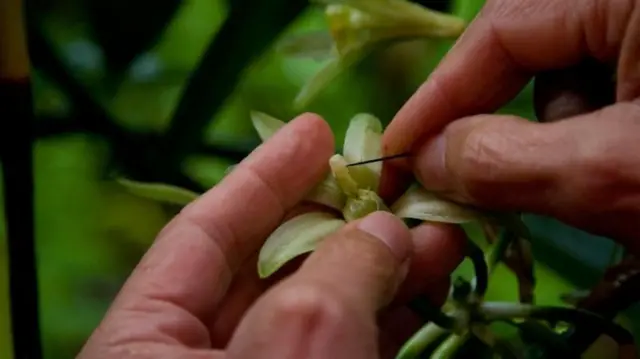
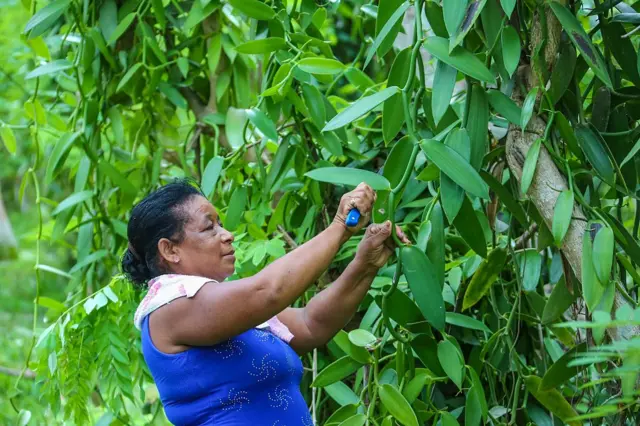
Edmond show am. Everi vanilla orchid (vanilla planifolia) male and female parts divided by membrane, to stop self-pollination. Di boy pick up nearby flower and peel di lip of di orchid with im finger, lift di membrane wit stick and press di female and male parts together - di action no dey different from pollination of watermelon wey im bin don see bifor.
Bellier-Beaumont dey shock and happy, and e no fit remain quite wit di news. Soon Edmond dey waka around di island begin show im trick to di oda farmers.
"Afta den e become possible to start growing vanilla forRéunion, Madagascar and elsewhere," Karremans explain. " Dis na in di mid-1800s, three centuries afta di Europeans understand say vanilla dey useful. E take dem 300 years to figure out how to get fruit from di plant."
Di vanilla growers of Reunion Island make dia dream come true: in 1848, dem manage to export 50 kg of vanilla pods to France, and in 1898, by producing 200 tons of dried vanilla, dem overtake Mexico as world supplier.
Edmond no share dis boom. Although dem free am along wit all di French slaves wey dey in 1848, in 1852 dem accuse am of stealing and sentence am to five years in prison wit hard labor. French botanist wan take credit for Edmond invention, e claim say im visit Réunion in 1838 and show di group of farmers techniques of pollinating vanilla.
Dem later release Edmond and his discovery gain recognision (thanks to di strong support of im former slave owner), but im die poor, at di age of 51.
“Di same man wey generatevgreat profit for dis colony by discovering how to pollinate vanilla flowers die at di public hospital of Sainte-Suzanne,” na how di local newspaper Moniteur record im death in 1852, according to Ecott book. “Na poor and miserable end.”
Afta im die, di discovery of Edmond Albius (im full name as a free man and citizen) quickly change di global vanilla market. Few regions of di world feel di impact like di coastal region of Veracruz, Mexico, wia dem dey produce most vanilla bifor di discovery of hand pollination.
During di eureka era in Reunion, Mexican growers still dey rely on local bees to pollinate di flowers. Wen di global market don dey dominated by vanilla from elsewia – first only from Réunion, den from Madagascar, Indonesia and oda kontris – di local industry no fit compete. Today, Mexican production represents only 5% of di natural vanilla bean trade.
Di industry become even more complicated wit di development of artificial vanilla in the late 1800s, wey now supply most of di market.
Na only 1% of di market natural vanilla dey serve, wey fit fetch high prices: in 2018 e reach record high of £445 (around $2,800) per kg, wey make am more valuable by weight dan money.
Pipo wey dey market natural vanilla - even for Mexico - don adopt di hand pollination method, wey dey much more reliable dan waiting for natural pollinators. In fact, all vanilla plants grown around di world now na hand pollinated, making di task laborious.
"Di flowers fit open for one month, but each one go open for only few hours for one day. So everi day you go need to waka go fields to pollinate dem by hand. e dey extraordinary," Menchaca García tok. "Everi time I see vanilla pod, I say to myself, 'Dis na handmade product'."