Table salt, Himalayan and odas - E get any beta type of salt wey good for your health?
Wia dis foto come from, Getty Images
- Author, André Biernath
- Role, BBC News Brasil
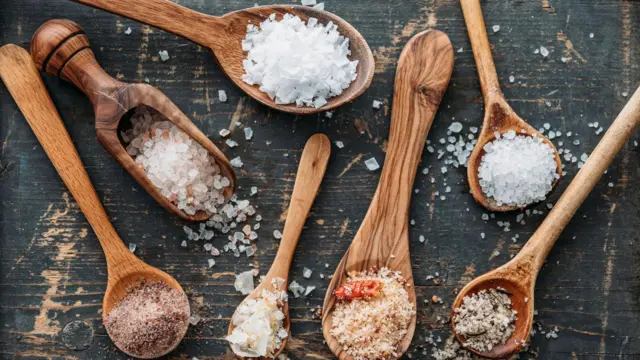
For recent years, supermarket shelves for condiments, particularly salt, don gain uncommon diversity.
Make we add to di refined version - di popular cooking salt - and coarse salt, (coarse salt na di one wey no dey smooth) dem don launch new products like Himalayan pink salt, light salt or low-sodium salt - dat one dey low in sodium.
All of dem dey promise to bring ogbonge health benefits and help to prevent or fight against hypertension, one very common disease wey relate to heart attacks, cerebrovascular accidents (CVA) and even death.
But dis alternatives really get wetin dem promise?
Wia dis foto come from, Getty Images
Experts wey BBC News Brazil consult bin point out say more important dan to choose type of salt, di key na to sabi how to use am for moderation and to sabi industrialised products wey contain lot of dis ingredient.
For general terms, light or low-sodium salt get evidence say e dey beneficial to health, as far as pesin use am correctly.
We no fit tok di same for Himalayan pink salt or coarse salt.
Studies show say di amount of sodium inside am dey similar to dat one wey dem dey find for normal cooking salt and e no change blood pressure wen pesin substitute am for dis oda ones.




End of Di one wey oda users dey read well well
Time don reach to know di differences between some of dis salts and how to use di seasoning without damage to di heart and blood vessels.
Kitchen salt
Doctor Weimar Barroso, president of di Brazilian Society of Cardiology, joke say if to say na now dem discover sodium, e no go dey approved for human consumption.
Beyond dat, salt na important element for di functioning of our bodi. We fit see am for small quantities but enough for our health inside many foods of plant and animal origin.
Human beings don dey use salt since millennia as way to boost di flavor of food or even to preserve certain products, like meat and fish.
Di technical name for di salt wey everybody get for kitchen na sodium chloride, wey mean say e contain one mixture of chlorine and sodium.
Wia dis foto come from, Getty Images
Di World Health Organisation (WHO) set one limit of 5 grams of salt per day.
In practice, dis one mean say we dey take in almost double wetin experts consider acceptable.
But wia we dey go wrong?
Barroso tok say di big enemy here na di added sodium wey dey industrialised products.
"About 80% of dis consumption dey concentrated inside ultra-processed products or sausages, and 20% dey come from added salt, wey we use to season our food," di cardiologist and professor for di Federal University of Goiás tok .
Nutritionist Camila Cristina da Silva Santos remind us say one single tablet of ready-to-use concentrated seasoning, of di kind wey dem dey use on meat or beans, get practically di entire amount of sodium wey one pesin suppose eat for one full day.
Wia dis foto come from, Getty Images
But why too much salt be concern afta all, and wetin be di effects of salt consumption on di body?
Barroso explain say dat excess sodium get repercussions, like fluid retention for di body. Dis, in turn, dey lead to increase for di so-called volemia, di amount of blood wey dey circulation.
Di result of dis na additional and unnecessary pressure on di walls of di blood vessels, wey for di long term dey lead to hypertension.
"Excess sodium also dey influence di renin-angiotensin-aldosterone system, wey play one important role to regulate blood pressure," di doctor add.
Dis uncontrolled pressure fit lead to "injury" to di inner walls of di vessels wey dey carry blood through di body. And e get di potential to lead to very serious and even fatal complications like heart attack and stroke.
Salt wit less sodium
Low sodium salt na one wey get 50% less sodium content of di final product.
E usually dey-dey replaced by potassium. E get half sodium chloride, half potassium chloride.
E get versions wit smaller, less di amount of sodium. Generally, dia packaging get words like "light" or "rich for potassium. "
One survey wey dem do for Australia and publish for di end of January conclude say patients wit hypertension fit benefit from dis kind salt.
For di article, di authors bin defend di idea say dis ingredient na part of di treatment guidelines for high blood pressure and doctors bin go on to suggest a use of low-sodium (or potassium-rich) salt for dia patients.
Wia dis foto come from, Getty Images
Although dey gree wit di report, di sabi pipo wey BBC News Brazil consult bin point out one barrier and two worry wen dem indicate di consumption of dis product.
Di barrier need do wit price: light or low-sodium salt costs double or triple dat of common refined salt. Make we say, for many pipo e fit dey difficult to include am for monthly budget.
"Medical societies and di goment fit embrace dis cause and think about ways to lower di price of salt wit potassium as public health strategy," Barroso propose.
And among di concerns, di first get to do wit di use of dis product. Dis na sake of say dis kain salt no dey quick catch and to compensate for di taste, di pesin fit end up using larger portion during meal preparation.
For dis scenario, di amount of sodium go dey very similar to di one wey pesin take wen dem use di common salt, without any health benefits.
"E dey very easy to use more, so care dey needed to consume dis options moderately," nutritionist Luis Gustavo Mota tok, from Hcor, São Paulo.
Di second alert need do wit patients wey get kidney problem.
"Potassium consumption for individuals wit chronic kidney disease need attention, since plenti of di element fit further damage those organs wey dey most vulnerable for dis context," Mota highlight.
Pink salt and coarse salt
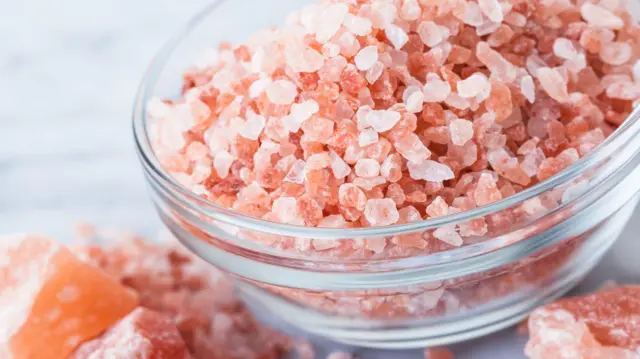
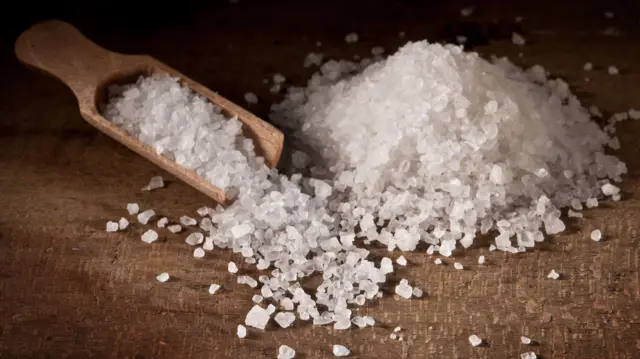
Weda for gastronomic or health reasons, Himalayan pink salt don become di tin for recent years and don gain popularity for restaurants, markets and emporiums.
E get one pink colour and dem dey extract am from salt rocks for Punjab region of Pakistan.
One of di arguments of those wey defend di use of dis option na di amount of minerals, iron and copper for im composition.
"But na just salt and na mistake to associate am wit consumption of micronutrients, for which oda more suitable sources dey," Silva Santos tok.
Wia dis foto come from, Getty Images
To add, di amount of sodium inside Himalayan pink salt na nearly di same as di one inside refined salt.
"We get very reliable studies wey compare di blood pressure and urinary sodium level of individuals wey dey consume pink salt and regular salt," Mota tok.
"And no benefit, like lower blood pressure or less sodium, dey observed among those wey dey use pink salt," e report.
Di same message apply to coarse salt. Dis condiment, wey dem dey commonly use for barbecues, don recently gain reputation sake of say belief dey say e get less sodium dan normal kitchen table salt.
"But di amount of sodium inside both dey similar," Barroso tok.
'Di secret na di quantity'
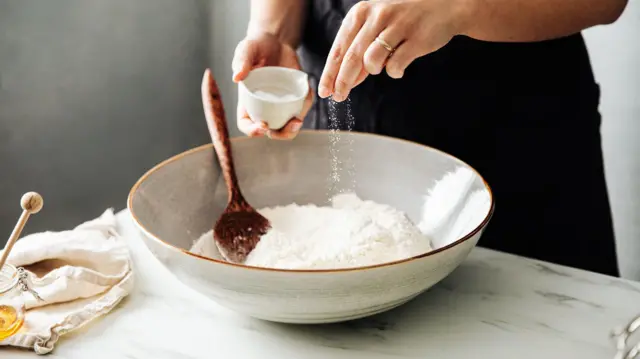
Weda to prevent or control hypertension, di secret dey for di amount of salt wey you put as you dey prepare di food.
To explore new flavors, Mota indicate one simple recipe wia e use coarse salt and fine dried herbs. Simply mix dem for blender or processor to get condiment wit different flavor.
"Ideas like dis fit boost di flavor of di food and, same time, reduce di sodium content," e point out.
Silva Santos dey follow di same line. She suggest to look for oda seasonings wen pesin dey prepare recipes, like peppers, basil, rosemary, bay leaf.
Wia dis foto come from, Getty Images
"E get so many fresh and dried natural spices wey go beyond salt. I sometimes dey joke say e no dey possible to get sick wit so many options wey dey our disposal," e report.
To remove di salt shaker wey dey ontop table for extra use afta food preparation also na simple and effective tactic, expert tok.
Finally, Barroso remind us about di importance wey dey to dey chop industrialized, ultra-processed and sausage products for great moderation.
"We need to get into di habit to dey read food labels and always go for options wey provide less sodium," e tok.