Young girls wey dem carry give gods dey trapped inside life of sexual exploitation
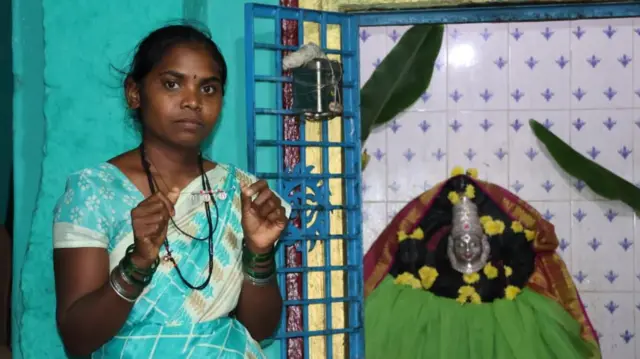
Wia dis foto come from, Sakhi Trust
- Author, Swaminathan Natarajan
- Role, BBC World Service
- Read am in 8 mins
"Sex work don impact me a lot. My body dey very weak, I dey mentally broken," na so Chandrika tok.
Chandrika life as a sex worker start wit religious ceremony. At di age of 15, dem carry her go temple and she come dey ceremonially married to one goddess.
"At dat time, I bin no dey aware of di meaning of di ritual," she tell di BBC.
Chandrika now dey in her late thirties and she don dey do sex for money for nearly 20 years.
From divine bride to prostitute
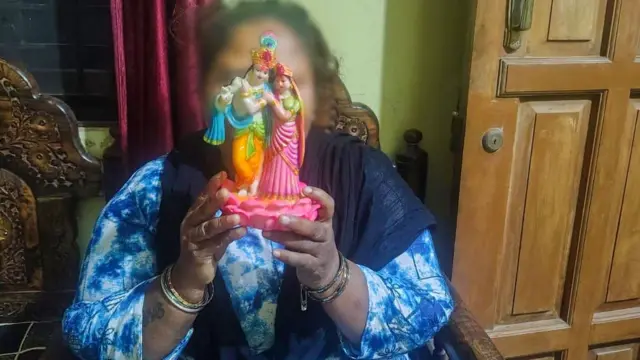
Di southern Indian state of Karnataka dey conduct a survey to identify pipo like Chandrika wey become sex-workers afta dem initiate am into di devadasi tradition.
Di devadasi or "slaves of god" tradition originate from south India over one thousand years ago. Initially dem bin dey perform as artists in temples, and excel in singing and dancing. Over time, di devadasi system become more like sanctioned prostitution.
While bans begin during di colonial era for many parts of India, Karnataka only outlaw di practice in 1982. Yet e still kontinu till today.
Devadasis wey dey live in villages fit get an intimate partner and also take on oda clients. Many migrate to cities like Mumbai to work in brothels.
Tricked into di sex trade
Afta her dedication ceremony in di city of Belgaum, Chandrika come home and live normally for four years. Den one female family member carry her go di industrial town of Sangli, wit promise of work as house help. She leave Chandrika for one brothel.
"E bin dey very hard for di first few months. I fall sick. I no fit eat or sleep well," Chandrika remember. "I bin think of to run away, but gradually I accept am."
Chandrika bin dey just 19, get very little education, and she barely understand di Hindi or Marathi wey dem dey speak for Sangli.
"Some [clients] physically attack me, some use abusive language. I struggle to handle am," she kontinu.
Brothel clients range from college students to drivers, lawyers, and daily wage labourers.
Chandrika meet her partner, a truck driver, through sex work for Sangli.
Togeda dem born a daughter and a son. Her partner dey take care of di children while Chandrika kontinu to work for di brothel, wia she go see 10 to 15 clients a day.
A few years afta di birth of her second child, her partner die for road accident and she move back to Belgaum, from wia she tok to di BBC through a translator.
'Men no dey come to us for marriage'
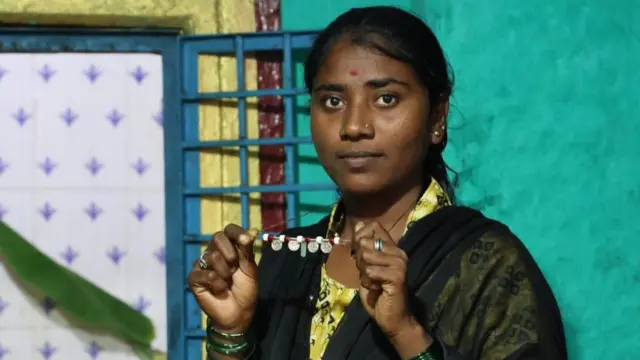
Wia dis foto come from, Sakhi Trust
No be all devadasi dey work for brothel and some no be sex workers at all.
Ankita and Shilpa, both aged 23, na cousins and dem live for one village in northern Karnataka. Like Chandrika, dem come from di Dalit caste, a group wey dey suffer great discrimination for India.
Shilpa drop out afta just a year in school and her dedication happun in 2022. Ankita study until she dey around 15 years and her parents arrange for di ceremony in 2023. Afta di death of her brother, she come dey under pressure to become a devadasi.
"My parents tell me say dem wan dedicate me to di goddesses. I no gree. Afta a week dem stop to give me food," Ankita tok.
"I feel very bad but accept am for di sake of my family. I dress as a bride and dem marry me to di goddess."
Ankita hold a necklace made of white pearls and red beads, wey symbolise dis union.
Her mama and grandmother neva be devadasis bifor. Di family get small farm land, but e no dey enof to feed dem.
"E get dis fear say if no-one dey initiated, di goddess go curse us."
Devadasis no fit marry but dem fit get intimate partners wey fit dey legally married to anoda woman.
Ankita reject all advances from men and she still dey work as agricultural labourer, dey collect about $4 per day.
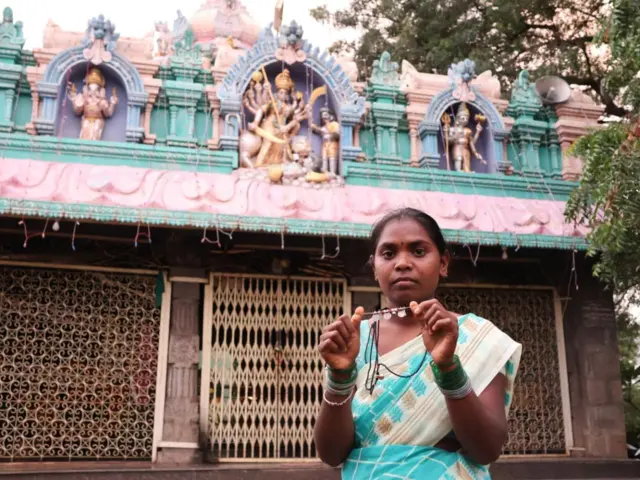
Wia dis foto come from, Sakhi Trust
Shilpa life change afta her initiation, she start a relationship wit a migrant worker.
"Na im come to me becos im know say I be devadasi," she recall.
Like many devadasi women, Shilpa live wit her partner for her house.
“E bin only dey wit me for a few months and give me belle. E give me 3,000 rupees ($35) during di time e dey wit me. E no react to my pregnancy and one day e just vanish."
Shilpa bin dey three months pregnant and confused.
"I try to call am but im phone no dey unreachable. I no even know wia im originally come from."
She no go police to trace am.
"In our system, men no dey come to us for marriage," she tok.
Poverty and exploitation
Wia dis foto come from, Sakhi Trust
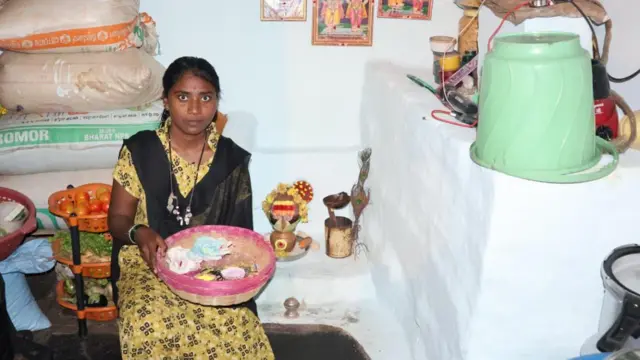
Dr M. Bhagyalakshmi na director for one local NGO Sakhi Trust, and e don dey work wit devadasi women for over twenty years. She say initiations still dey kontinu despite di ban.
"Evri year we dey stop three or four girls from being dedicated as devadasis. But most of di ceremonies dey happun for secret. We dey only know wen a young girl don get belle or born pikin."
Dr Bhagyalakshmi say many women lack basic facilities, get little proper food or education, and dey fear to ask for help.
"We don survey 10,000 devadasis in di Vijayanagara district. I see many disabled, blind and oda vulnerable women wey dem push into di system. Almost 70% no get house," she tell di BBC.
Intimate partners no dey usually gree to use condoms and dis dey lead to unwanted pregnancies or HIV transmission.
Dr Bhagyalakshmi estimate say about 95% of all devadasis come from di Dalit caste and di rest from tribal communities.
Unlike in di past, modern devadasis no dey get any support or income from di temples.
"Di devadasi system na just exploitation," she tok emphatically.
Stopping di practice
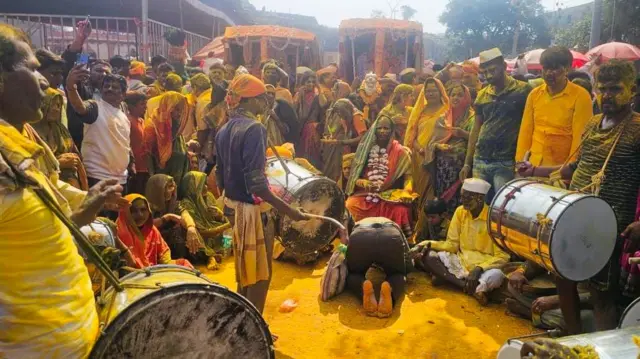
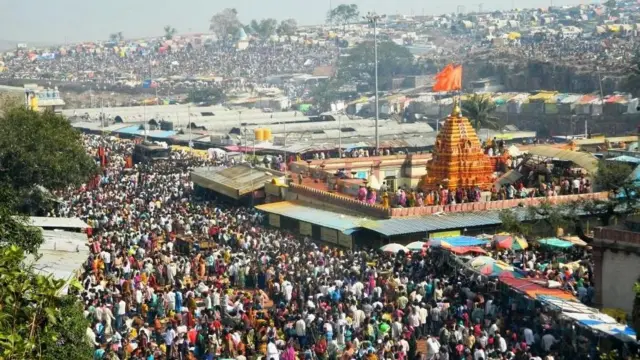
Present and former devadasis gada on di Saundatti Yellamma temple in Belgaum for annual festival, but officials say no initiation dey take place dia.
"Now na punishable offence. We get posters and pamphlets during di festivals to warn pipo say we go take strict action," Vishwas Vasant Vaidya tok.
Vaidya na member of Karnataka Legislative Assembly and also a member of di Yellamma temple board. E tell di BBC say di number of active devadasis don come down well well.
"Now we fit get like 50 to 60 devadasis for my constituency," e tok. "No-one dey encourage di devadasi initiation for di temple."
"We don stop di devadasi tradition due to our strong actions," e claim.
Di most recent survey by di Karnataka govment for 2008 identify over 46,000 devadasis in di state.
Next Generation
Wia dis foto come from, Sakhi Trust
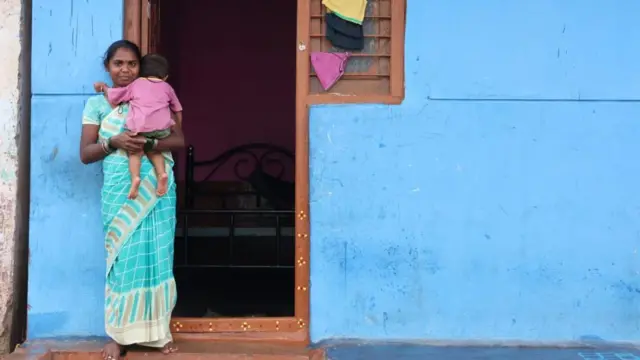
Money from sex work help Chandrika to escape poverty. To protect her children from stigma, she send dem go boarding schools.
"I always dey worried about my daughter," Chandrika tok.
"Wen she bin dey about 16, I marry her to a relative so she no go be devadasi like me. Now she dey live wit her husband."
Chandrika now dey work wit NGO and she dey regularly go for HIV checks.
"I don dey old - I no go fit do sex work in a few years time," she tok. She dey plan to start a shop to sell fruits and vegetables.
Shilpa wan provide a good education for her daughter. She dey bitter about di devadasi tradition.
"I want make dis tin stop. I no go make my daughter devadasi. I no wan kontinu dis system," she tok.
Ankita say she wan marry so she go finally remove di pearl necklace.
(We change Chandrika name to protect her identity)