Wetin be Genocide – di word wey Trump describe killings for Nigeria
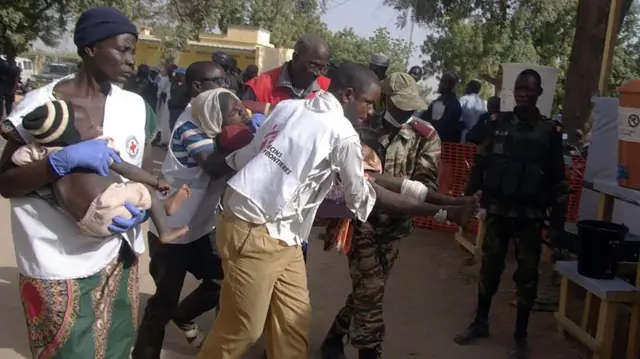
Wia dis foto come from, STRINGER/AFP via Getty Images
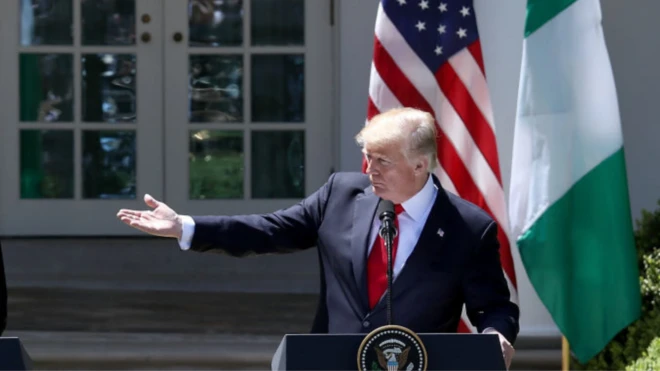
US President Donald Trump don order di military to prepare for action for Nigeria to tackle Islamist militant groups, and accuse di govment say dem fail to protect Christians.
Trump no tok about di exact killings e dey refer to but claims of genocide against Nigeria Christians don dey circulate in recent weeks and months for some right-wing US circles.
Groups wey dey monitor violence say evidence wey suggest say dem dey kill Christians pass Muslims for Nigeria no dey, kontri wey get plenty followers for di two religions.
Nigeria President Bola Tinubu don insist say religious tolerance dey di kontri and say di security challenges dey affect pipo "across faiths and regions".
Nigeria don get religious and ethnic tensions for long, particularly for di northeast, wia Islamist groups like di Boko Haram and Islamic State West Africa Province don carry out deadly attacks pass 10 years.
For di North central states of Plateau and Benue, hundreds of pipo don die, dem say na farmers and herders clashes.
But diz killings reach wetin go fit make dem call am genocide as President Trump claim? BBC News Pidgin provide ansas on wetin you fit call genocide.
Wetin be genocide?
Na one Jewish-Polish lawyer Raphael Lemkin coin di word for 1943, e combine Greek word "genos" (race or tribe) wit di Latin word "cide" (to kill).
Afta e witness di horrors of di Holocaust, wia dem kill evri member of im family except im brother.
Dr Lemkin campaign to make sure say dem recognise genocide as a crime under international law.
Im efforts led to di adoption of di United Nations Genocide Convention for December 1948, wey came into force in January 1951. As at 2022, 153 kontris don accepr am.
Article Two of di convention define genocide as "any of di following acts committed wit di intent to destroy, in whole or in part, a national, ethnic, racial, or religious group, as such":
- Kill members of di group
- Cause serious bodily or mental harm to members of di group
- Deliberately impose on di group conditions of life calculated to cause physical destruction of di group, in whole or in part
- Impose tins wey go go make di group no born children
- Use force transfer children of di group to anoda group
Di convention also imposes a general duty on signatory states to "prevent and to punish" genocide.
Who dey decide wetin dem fit call genocide?
Di UN tok say dem no dey determine weda a situation constitute genocide, and only authorised judicial bodies, like di international courts, get di power to do so.
Na only some cases dem don rule as genocide under international law: di 1994 genocide for Rwanda, di 1995 Srebrenica massacre for Bosnia, and di Khmer Rouge campaign against minority groups for Cambodia from 1975 to 1979.
Di ICJ and di International Criminal Court (ICC) na di most influential international courts wit di mandate to rule on genocide. Di UN also establish ad hoc tribunals to address genocide for Rwanda and di former Yugoslavia.
Di ICJ na di UN highest judicial body dem give di power to settle kasala between states. Ongoing genocide cases include di one wey Ukraine bring against Russia in 2022. Kyiv accuse Kremlin of falsely claiming say Ukraine commit genocide in di eastern region of Donbas, and say dem use am as a excuse for invasion.
Anoda example na di case wey The Gambia file in 2017 against Myanmar. Dem allege say di kontri wey Buddhist full inside carry out genocide against di Muslim Rohingya minorities by "widespread and systematic clearance operations" for dia villages.
Set up in 2002 under di Rome Statute, di ICC target individuals for prosecution. Only 125 states wey don ratify di treaty na members — di US, China and India dey among di notable exceptions.
Di ICC don dey investigate cases of alleged genocide, but so far dem don only press charges against Omar Hassan Ahmad Al Bashir, di former Sudanese president wey dem overthrow in 2019 afta nearly 30 years in power. E still dey run.
While national legislative and executive authorities fit use term "genocide", di UN say such labels no carry legal weight beyond dia own borders.
For example, various govments and parliaments don recognise di Holodomor, di starvation of millions for Ukraine in 1932-33 sake of di Joseph Stalin collectivisation policies, as genocide in recent years.
Di UK neva gree becos of dia long-standing policy of to only determining genocide only if competent court tok am.
Dem don criticise di convention?
Since di adoption, dem don criticise di UN treaty from various sides, mostly by doz wey don dey frustrated sake of how hard e dey to apply amto specific cases. Some argue di definition dey limited, while odas say di value don drop sake of say pipo don overuse am.
"E dey almost impossible to meet di condition for wetin pesin fit call genocide," Thijs Bouwknegt, a genocide expert wey don work wit di ICC tok for interview wit AFP.
"You gatz prove say intention dey – and say di intention na di only possible explanation for wetin happun," e add.
Some oda common criticism include di exclusion of targeted political and social groups; and defend how many deaths dey equal to genocide.
Oga Bouwknegt note say e fit take years bifor any court rule on weda genocide occur.
For Rwanda case, e take nearly 10 years for di UN-established tribunal to formally conclude say genocide really happun.
And no be until 2007 wey di ICJ recognise di 1995 Srebrenica massacre of nearly 8,000 Muslim men and boys as genocide.
Rachel Burns, a criminologist for di University of York, say na only few offenders dem don ever convict for dia crimes.
"Di true number of perpetrators for Rwanda, di former Yugoslavia, and Cambodia dey unknown, yet only few pipo don dey convicted."
Experts say once a situation don dey legally defined as genocide, kontris wey don sign di convention must take steps to stop am — through diplomacy, sanctions, or even military intervention.
During di Rwandan genocide, for example, declassified US documents reveal say officials deliberately avoid using di word "genocide" wen di killings dey go on, partly to avoid triggering legal and political obligations under di convention.
"Even wit di UN definition, e still hard to define, a failure to act and a failure to prosecute," Ms Burns tok.