Covid origin studies show say evidence point to market
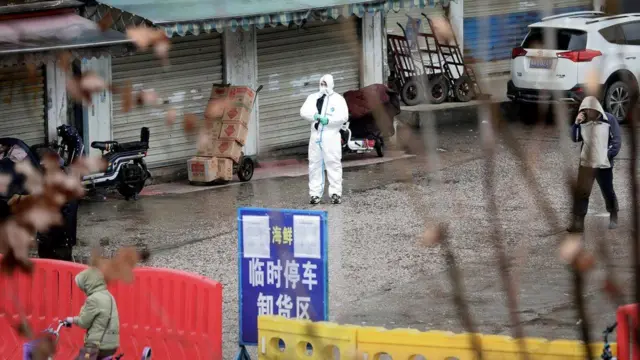
Wia dis foto come from, Reuters
Scientists say "compelling evidence" dey to show say Wuhan Huanan seafood and wildlife market dey at di centre of di Covid-19 outbreak.
Two peer-reviewed studies wey dem publish on Tuesday re-examine information from di first outbreak inside di Chinese city.
One of di studies shows say di earliest known cases dey clustered around that market.
Di odas use genetic information to track di timing of di outbreak.
E suggest say dem be two variants wey dey introduce into humans for November or early December 2019.
Togeda, di researchers say dis evidence paint one picture wey show say Sars-Cov-2 bin dey present for live mammals wey dem dey sell for Huanan market for late 2019.
Dem say e dey transmitted into pipo wey dey work or shop there in two separate "spillover events", where human contract di virus from animal.
One of di researchers wey dey involve, na virologist Prof David Robertson from di University of Glasgow, E tell BBC News say e dey hope say di studies go "correct di false record wey say di virus come from one lab."



End of Di one wey oda users dey read well well
Pandemic epicentre
Two years of scientific effort to understand di virus wey dey cause Covid-19 don provide dis researchers with more informed perspective.
Dis don enable dem to address one difficult area for di earliest patient data: dat out of hundreds of pipo wey dey hospitalised with Covid-19 inside Wuhan, only about 50 get direct, traceable link to di market.
"Dis dey really suprising that dem no fit link most cases to di market," Prof Robertson tok.
"But knowing wetin we know about di virus now, na exactly wetin we suppose expect - because many pipo only get ver mild sickness, so dem go don comot from di di community transmitting di virus to odas and di serious cases go dey hard to link to each oda."
Dis Covid-19 case-mapping research find out say large percentage of early patients - with no known connection to di market, meaning dey neither work nor shop there - but turn out to live near there.
Dis supports di idea say di market na di epicentre of di epidemic, dis na according to Prof Michael Worobey wey be lead author and biologist from di University of Arizona. Sellers dey infected first and setting off a "chain of infections among community members for di surrounding area".
"For a city wey cover more than 3,000 sq miles (7,770 sq km), di area with di highest probability of containing di home of someone wey get one of di earliest Covid-19 cases for di world na one area of few city blocks, with di Huanan market smack dab inside am," Prof Worobey tok.
Dat study also zoom in on di market itsef. Di scientists create one map of di samples - swabs of fluid from drains and on market stalls - wey test positive for di virus.
"Most of di positive samples cluster around di south-western side of di market," Prof Robertson explain. "
And dat na di location where we report say dem dey sell species like raccoon dogs.
"So we get confirmation of animals we now know say dey susceptible [to Sars-Cov-2, di virus wey dey cause Covid-19] wey dem dey sell for ther for late 2019."
Di lab leak theory
Ova di last two years, di search for di origin of di deadly pandemic turn from one scientific investigation into one toxic political row.
One of di subjects of one serious international blame game - primarily between politicians for di US and China - na one theory wey say di virus fit don leak from one Wuhan laboratory, di Wuhan Institute of Virology.
But dat hypothesis "no fit explain di data," Prof Stuart Neil from Kings College tok.
"We now dey as sure as we fit be, based on di small-small evidence we get, say dis na spillover event wey happen for di market."
Crowded, live animal markets, many scientists agree, provide ideal transmission hotspot for new diseases to "spill over" from animals.
And in the 18 months up to the beginning of the pandemic, a separate study showed that nearly 50,000 animals - of 38 different species - were sold at markets in Wuhan.
Prof Neil tok say di pandemic dey very likely to be consequence of "unhealthy, cruel and unhygienic practice wey dem don bin warn Chinese authorities about".
Di major risk to dey distracted by looking for someone inside laboratory to blame for all dis, be say "we run di risk of letting dis happen again because we don focus on di wrong problem," e add.