'I do 36 blood transfusions during pregnancy' - how pregnant woman survive blood disorder
Wia dis foto come from, Pavan Jaishwal
- Author, Lakshmi Patel
- Role, BBC News Gujarati
- Published
- Read am in 5 mins
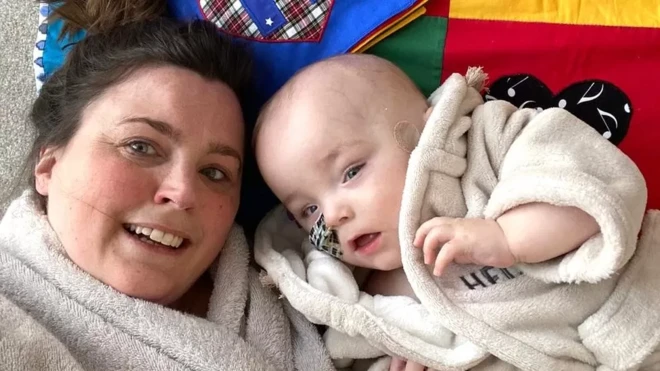
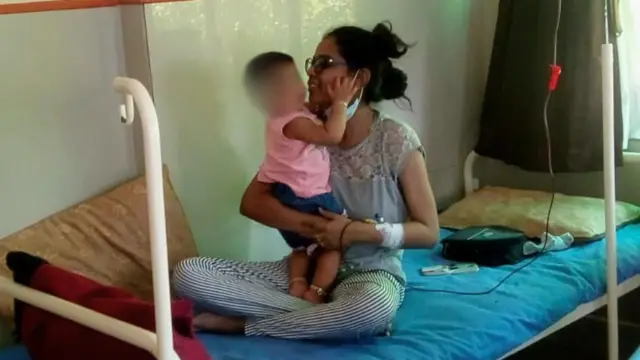
''Di first time I see my daughter face, I forget all my pregnancy pain," Kinjal Lathi, from Ahmedabad in India tok.
"I cry, and also my husband."
Until dat moment marriage and motherhood dey always feel like a distant dream for Kinjal becos she get beta thalassaemia major disease.
She need a blood transfusion evri two weeks and gatz follow a veri strict diet and medicine regime.
Added to her underlying health condition na di challenge to born a child in di first place and to carry am.
"E get risks for both mother and child wey dey involved. But I decide to realise my motherhood dream,'' Kinjal tok.
Kinjal do 36 blood transfusions during her pregnancy but eventually give birth to a healthy daughter on July 12 for 2019. She get a planned caesarean section birth wey dey designed to minimise any potential blood loss.
Even afta she give birth, di 25 year-old "gatz undergo blood transfusion," she tok. She add say at one point she do transfusion and at di same time she dey breastfeed her newborn baby
Di blood disorder no dey inherited by her daughter.
Thalassaemia dey caused by faulty genes wey dey affect di production of haemoglobin wey be di protein for red blood cells wey dey carry oxygen around di body.
Pikin fit only dey born wit thalassaemia if dem inherit dis faulty genes from both parents.
So, if both parents get di faulty gene wey dey cause beta thalassaemia major, e get a one in four chance of each child say dem go dey born wit di condition.
Parents of a child wit thalassaemia na usually carriers, meaning say dem only get one of di faulty genes.
How thalassemia dey change pregnancy?
Kinjal successful pregnancy dey extremely rare, according to paediatrician Doctor Anil Khatri, member of di Gujarat State thalassaemia task force. E treat both mother and child.
So rare, in fact, na somtin wey im neva previously encounter for di last three decades as a doctor treating more dan 100 thalassaemia patients.
Worldwide e get around 270 million pipo wey get thalassaemia, according to di Indian Ministry of Health and Family Welfare.
Na devastating disease wey dey make patients weak, get short of breath, unable to work and cut dia life expectancy.
E get several different types of thalassaemia, including Hemoglobin H disease.
Dis fit dey divided into alpha and beta thalassaemias - beta thalassaemia major (TM) na di most severe version of di disorder, India get 100,000 -150,000 children wit TM, di highest number of cases for di world.
Some 10,000-15,000 Indian babies dey born wit di disease evri year.
To give birth to a baby in di first place dey harder for pipo wit thalassaemia, gynaecologist Doctor Uma Khatri, wey treat Kinjal, explain.
Repeated blood transfusions fit affect di hypothalamus, pituitary and adrenaline glands and secretion of hormones wey dey impact fertility.
Correctly balancing iron levels through transfusions also dey challenging and patients fit also end up wit too much iron circulating for dia blood.
During pregnancy, di volume of blood for your body increase and so also di amount of iron wey you need to support yourself and supply oxygen to your baby. "Thalassaemia patients don increase iron due to repeated blood transfusions. Den normally dey take medicine to reduce dis but dem no fit give am during pregnancy as e fit affect di patient internal organs,'' Doctor Uma Khatri explain.
"Usually, we dey call pregnant women for a check-up once a month. We dey call Kinjal evri 15 days. Dis na first-time for us too," Khatri tok as she explain say sonography normally na monthly to monitor a baby growth during pregnancy.
Wia dis foto come from, Pavan Jaishwal
Why some couples seek genetic counselling?
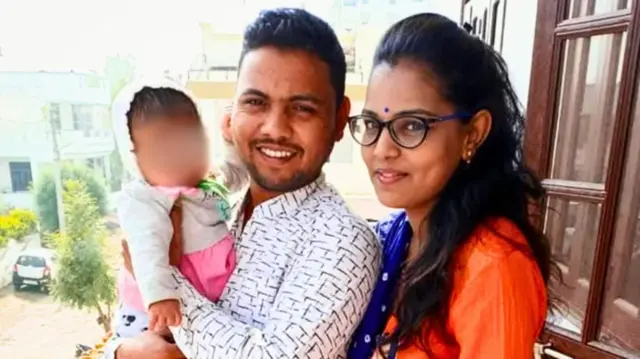
Sake of di additional strain pregnancy fit put on Kinjal body, her husband Naveen Lathia dey understandably worried.
E say e dey "afraid im go lose Kinjal for di process." But following her insistence, despite di risks, she still wan get a baby so e begin to research. E no dey able to find a single oda case of a woman wit thalassaemia major giving birth to a healthy child. "But afta I discuss am wit di doctor, I dey ready," e tok.
Afta di birth, doctors advise Kinjal to stick to home-cooked food and stay away from crowded places to reduce any risk of infection.
Dr Khatri say TM patients dey at higher risk of infection as dia vital organs like heart, kidneys, lungs fit don damage and weaken dia immune response.
Pre-marital testing of couples and pregnant women plus counselling sessions don become widespread across India wit millions wey dey take part.
Dr Anil Khatri advise Indian couples say bifor any marriage both partners gatz dey tested for genetic blood disorders. "If both get thalassaemia minor, make dem avoid marriage if possible, as e mean say e get a one in four chance of dat couple to get thalassemia major pikin," e tok.
However, doctors advise say if couple wey dey expect pikin both get thalassemia minor, a prenatal test fit take place for utero - wen di foetus still dey for di mother womb - at eight to nine weeks old.
If dat test den show say di pikin go get thalassaemia major, den some couples fit choose to do medical abortion.