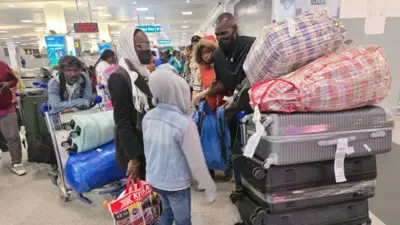
Bangladesh Prime Minister Sheikh Hasina don resign and run comot di kontri afta hundreds die inside protests
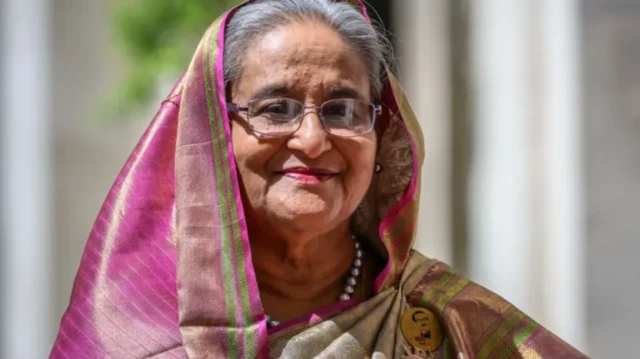
Wia dis foto come from, Getty Images
Bangladesh army chief Waker-uz-Zaman say dem go form interim government.
E tok for nationwide broadcast to di nation afta kasala from di protests for di kontri wey make Bangladesh Prime Minister Sheikh Hasina resign and run comot di kontri.
Reports say army helicopter don carry her and her sister to safety. BBC Bengali say she dey onboard a helicopter dey head to di Indian city of Agartala.
Crowd of protesters bin storm her official residence for di capital Dhaka with shout, despite a curfew and internet clampdown.
Di army chief say e go go meet with President Mohammed Shahabuddin, and e dey hope say dem go find a "solution" by di end of di day.
Di army chief say e don already speak to di kontri opposition political parties.
E no dey clear who go head di government.
And Waker-uz-Zaman also vow "justice" for all di Bangladeshi pipo - something wey protesters don dey demand for afta di deaths of hundreds of pipo over di last few weeks.
Reports say di anti-government protests for di kontri don lead to di deaths of hundreds of pipo.
At least 90 pipo die on Sunday for katakata between police and protesters, e take di death toll in recent weeks to more dan 300.
Di bloodshed na some of di worst di South Asian country don see since e come into being for1971.
Di student protest begin for July with calls to scrap civil service job quotas, but e move into demands for Hasina to quit after over two decades in power.
Hasina, don dey lead Bangladesh since 2009.
Wia dis foto come from, Reuters
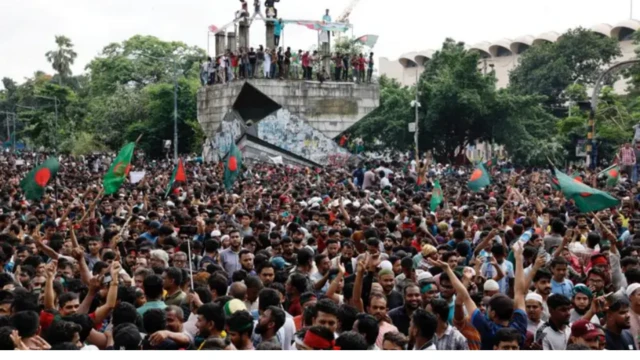
Happy crowds enter di streets for Bangladesh, to celebrate di departure of long-term Prime Minister Sheikh Hasina.
Crowds wave flags as some demonstrators dance on top one tank dem park for di capital Dhaka, AFP news agency report.
Meanwhile, Bangladesh Channel24 show footage of happy protesters wey break enter Hasina official residence for Dhaka, with some wey dey wave to di camera as dem enta di compound.
Why Hasina go run go India?
Wia dis foto come from, EPA
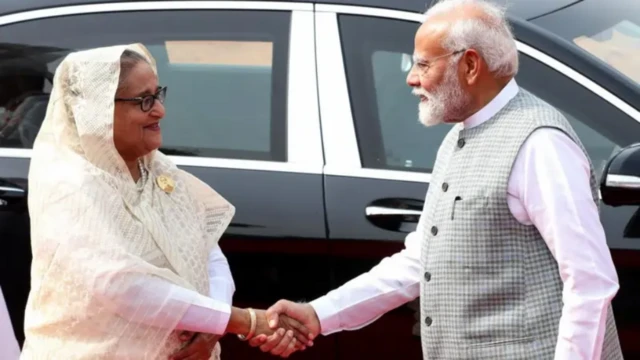
According to reports, di “safe place” Sheikh Hasina dey run go na im giant neighbour – India.
Over di years, India don be her biggest padi-padi and dis don work well for both kontries.
Bangladesh dey share borders with some north-eastern Indian states – many of wey dey deal with militancy over di years, and a friendly regime for Dhaka don help with dat palava.
During her time in power, Hasina face down anti-India militant groups for Bangladesh, she win friends for Delhi. She don also give transit rights to India to make sure goods from im mainland make am to those states.
Hasina, wey work out close ties with India ever since dem first elect am for1996, don always justify Dhaka close relationship with Delhi.
During one visit to India for 2022, she remind pipo of Bangladesh how India, im government, pipo and armed forces don help di kontri during di independence war for 1971.
But her closeness to Delhi – and India backing of her - don dey criticised by di opposition parties and activists wey say India suppose dey back di pipo of Bangladesh and not one particular party.
Why di Bangladesh Protest happun in di first place?
Di protests bin start last month wen students enta street bicos of one quota system for one third of civil service jobs.
Di quota na to reserve one third of di civil servant jobs for di family members of di pipo wey fight for di Bangladesh independence war against Pakistan for 1971.
Goment ruling don scale back most of di quota but di students bin still tanda dey protest. Dia new demands na for justice of di at least 90 pipo wey don die for dis protests.
Dem bin also call for di prime minister to step down.
Bangladeshi tori pipo report say most of di pipo wey die for di protests na police allegedly shoot dem.
Di goment tok say di police open fire in self defence and to protect state property.
How Sheikh Hasina come to power?
Born to one Muslim family for East Bengal for 1947, Ms Hasina bin get politics for her blood.
Her papa na di nationalist leader Sheikh Mujibur Rahman, Bangladesh "Father of di Nation" wey bin lead di kontri independence from Pakistan for 1971 and become dia first president.
Dat time, Ms Hasina already don establish one reputation as student leader for Dhaka University.
Dem bin assassinate her papa wit most of im family members for one military coup for 1975. Only Ms Hasina and her younger sister survive as dem bin travel abroad dat time.
Afta she live for exile for India, Ms Hasina return to Bangladesh for 1981 and become di leader of di political party wey her papa belong to, di Awami League.
She bin join hands wit oda political parties to hold pro-democracy street protests during di military rule of General Hussain Muhammed Ershad. Na di popular uprising make Ms Hasina quickly become national icon.
She first gbab power through election for 1996. She bin earn credit sake of say she sign one water-sharing deal wit India and one peace deal wit tribal insurgents for di south-east of di kontri.
But same time, her goment dey criticised sake of plenti alleged corrupt business deals and say she dey too submissive to India.
She later lost to her former ally wey become nemesis, Begum Khaleda Zia of di Bangladesh Nationalist Party (BNP), for 2001.
As heirs to political dynasties, both women don dominate Bangladesh politics for more dan three decades and dey known as di "battling Begums". Begum na Muslim woman of high rank.
Observers say say dia bitter rivalry don result to bus bombs, disappearances and extrajudicial killings become regular tins.
Ms Hasina later come back to power for 2009 for polls under one caretaker goment.
She be political survivor, wey bin endure plenti arrests while she dey opposition as well as several assassination attempts, including one for 2004 wey damage her hearing. She don also survive efforts to force her into exile and plenti court cases wia she bin chop accuse of corruption.
Wetin she don achieve?
Bangladesh under Ms Hasina present one contrasting foto. Di Muslim-majority nation, wey once be one of di world poorest, don achieve ogbonge economic success under her leadership since 2009.
E now be one of di fastest-growing economies for di region, e even pass im giant neighbour India.
Im per capita income don triple inside di last decade and di World Bank estimate say more dan 25 million pipo don dey lifted out of poverty inside di last 20 years.
Plenti of dis growth dey fuelled by di garment industry, wey account for di majority of total exports from Bangladesh and don expand rapidly for recent decades, dey supply markets for Europe, North America and Asia.
Wit use of di kontri own funds, loans and development assistance, Ms Hasina goment don undertake big-big infrastructure projects, including di flagship $2.9bn Padma bridge across di Ganges.
Wetin be di controversy wey surround her?
Di latest protests na di most serious challenge Ms Hasina don ever face since she gbab office, and follow one highly controversial election wia her party dey re-elected for di fourth straight parliamentary term.
For middle of increasing calls say make she resign, she no gree. She bin condemn di agitators as “terrorists” and appeal for support to "suppress dis terrorists wit one firm hand".
Di latest unrest for Dhaka and elsewhere bin start wit demand to cancel quotas for civil service jobs but turn into one wider anti-goment movement.
For di wake of di pandemic, Bangladesh don dey struggle wit cost of living wey dey increase. Inflation don skyrocket, dia foreign exchange reserves don drop wella, and dia foreign debt don double since 2016.
Critics don blame dis on Ms Hasina goment mismanagement, and say Bangladesh previous economic success only help dose wey dey close to Ms Hasina Awami League sake of endemic corruption.
Dem also say di kontri progress don come wit di cost of democracy and human rights, and allege say Ms Hasina rule don dey marked wi repressive authoritarian measures against her political opponents, detractors and di tori pipo
Di goment and Ms Hasina don deny dat kai allegations.
But for recent months, many senior leaders from di BNP dey arrested, along wit thousands of supporters following anti-government protests – one ogbonge turnaround for one leader wey once fight for multi-party democracy.
Rights groups don also express worry about hundreds of cases of alleged enforced disappearances and extra-judicial killings by security forces since 2009.
Ms Hasina goment flatly deny claims say e dey behind dose kain abuses - but e also seriously restrict visits to foreign journalists wey wan investigate dat kain allegations.