Why women dey less likely to ask questions for public?

Wia dis foto come from, Getty Images
- Author, By Claudia Hammond
- Role, BBC Future
- Published
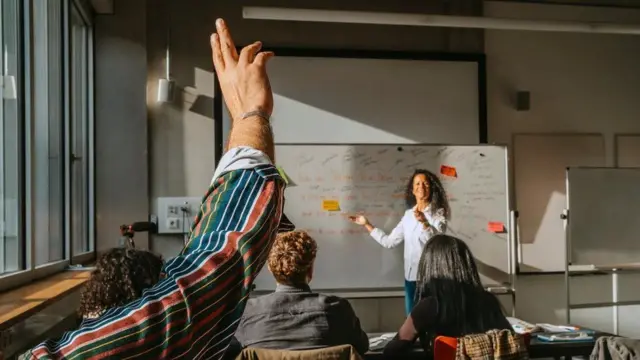
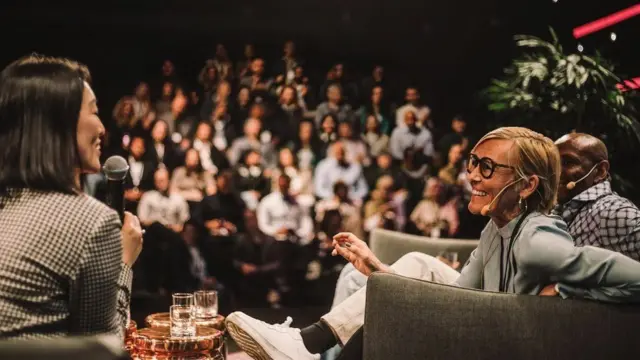
Over di years I don present dozens of radio shows and chaired hundreds of public events for front of live audiences. Di questions and answer for di end na always important part of di session and so I wan make evri one feel comfortable enough to ask dia burning question. But however as I dey try to make pipo feel relaxed, as di hands dey go up, men wey ready to ask questions dey plenty pass di women and many times, doz first hands all belong to men.
E dey possible of course say women get fewer questions wey dem wan ask, wey dey fair enough. But countless times, for di queue for di ladies afterwards, women from di audience bin tell me di question wey dem bin wan ask bifor, but dem no ask. Invariably na veri excellent question.
Data no be di plural of anecdote, but years of diz experiences don prompt me to look at di statistics. Most of di research ontop dis topic na by observing audiences for academic conferences rather dan events wey dey open to di general public, but e still dey instructive. Di evidence suggest say my experience no dey abnormal. Na di norm.
For example one study by Shoshana Jarvis from University of California, Berkeley, wey dem publish for 2022, observe who dey ask questions for conference wey include evri one from biologists to astrophysicists and economists. Dis na one of doz conferences wia if you wan ask question you gatz leave your seat and stand for queue for front of microphone while evri one else go dey watch you. Of di delegates, 63% na men, so you fit expect 63% of di questions to come from men, but in fact men ask 78% of di questions.
Study show women dey less likely to ask question
Di same happun wen dem observe 250 academic departmental seminars for 10 kontris for one study wey Alecia Carter wey currently dey University College London bin lead. She find say women dey two-and-a-half times less likely dan men to ask question despite di fact say di ratios of men to women present dey on average and equal.
Na true say for diz studies di observers only look at di actual questions wey dem ask, no be who get dia hands up in di hope of asking di question, so e also get di possibility say di moderators choose to take di questions from men. But di repeated experience of men asking more questions don lead some for academia to dub dem "question-and-answer" sessions.
Wia dis foto come from, Getty Images
So wetin dey put some women off?
E be like say no be for di lack of questions to ask. Alecia Carter analyse survey responses from 600 academics from 20 kontris. E dey interesting to see say both men and women say dem sometimes no volunteer question, even though dem get one for mind. But women dey more likely to tok say di reason dem dey hold back na sake of say dem no fit work up di nerve to ask am. Dem dey worry say dem misunderstand di context, say di speaker dey too eminent or intimidating, or say dem feel say dem no dey clever enough to ask good question.



End of Di one wey oda users dey read well well
Nobodi wan be di pesin wey go ask question, only to hear in front of three hundred pipo say dem miss di point. But dis study go suggest dis possibility dey more likely to discourage women.
Men wey be times two of women tok say dem dey motivated to ask question becos dem feel say dem spot mistake
For di US, Jarvis find say women tend to tok say dem feel too anxious to ask a question, while men tok say if dem no ask question dem dey hold back so dem go fit give odas space, and dis kain tin suggest say some men dey take active steps not to dominate di question and answer.
Men wey be times two of women tok say dem dey motivated to ask question becos dem feel say dem spot mistake. Dis fit sound mean, but diz na academic events wia speakers responding to criticism na all part of di process.
Research don also look at di nature of di questions men and women ask. E dey sometimes claim say men dey more likely to ask longer questions or attempt to ask more dan one question at a time (I no believe how often I dey tok say we get time for one last quick question, di pesin wey I choose go start by saying dem get three questions to ask).
But men no be di only offenders. Wen Gillian Sandstrom from di University of Sussex analyse more dan 900 questions wey dem ask for 160 live conferences or public festivals, for one paper wey dey await publication, she find no difference based on gender. Wen women bin ask question, e just be like how man question dey long and get many parts.
Wen oda characteristics of questions dey compared, such as beginning by saying hello to di speaker, complimenting dem, or introducing demsef, di only variation between men and women na say women dey more likely to greet di speaker.
Wia dis foto come from, Getty Images
Getting noticed
You fit argue say since time no dey for evri one to ask a question anyway, den if some pipo no volunteer, e no really matter. Di problem na say half di audience dey more reluctant to join in, den you fit no get as diverse and interesting range of questions as you want. So far research don tend to focus on men and women, but e go dey interesting to look at weda oda under-represented or marginalised groups also hold back from di asking wey dem go like answer to.
For work setting, to dey ask questions fit get you noticed and if you wan get di best jobs, den visibility mata. For a study wey dem conduct at a conference for France, researcher Junhanlu Zhang for di Insitut Pasteur find say pipo dey more likely to remember di names of serial questioners. Of course, dat no mean say dia names dey necessarily remembered positively. Maybe dem dey remembered as di annoying one wey dey constantly ask questions!
Di oda problem wit fewer women asking questions overall na women for di start of dia academic careers get fewer visible role models of oda women showing dem say dem no need to dey afraid to ask questions.

Wia dis foto come from, Getty Images
Solutions
So wetin dem fit do to enable more women to ask questions if dem want to?
At first sight di pandemic fit be like say e don show us one way forward. Wen events dey forced to go online, e bin get new opportunity to ask questions wey no warrant say make you tok am loud, but instead you go type dem for chat box on di screen, sometimes e fit be anonymously. Situation wey you go raise up your hand and dey uncomfortable as you dey hope or fear before dem pick you, no situation where you go dey worrry weda di mic dey work or weda you go make mistake wit your questions while evri one dey watch. And more and more in pesin events dey use apps wia you go send in your question using your phone, and di chair go receive a list of questions on a tablet.
Even better, if your question don already dey covered by di speaker earlier while your mind dey elsewhere (always my fear as audience member) den di chair, wey dia job na to pay attention, no go put di question to di panel. Dem go ignore am. So surely dat fit remove some of di anxiety and for online events women go ask many questions like men? Alas, no be according to Zhang study.
Wia dis foto come from, Getty Images
If man ask di first question den fewer women come forward wit questions afta
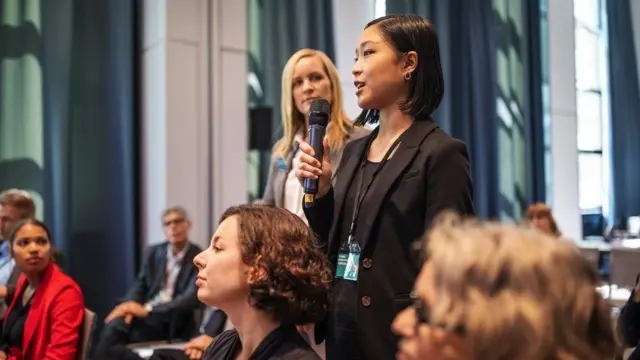
Zhang record di number of questions wey women and men dey ask for one French conference on bioinformatics wey dem hold online for June 2021. Dis na field wia until recently di majority of delegates na men, but wen di conference go online, na almost equal number of men and women dey attend. Yet still men ask 115 questions, while women ask 57. Seniority bin make a difference too, as men wey dey over di age of 35 ask more dan times nine of di questions wey younger women and gender minorities ask.
Sandstrom believe say moderators get part to play in making evri one feel comfortable enough to ask a question. For Zhang study, di gender of di chairperson no get impact. But e fit get strategies wey di moderator fit use to make a difference.
E find say if man ask di first question den fewer women come forward wit questions after. E be like say di tone don dey set for di rest of di session. So maybe di answer na to choose a woman to ask di first question and ideally someone who no dey too senior. Of course, dat go only work if e get more junior woman wey raise her hand up. Wen no woman wan ask question, I dey tell dem on occasion about di research for dis field and openly ask if any woman wey go like ask question to go first.

Wia dis foto come from, Getty Images
Take preparation break
Di same research reveal alternative option - to get short break between di main speaker or panel and di start of di audience question and answer. Dis na cunning plan becos e give pipo di chance to try out dia questions on dia neighbours for di audience. I don try dis and you get far more questions sake of say pipo get di chance to check say di question no dey stupid or dem neva deal wit am wen your mind no dey dia.
Women also dey ask more questions for longer sessions, so maybe if one argument dey for allowing more time for audience questions. Although, I realise say no be somtin wey evri one go applaud.
Currently, we gatz rely on research wey dem conduct for academic situations, but e go dey interesting to know weda di same dey happun for public meetings too. Di advantage of diz second strategies be say dem no only help women but anyone wey fit feel marginalised and less likely to speak up.