Fotos of 'blood moon' wey make stargazers around di world wonder as lunar eclipse happun
Early-rising stargazers for UK wake up to di lunar eclipse just before day break on Friday.
Di eclipse be partialone for most of di UK, with di Earth shadow only covering part of di Moon.
But some western areas for UK, as well as di Americas and some Pacific islands, see a total lunar eclipse. Na di first since May 2022, wen di Moon turn completely red.
Di ogbonge "blood Moon" happun as di Moon move enta Earth shadow, as e gradually go dark before turning to red.
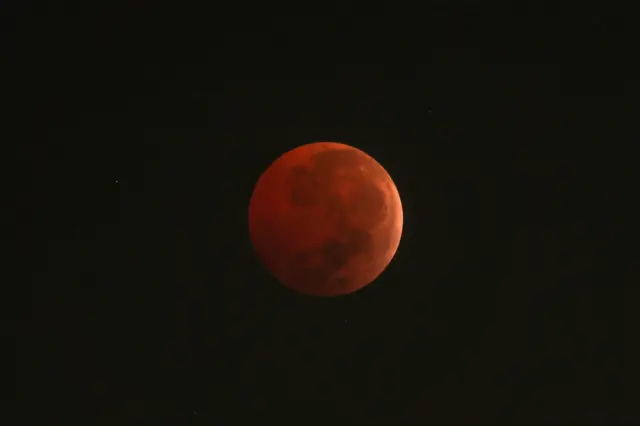
Wia dis foto come from, Reuters
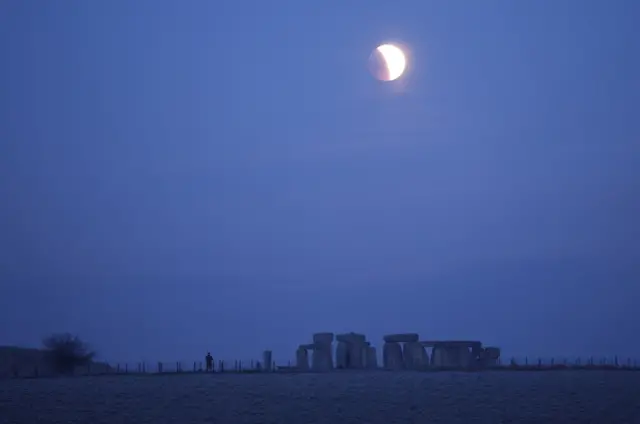
Wia dis foto come from, Reuters
Stargazers around di world catch di first sign of di lunar event, wey begin at 05:09 GMT, on one livestream wey LA Griffith Observatory do.
Lunar eclipse dey happen wen di Earth move directly between di Sun and di Moon, blocking sunlight and casting shadow on di Moon surface.
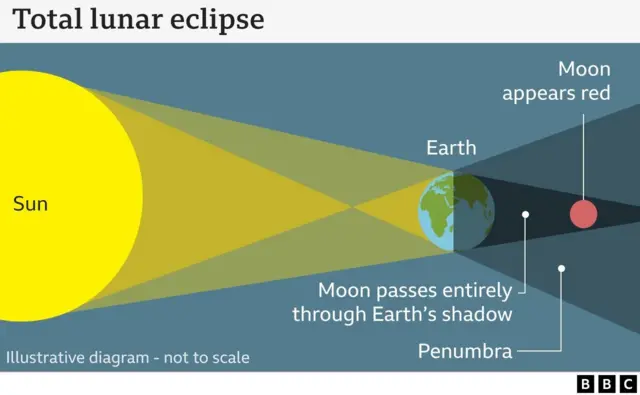
Lunar eclipse dey happen wen di Moon pass through di outer region of Earth shadow, wey dem call di penumbra.
A total lunar eclipse require di Earth to block di light from di Sun hitting di Moon - meaning say di three celestial objects need to dey in alignment.
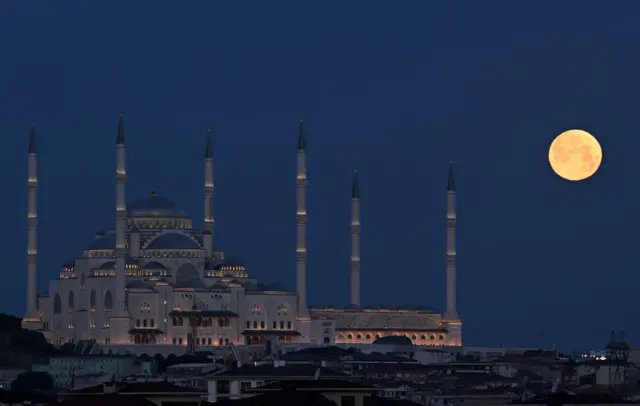
Wia dis foto come from, Getty Images
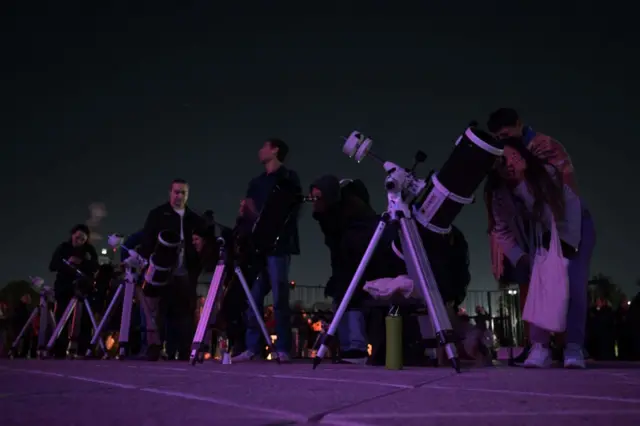
Wia dis foto come from, AFP
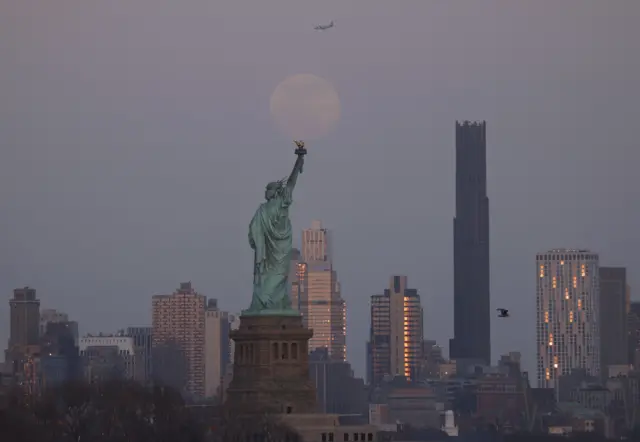
Wia dis foto come from, Shutterstock
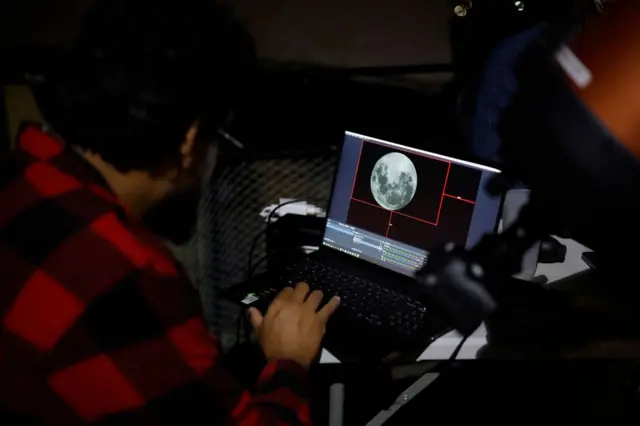
Wia dis foto come from, AFP
Pipo sometimes dey call a lunar eclipse "blood Moon" because of di way di Moon fit turn deep, copper red during di eclipse.
Dis dey happen sake of a process known as "Rayleigh scattering", wey dey also make di sky blue and di sunsets red.
Wen sunlight pass through di Earth atmosphere to reach di Moon, e dey cause di Moon to appear a different colour, na so astronomer Jake Foster, for di Royal Observatory Greenwich explain.
Wen light dey blocked by di small particles for Earth atmosphere, e dey scatter more of di shorter blue wavelengths, leaving longer red wavelengths to remain visible.
Mr Foster say: "Red light dey mostly unaffected by di gas of di atmosphere, so e dey travel all di way through dem and out di other side wia e fit shine on di Moon, making am to appear red."
Di next total lunar eclipse dey due to take place for di beginning of September - but go show well-well over central and east Asia, with only some parts of di UK wey go see di total eclipse effect.