'I dey fear elephants wan kill me'
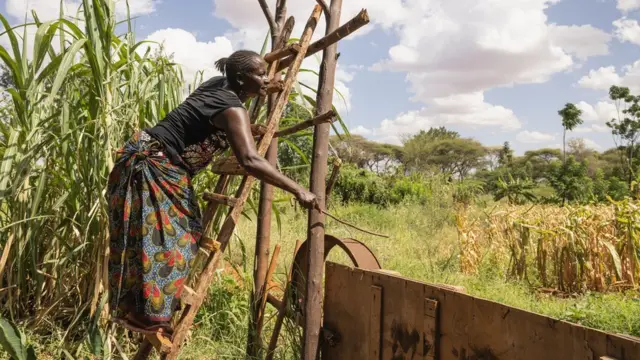
Wia dis foto come from, Esther Mbabazi/BRC
For series of letters from African journalists, Ismail Einashe reflect on how Kenya changing climate dey bring wahala between animals and humans.
For hot afternoon for one small Kenyan village of Njoro Mata, one farmer dey desperately inspect di damage wey elephants don cause for her smallholding.
Kenya famous giants dey invade Monicah Muthike Moki land for southern Kenya, dey ova look Mount Kilimanjaro.
DI 48-year-old na single mother of three wey livelihood depend on her hard work to grow cassava, maize, bananas, sugarcane and mangos.
Her harvest bin dey increase afta she begin try new farming methods Kenya Red Cross Society bin introduce, but in recent months, elephants dey destroy her precious crops.
Madam Moki say elephants dey come every day from nearby Tsavo national park, one of di world largest game sanctuaries, wey dey home to about 15,000 of di mammals.
According to her, herders cut di fence to access food for dia livestock for di park but elephants too dey cross di oda way.
Wit many years without rains, di pastoralists dey desperate to feed dia animals, while at di same time di elephants don begin dey roam further up field to find food.


End of Di one wey oda users dey read well well
Di animals new behaviour patterns dey caused by Kenya climate crisis and drought, wey now dey cause wahala for pipo and wildlife.
For Madam Moki, di way di elephant dey raid her crop-dey "very painful" to see.
She say di elephants dey "bold" and "dem no dey fear". Dem fit come any time but usually from around night, and dem dey raid in herds, as pairs or sometimes lone elephants wit dia pikin dem.
Di elephants recently eat her entire maize, banana and cassava crops.
Wia dis foto come from, Esther Mbabazi/BRC
Currently, she suppose to dey harvest five to six 90kg bags of maize wey she go sell for di local market for di nearby town of Taveta for 6,500 Kenyan shillings ($48; £38).
Without her crops, Madam Moki no go fit feed her family or sell her produce to pay di school fees for her 10-year-old daughter.
Farmers for her village also dey use di bags of maize dey harvest as security deposit or payment of school fees for dia children to attend di local primary school. In turn, di schools dey use maize to serve children meals.
Now children as young as four years old dey forced to walk up to 4km (2.5 miles) home from school for lunch before dem go walk for di same distance for di opposite direction for afternoon.
Di largest land animals for di world fit chop 150kg of food per day, dem dey spend most of dia day just dey chop. Madam Moki explain say most times dem no dey leave anything.
Elephants also dey drink 100 litres of water a day, so most times dem dey drink di small water wey di local authorities dey give to take farm.
Homemade alarm system
Na vicious cycle wey she say dey worse more-more.
Madam Moki dey try to pursue di elephants wit bright lights and loud noise and don develop oda techniques to stop dem from raiding her crops.
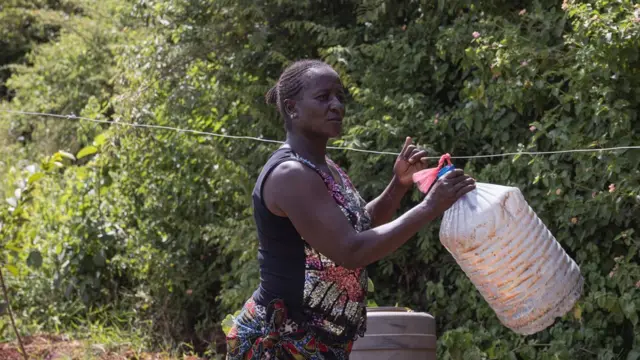
She dey use old water and oil bottles around di edge of di farm wey she connect wit one wire so if di elephants hit di wires, dem go shout and she fit get up to respond.
"I climb one ladder, flash my light towards dem, and make noise because you no fit approach di elephants," di farmer tok.
Wia dis foto come from, Esther Mbabazi/BRC
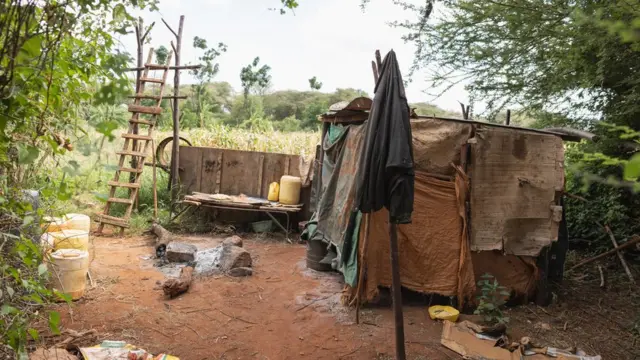
Every night she dey sleep away from her family alone for di farm, wit fear dey wait di rustling of jerrycans or di barking of dogs.
Sadly, all her inventive measures no drive di elephants, but at least e dey alert her to dia presence.
Elephants fit dey very dangerous.
"If elephant hurt, injures or kills me, my family go suffer," Madam Moki tok.
'I run pass di elephant'
Her neighbour Jonathan Mulinge, wey be farmer and father to four young children, say im recently get near-death experience wit one elephant.
Im say im try to pursue one from destroying im crops, but e turn around and attack am.
"Di only tin wey save my life na say I bin fit run pass di elephant and run enta my house," Im tok.
Oga Mulinge say dis na "one conflict between us, humans and di elephant", wey farmers like me dey pay di heaviest price.
"You plant your crops so you fit benefit from am, and den di elephants come and destroy am, and di farmers dey back to zero."
Di community feel powerless and dem dey blame di Kenya Wildlife Service (KWS) for not doing enough to help dem. Di KWS no respond to BBC request for comment.
Madam Moki say di situation dey worse, and dia concerns no dey addressed.
Joram Oranga of di Kenya Red Cross Society say di harsh conditions, lack of rainfall and extreme weather patterns wey climate change cause dey drive di conflict between humans and elephants sake of lack of water and land resources, wey e claim say go only get "worse" for future.
For Madam Moki, dis conflict dey affect her mental health, togeda wit her extreme lack of sleep.
She dey suffer from anxiety and panic attacks and fears for her children future if elephant kills her.
"I dey fear scared because if I die," she tok, "who go look afta dem?"