London honour di African wey fight against British rule
Wia dis foto come from, Getty Images
Dem don unveil one new statue for central London historical Trafalgar Square.
But dis time, no be di monument of one of UK war heroes or kings.
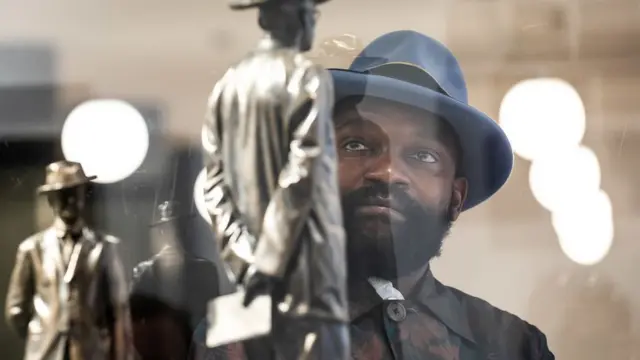
Instead na di very big statue of Malawian Baptist preacher and pan-Africanist John Chilembwe, wey fight against British colonial rule.
Di sculpture, wey di name na Antelope, go dey for di square newest Fourth Plinth – wey dem dey regard as one of di world most famous public art commissions.
Chilembwe five-metre statue go mark di first African statue for Trafalgar Square.
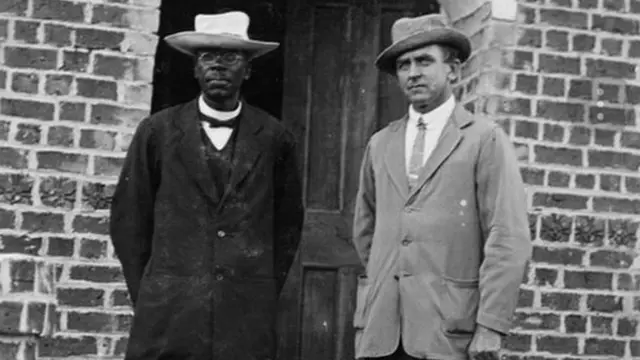
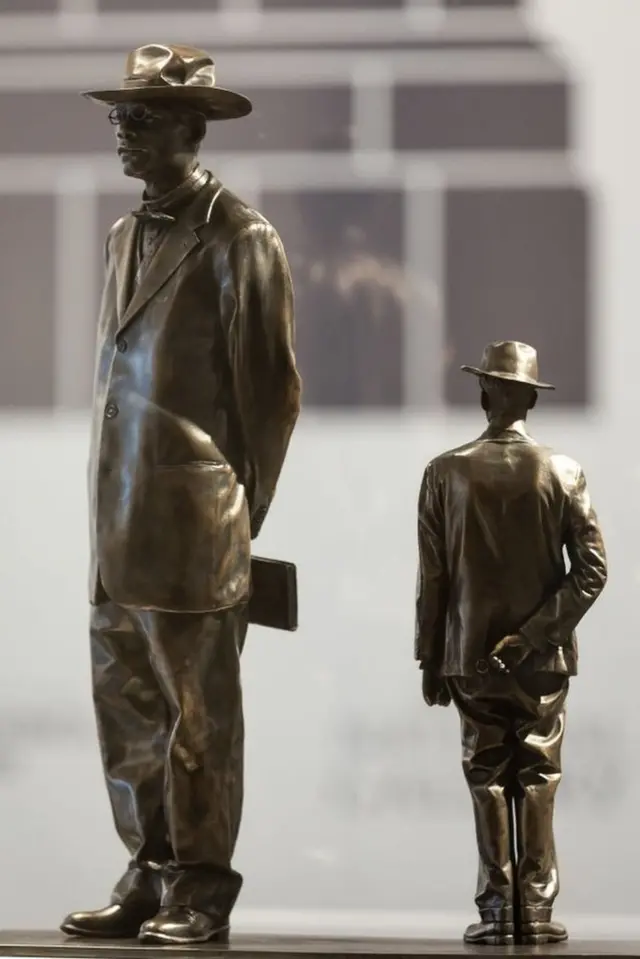
E dey cast in bronze, Antelope restage one popular foto dem take for 1914 of Chilembwe as e stand next to British missionary John Chorley, outside im church for Mbombwe village for southern Malawi.
For di foto, e show Chilembwe wey wear one wide hat, despite one unwritten rule wey say make Africans no wear hats in front of white pipo.
While di two stand togeda for di foto, wen e reach di statue, di sculptor bin add one twist wey make di image of di Malawian enta pipo eye.


End of Di one wey oda users dey read well well
Malawian-born artist Samson Kambalu design di piece to make Chilembwe big well-well pass Chorley. Im statue stand at five metres and e high pass dat of Chorley.
Who be Chilembwe wey London honour
Wia dis foto come from, Wikimedia Commons
Although di monument take centre stage for London, Chilembwe still na unknown figure to many.
"Many pipo fit no sabi who John Chilembwe be. And dat na di whole point,'' Kambalu, wey be associate professor of fine art for di University of Oxford for England tok.
Dem sabi Chilembwe as one of di first Africans to fight against colonial injustices for di 20th Century.
E stage protest against di British for Malawi (formerly Nyasaland) for 1915.
Although di uprising no long, im actions echo across di continent and beyond.
Chilembwe dey considered to don influence several figures of black liberation, including Jamaican political activist Marcus Garvey, and John Langalibalele Dube, di founding president of wetin later become di African National Congress (ANC) for South Africa.
Dem born Chilembwe for di early 1870s, and e grow up for southern Malawi Chiradzulu District.
E be one of di four children im papa born. Im father na from di Yao pipo and im mother na from di Mang'anja community.
Growing up for Chiradzulu, Chilembwe dey heavily influenced by Scottish missionaries wey come Malawi as dem follow for di footsteps of explorer David Livingstone.
Na for hia Chilembwe bin first meet one radical missionary, Joseph Booth, wey im popular saying na "Africa for Africans".
Chilembwe become one of Booth early protégés, and di two eventually travel go US, wia e study theology for Virginia.
During im time for US, Chilembwe witness di struggles of African Americans during di reconstruction period afta di abolition of slavery.
Several years later, e comot US wit courage to tackle di colonial injustices e see for im own kontri.
As e come back Malawi, an ordained Chilembwe work to establish one mission for Chiradzulu.
He build brick church, several schools, and plant crops of cotton, tea and coffee, wit financial backing from di US.
Anti-colonial resistance
Wia dis foto come from, Getty Images
E return to see fast growing resistance against di British regime, wey come from new laws wey push Malawians comot dia land, dem also force many of dem to work on white-owned plantations unda poor conditions.
Chilembwe bin get further grievances wit di colonialists afta di outbreak of World War One, where dem carry Malawian sojas to fight against di German army for wetin now be Tanzania.
E publicize im discontent, e write letter to di only newspaper wey dey at di time. Shortly afta di letter na im e begin plan im rebellion, wey start for January 1915.
Howeva, dem quickly quench Chilembwe attempt to attack white settlers and British forces quickly raise di alarm early.
Im uprising claim only a few casualties, and di British army arrange reward for Chilembwe and im supporters.
Few days later, African sojas shoot am as e dey try cross into wetin now be Mozambique.
Although im rebellion no dey successful, historians say Chilembwe attempt create di groundwork for Africa independence movements.
Malawi become independent for 1964.
Today, Chilembwe legacy dey show for across Malawi. De name plenty roads am, while im foto show for di kontri currency, di kwacha plus di stamps.
Dem also dey celebrate John Chilembwe Day every year on 15 January.
However, historians say debate dey go on about im relevance.
"Every year on Chilembwe Day, di newspapers and online publications dey write essays to debate im legacy," Malawian historian Muti Michael Phoya tok.
"While most pipo agree say e dey very important for Malawi history, some say e stage im uprising too early," Mr Phoya add. "But Kambalu sculpture fit bring back dis mata and we fit see renewed interest for im story."
Kambalu agree say im hope say di statue "go start conversation for Britain wey still dey try to reckon wit dia colonial past.
"Di sculpture bring to light histories wey pipo don forget of di empire, and society dey look for dat recognition."