Wetin hapun for Hiroshima 80 years ago? Survivors speak of disfigurement, shame and pain
Wia dis foto come from, BBC/Hyojung Kim
- Author, Hyojung Kim
- Role, BBC Korean in Hapcheon
- Read am in 9 mins
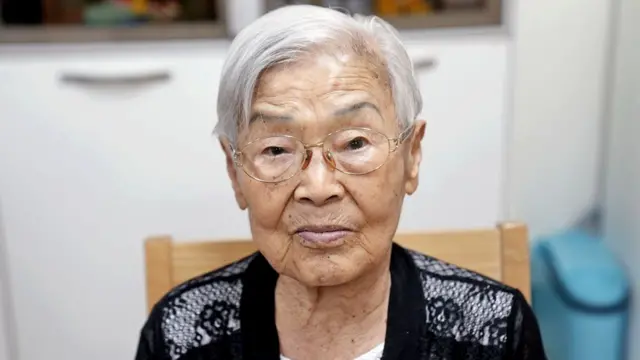
At 08:15 on August 6, 1945, Lee Jung-soon bin dey on her way to elementary school, wen nuclear bomb bin fall like stone through di skies ova Hiroshima.
Ms Lee wey be 88-year-old now wave her hands as if she dey try erase di memory.
"My father bin dey on im way to work, but suddenly e run back to wia we dey and tell us to evacuate immediately," she recall. "Dead body full di road – but I bin dey so shocked all I remember na say I dey cry. I just dey cry and cry."
Di body of victims "melt na only dia eyes bin dey visible", Ms Lee tok, as blast wey equal to 15,000 tons of TNT cover di city of 420,000 pipo. Wetin remain after na dead bodies wey scata beyond identification.
"Di atomic bomb… na terrifying weapon."
E don reach 80 years since di United States bin detonate 'Little Boy', humanity first-ever atomic bomb, ova di centre of Hiroshima, wey instantly kill some 70,000 pipo. Tens of thousands die in di coming months from radiation sickness, burns and dehydration.
Di devastation wey di bombings of Hiroshima and Nagasaki – cause na im bring about di decision to end both World War Two and Japanese imperial rule across large areas of Asia.
One fact wey pipo no too sabi na say about 20% of di immediate victims na Koreans.
Korea bin dey part of Japanese colony for 35 years wen di bomb drop.
Estimated 140,000 Koreans bin dey live for Hiroshima at di time - many pipo bin move go dia sake of forced labour mobilisation, or to survive under colonial exploitation.
Those wey survive di atom bomb, plus dia descendants, still dey live for di long shadow of dat day – dem dey deal wit disfigurement, pain, and years of fight for justice wey dem still neva solve.
Wia dis foto come from, BBC/Hyojung Kim
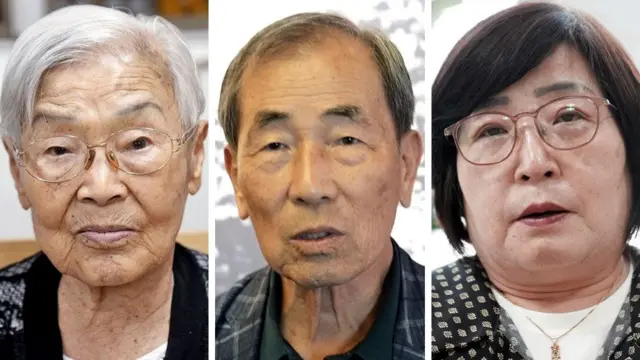
"Nobody take responsibility," Shim Jin-tae, one 83-year-old survivor tok. "Not di kontri wey drop di bomb. Not di kontri wey fail to protect us. America no eva apologise. Japan pretend like say dem no know. Korea no beta. Dem just pass di blame - and we dey left alone."
Mr Shim now dey live for Hapcheon, South Korea: one small county wey as e become home to dozens of survivors like im and Ms Lee, dem nickname am "Korea Hiroshima".
For Ms Lee, di shock of dat day neva fade – e dey inside her body as sickness. Now she dey live wit skin cancer, Parkinson disease, and angina, one condition wey poor blood flow to di heart dey cause, e dey typically manifest as chest pain.
But wetin dey painful pass na say di pain no stop wit her. Her son Ho-chang, wey dey support her, dey diagnosed wit kidney failure and e dey undergo dialysis as e dey wait for transplant.
"I believe say na sake of di radiation exposure, but who fit prove am?" Ho-chang Lee tok. "E dey hard to verify scientifically – you go need genetic testing, wey dey exhausting and expensive."
Di Ministry of Health and Welfare (MOHW) tell BBC say dem don gada genetic data between 2020 and 2024 and go continue further studies until 2029.
Dem go "consider expanding di definition of victims" to second- and- third-generation survivors only "if di results dey statistically significant", dem tok.
Wia dis foto come from, Getty Images
Di Korean angle
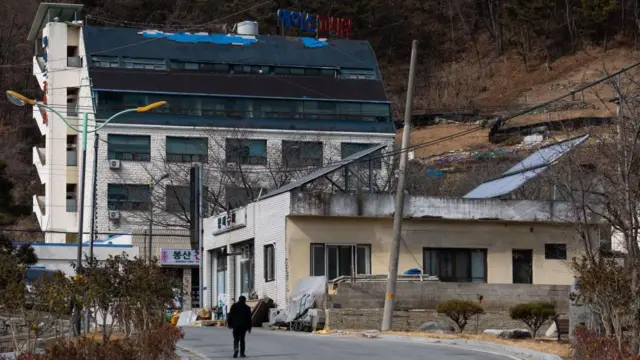
Out of di 140,000 Koreans wey bin dey live for Hiroshima at di time of di bombing, many of dem bin come from Hapcheon.
Surrounded by mountains wit little farmland, na difficult place to live. Japanese occupiers bin seize dia crops, drought destroy di land, and thousands of pipo comot di rural kontri go Japan during di war. Dem force some to join di military; dem deceive odas wit promise say "dem fit chop three square meals a day and send dia children to school."
But for Japan, Koreans na second-class citizens – dem dey often give dem di hardest, dirtiest and most dangerous jobs. Oga Shim tok say im father bin work for one factory as forced labourer, while im mother dey hammer nails into wooden ammunition crates.
After di bomb, dis distribution of labour bin turn into dangerous and often deadly work for Koreans for Hiroshima.
Wia dis foto come from, BBC/Hyojung Kim
Outcasts for house
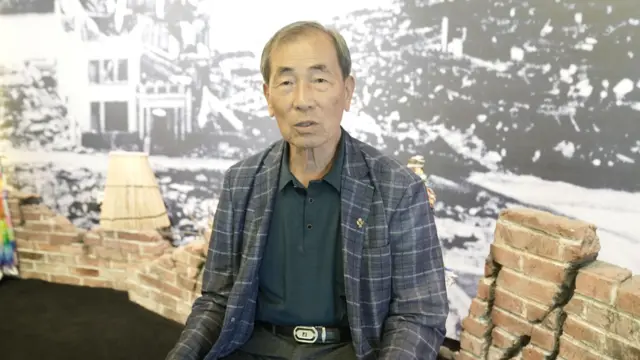
"Korean workers get to clean up body of dead pipo," Oga Shim, wey be di director of di Hapcheon branch of di Korean Atomic Bomb Victims Association, tell BBC Korean. "At first, dem dey use stretchers, but di bodies too many. Dem later come dey use dustpans to gada corpses and dey burn dem for schoolyards.
"Na mostly Koreans do dis work. Na us do most of di post-war clean-up and munitions work."
According to one study wey Gyeonggi Welfare Foundation carry out, dem force some survivors to clear di remains and recover bodies. While Japanese evacuees run go wia dia relatives dey, Koreans wey no get local ties remain for di city, exposed to di radioactive fallout – and wit limited access to medical care.
A combination of dis conditions - poor treatment, hazardous work and structural discrimination - all contribute to di extremely high death toll among Koreans.
According to di Korean Atomic Bomb Victims Association, Korean fatality rate na 57.1%, compared to di overall rate of about 33.7%.
About 70,000 Koreans bin dey exposed to di bomb. By di end of dat year, about 40,000 pipo die.
Afta di bombings, wey lead to Japan surrender and Korea subsequent liberation, about 23,000 Korean survivors bin return home. But dem no dey welcomed. Dem brand dem as disfigured or cursed, dem face discrimination even for dia homeland.
"Hapcheon already get leper colony," Oga Shim explain. "And sake of dat image, pipo tink say di bomb survivors get skin diseases too."
Those kain stigmas make survivors remain silent about dia plight, e add, "survival come bifor pride".
Ms Lee tok say she see dis "wit her own eyes".
"Dem treat pipo wey dey badly burned or extremely poor terribly," she recall. "For our village, pipo wey dia backs and faces get serious burns, wey na only dia eyes dey visible. Dem dey rejected from marriage and dem shun dem."
Wit di stigma come poverty, and hardship. Den sickness come wit no clear cause: skin diseases, heart conditions, kidney failure, cancer. Di symptoms bin dey everywia - but no-one fit explain dem.
Ova time, di focus bin shift to di second and third generations.
Survivors from second, third generations afta Hiroshima bombing suffer sicknesses
Wia dis foto come from, BBC/Hyojung Kim
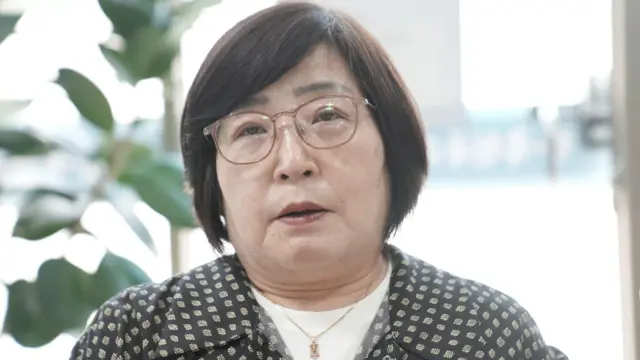
Han Jeong-sun, one second-generation survivor, dey suffer from avascular necrosis for her hips, she no fit walk without dragging herself. She born her first son wit cerebral palsy.
"My son neva take one single step for im life," she tok. "And my in-laws treat me horribly. Dem say, 'You born pikin wey be cripple and you sef dey crippled too—you come here to ruin our family?'
"Dat time na absolute hell."
For decades, even di Korean govment bin no take active interest for dia own victims, as dem treat di war wit di North and economic struggles as higher priorities.
No be until 2019 - more than 70 years afta di bombing – wey MOHW release dia first fact-finding report. Dat survey mostly bin dey based on questionnaires.
In response to BBC inquiries, di ministry explain say prior to 2019, "dem no get legal basis for funding or official investigations".
But two separate studies don discover say second-generation victims bin dey more vulnerable to illness. One study, from 2005, show say second-generation victims bin dey far more likely to suffer depression, heart disease and anaemia pass di general population, while anoda study from 2013 discover say dia disability registration rate nearly double di national average.
Against dis backdrop, Ms Han dey shocked say authorities continue to dey ask for proof to recognise her and her son as victims of Hiroshima.
"My sickness na di proof. My son disability na di proof. Dis pain dey pass from generations, and e dey visible," she tok. "But dem no go see am. So, wetin we suppose do - just die without ever being acknowledged?"
Peace without apology
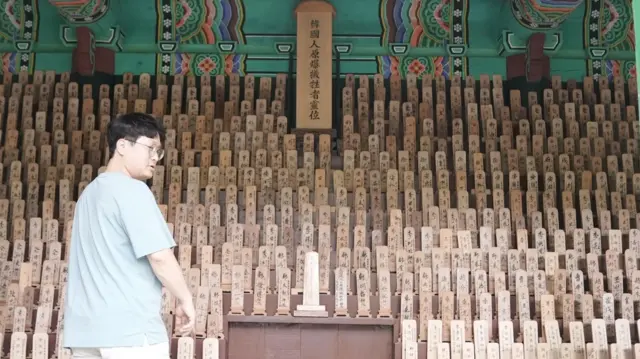
Na just last month, on 12 July, Hiroshima officials visit Hapcheon for di first time to lay flowers for one memorial. While former PM Yukio Hatoyama plus oda private figures bin don come bifor, dis na di first official visit by current Japanese officials.
"Now for 2025 Japan dem dey tok about peace. But peace without apology dey meaningless," Junko Ichiba, one long-time Japanese peace activist wey spend most of her life dey advocate for Korean Hiroshima victims tok
She say di visiting officials no mention or tok sorry for how Japan treat Korean pipo bifor and during World War Two.
Wia dis foto come from, BBC/Hyojung Kim
Ms Ichiba note say Japanese textbooks still omit di history of Korea colonial past - as well as dia atomic bomb victims – she say "dis invisibility only deepen di injustice".
Dis one add to wetin many pipo see as a broader lack of accountability for Japan colonial legacy.
Heo Jeong-gu, director of di Red Cross support division, say, "Dem must address dis issues while survivors still dey alive. For di second and third generations, we must gada evidence and testimonies bifor e dey too late."
For survivors like Oga Shim, e no just be about being compensated – na about being acknowledged.
"Memory mata more dan compensation," e tok. "Our bodies remember wetin we go through… If we forget, e go happun again. And someday, nobody go dey left to tell di story."