How Iran supporters and oda countries react as US bomb dia nuclear facilities
Wia dis foto come from, Reuters/EPA
- Author, Thomas Mackintosh
- Role, BBC News
- Author, Nadine Yousif
- Role, BBC News
- Published
- Read am in 10 mins
President Donald Trump say di US don carry out a "successful" bombing attack on three nuclear sites in Iran and say dem destroy dem.
Israel say dem follow for di "full co-ordination" wit di US to plan di strikes. Iranian officials don confam say dia facilities come under attack but deny any major blow.
Di strikes mark a major rise in di ongoing war between Iran and Israel.
Dis story touch on wetin we know and how di world react, wia govments stand on di strikes and who dey support Israel - and, by extension, di US action - and who dey likely criticise di actions.
How Tehran allies and oda kontris react to di US bomb on Iran nuclear facilitiies?
Wia dis foto come from, Getty Images
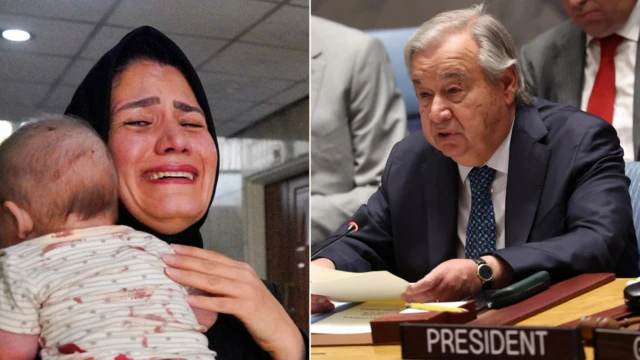
Di United Nations Secretary-General Antonio Guterres on X tok say dem dey "gravely alarmed by di use of force by di United States against Iran". Guterres refer to "di dangerous escalation for di region wey don dey already on di edge – and direct threat to international peace and security".
"Risk dey say dis conflict fit get out of control fast fast – wit catastrophic consequences for civilians, di region, and di world," e add.
Iraq don openly back Iran afta Israeli strikes on 13 June and, during one UN Security Council meeting, condemn Israel for dia actions.
Turkish foreign ministry don tok say US strikes on Iranian nuclear facilities fit cause risk of wider conflict.
"Di current developments fit increase di regional conflict into global one. We no want to see dis catastrophic scenario materialise," di ministry tok.
Meanwhile, President Recep Tayyip Erdoğan on 13 June tok say Iran dey defend dia sef against Israel illegal and "mad" assaults.
Pakistan, di only Muslim wey get nuclear weapons, tok say di US attacks "violate all norms of international law".
King of Jordan Abdullah II don warn di European Parliament say Israel "attacks" on Iran don threaten to dangerously escalate tensions in di "region and beyond".
Saudi Arabia - one of Washington most important allies in di Middle East and host to some of US military bases in di region condemn US actions and call for restraints "following wit great concern developments in di sisterly Islamic Republic of Iran, we dey call for restraint."
While Saudi Arabia and Iran be long time arch-rivals, dem sign one Chinese-brokered deal to restore ties for March 2023.
Oman wey be mediator in di nuclear tok between di US and Iran tok say e dey fear di "repercussions" afta di US strikes and issue "denunciation and condemnation" of events.
European Union top diplomat Kaja Kallas call for de-escalation and return to negotiations.
UK Prime Minister Keir Starmer support EU position and call for restraint while expressing im concerns ovabIran nuclear capabilities. E call on Iran make dem "return to di negotiating table and reach diplomatic solution to end dis crisis".
French President Emanuel Macron office tok say e don follow di leaders of Saudi Arabia and Oman tok on Sunday.
Canadian foreign minister, Anita Anand, tok say US-Iran negotiations wey don take place represent di best path to achieving "lasting and peaceful resolution" to Iran nuclear programme.
Russia express dia support for Iran while dem criticise Israel actions. E tok say di US attacks indicate di dangerous escalation fit start.
China don issue warning to di US about potentially giving Israel direct military assistance.
India stop from officially condemning Israel and condemning di US for dia actions, instead dem continue to support di effort to balance security cooperation wit Israel and broader regional stability.
Japan prime minister, Shigeru Ishiba, call di attacks "totally intolerable" and "extremely regrettable".
Afta di US strikes, di prime minister call for rapid de-escalation of di situation without expressing explicit support for Washington. However, e emphasise say dem must block Iran nuclear ambition.
North Korea wey dey develop dia own nuclear warheads earlier denounce di Israeli attacks and call dem "hideous act" of aggression, describing Israel as "cancer-like entity" for peace in di Middle East.
Some African kontris wey be signatories to one statement by di foreign ministers of 21 Arab and Islamic nations don condemn Israel earlier military "aggression" against Iran. Algeria, Chad, Comoros, Djibouti, Egypt, Gambia, Mauritania, Somalia, and Sudan sanction di statement.
Latin America and Carribean kontris dondrum in support for both sides
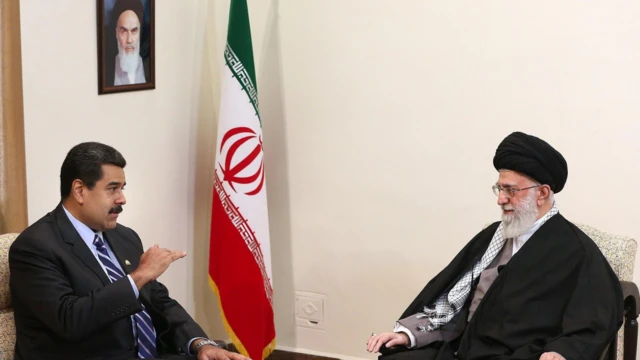
Venezuelan President Nicolas Maduro one key country in di region don call di initial Israeli strikes on Iran "act of war" and describe Israel as "di greatest threat to peace for humanity".
E also condemn di latest US strikes as "direct threat to international peace".
Cuba leadership call di US attacks "criminal, irresponsbile" act wey dey "violate international law".
Chile President Gabriel Boric on X tok say: "Power no authorise you make you use am to violate di rules wey we don give ourselves as humanity. Even if you are di United States."
Argentine President Javier Milei tok say "Iran na enemy of Argentina" and e tok say e dey fully back Israel. E accuse Iran of carrying out di deadly bombing attacks wey against Israeli wia dem target in Argentina in di 1990s.
Wia dis foto come from, Reuters
Wetin di US bomb and which weapons dem use?
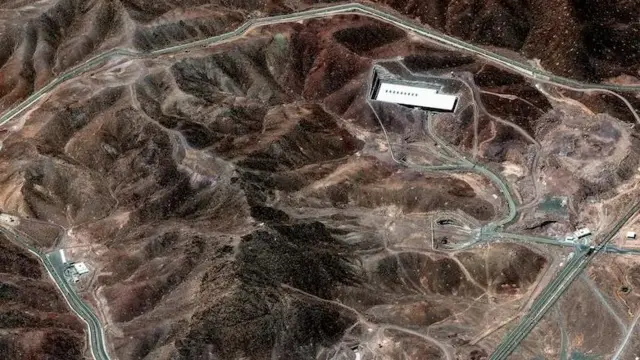
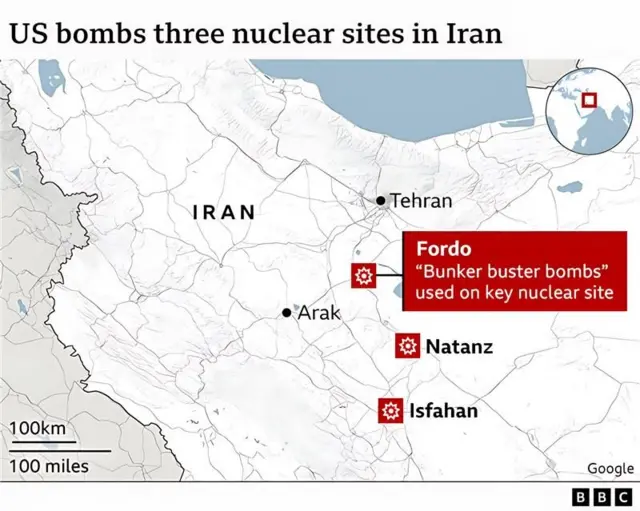
One of di targets na Fordo, a uranium enrichment plant dem hide for one remote mountainside wey dey important to Iran nuclear ambitions. We neva know di level of damage for di facility.
Di US say dem also hit two oda nuclear sites - for Natanz and Isfahan.
Sometin wey dem hide for one mountainside south of Tehran, tori be say wia dem hide Fordo dey deep underground pass di Channel Tunnel wey connect di UK and France.
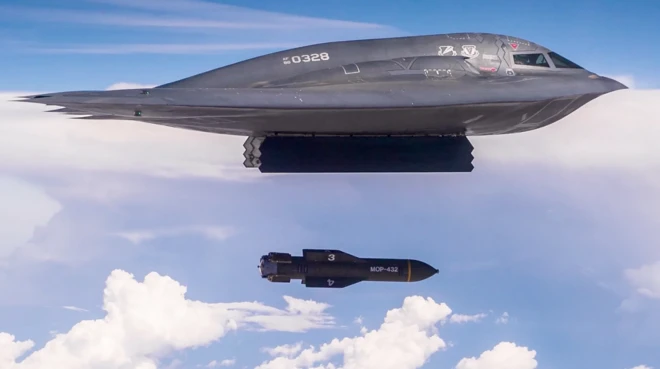
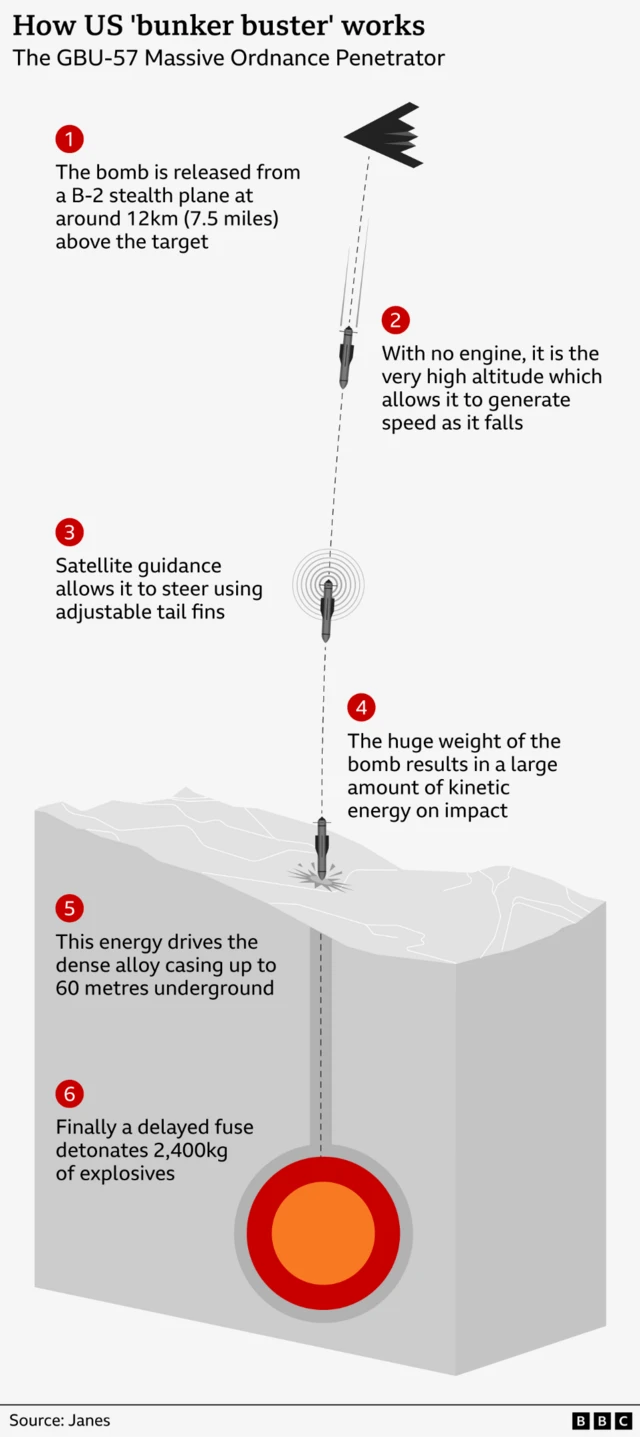
Due to how Fordo deep reach only di "bunker buster" bomb wey US get dey big enof to destroy di site. Dat US bomb na wetin dem dey call di GBU-57 Massive Ordnance Penetrator (MOP).
E get weight of 13,000kg (30,000lb) and e fit penetrate about 18m (60ft) of concrete or 61m (200ft) of earth before exploding, according to experts.
Due to di depths of Fordo tunnels, di MOP no dey guaranteed to dey successful, but na di only bomb wey fit come close.
US media report say dem use MOPs for di strikes.
Update about di impact of di attacks?
E no dey clear yet di kain damage di US attack get on di nuclear facilities, or whether any injuries or casualties dey.
Di Iranian Atomic Energy Organization say di bombing of di three nuclear sites na "barbaric violation" of international law.
Both Saudi Arabia and di United Nations' nuclear watchdog say dem neva notice increase in radiation levels afta di attack.
Di deputy political director of Iran state broadcaster, Hassan Abedini, say Iran do remove dis three nuclear sites a "while ago".
Appearing on state-run TV, e say Iran "no suffer a major blow becos dem den don already remove di materials".
For im televised address, Trump say di "nuclear enrichment facilities don dey completely and totally destroyed".
But speaking ontop BBC News Channel, former US assistant secretary of state for political-military affairs Mark Kimmitt dey reason am some how.
"No way dey to suggest dem don destroy am permanently," e tok.
Iran foreign minister don warn di US say dia attack on Fordo, Isfahan and Natanz go get "everlasting consequences."
Abbas Araghchi say Iran still dey chaeck "all options" to defend dia sovereignty.
How Iran fit take revenge?
Since Israel launch a surprise attack on dozens of Iranian nuclear and military targets on 13 June, Iran don dey weakened seriously, experts tok.
Iran still dey capable of doing a sizable amount of damage.
Previously, Iranian officials warn di US say make dem no involve dia sef, saying dem go suffer "irreparable damage" and dem risk an "all-out war" in di region.
BBC security correspondent Frank Gardner say Iran must now choose between three strategic courses of action in response to di US attack overnight:
- Do nothing. Dis fit save dem from further attacks from di US. Dem fit even choose di diplomatic route and re-join negotiations wit di US. But doing nothing go make di Iranian regime look weak, especially afta all dia warnings of serious implications if di US attack. Dem fit decide di risk of weakening dia stronghold say dia population outweighs di cost of further US attacks
- Revenge hard and fast. Iran still get enof reserve of ballistic missiles afta manufacturing and hiding for years. Dem get a target list of around 20 US bases to choose from in di broader Middle East. Dem fit also launch "swarm attacks" on US Navy warships using drones and fast torpedo boats
- Revenge later at any time dem like. Dis go mean waiting until di current tension don go down and launch a surprise attack wen US bases no dey on maximum alert
Di US dey operate military sites across at least 19 kontris for di Middle East, including Bahrain, Egypt, Iraq, Jordan, Kuwait, Qatar, Saudi Arabia and di United Arab Emirates.
Among di most obvious targets for Iran na di US Navy 5th Fleet HQ for Mina Salman in Bahrain.
Dem fit also target shipping lanes in di Strait of Hormuz, wey link di Persian Gulf to di Indian Ocean and through which dem dey transport 30% of di world oil supply. Dem fit also attack oda sea routes wey risk destabilising global markets.
Iran fit also target di assets of nearby kontris wey dem believe say dey allow US, wey fit make di war spread go di entire region.
In di hours afta di US bombing, Iran launch a fresh wave of missiles towards Israel. Dem hear explosions for Haifa, Tel Aviv and Jerusalem.
Wetin Trump tok and how US politicians don react?
Beside am na Vice President JD Vance, Defence Secretary Pete Hegseth and Secretary of State Marco Rubio, wia Trump for im address tok say future attacks go dey "far greater" unless Iran settle for a diplomatic solution.
"Remember, many targets still dey," e tok.
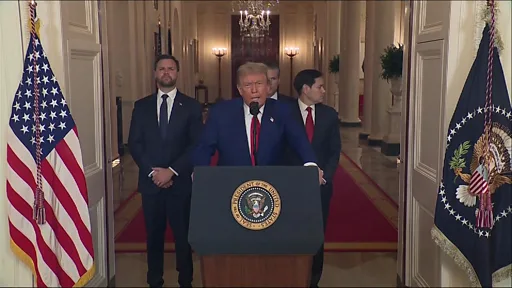
Several members of Trump Republican Party don post statements in support of di move. Texas Senator Ted Cruz "commend" di president, im administration and di US military wey involve for di strikes.
However, leading US Democrat Hakeem Jeffries say Trump risk US "involvement in a potentially disastrous war for di Middle East", while odas don accuse am say e bypass Congress to launch a new war.
Independent Senator Bernie Sanders describe di US strikes as "grossly unconstitutional" as di president no get di sole power to formally declare war on anodz kontri. Only Congress – lawmakers wey dem elect for di House of Representatives and di Senate - fit.
But di law also tok say di president na di commander in chief of di armed forces. Wey mean say e fit deploy US troops and conduct military operations without a formal declaration of war.
How dis mata start?
Israel launch a surprise attack on dozens of Iranian nuclear and military targets on 13 June. Dem say dia ambition na to dismantle Iran nuclear programme, wey Prime Minister Benjamin Netanyahu say go soon fit produce a nuclear bomb.
Iran insists say dia nuclear ambitions dey peaceful. In retaliation, Tehran launch hundreds of rockets and drones at Israel. Di two kontris don kontinu to exchange strikes since, for air war wey don last pass one week.
Trump bin don tok say e no like di idea say Iran get nuclear weapon. Tori be say Israel also get dia own, although dem neva confam or deny am.
For March, US national intelligence director Tulsi Gabbard say while Iran don increase dia uranium stockpile to unprecedented levels, dem no dey build a nuclear weapon - one assessment wey Trump recently say no "correct".
During campaign, Trump bin don criticised past US administrations for engaging in "stupid endless wars" for di Middle East, and e vow to keep America out of foreign conflicts.
Di US and Iran bin dey do tok-tok at di time of Israel surprise attack. Only two days ago, Trump say e go give Iran two weeks to enta into substantial negotiations bifor striking - but dat timeline turn out to be much shorter.