Wetin be di Strait of Hormuz wey US dey ask China to stop Iran from closing and how e fit affect fuel price?
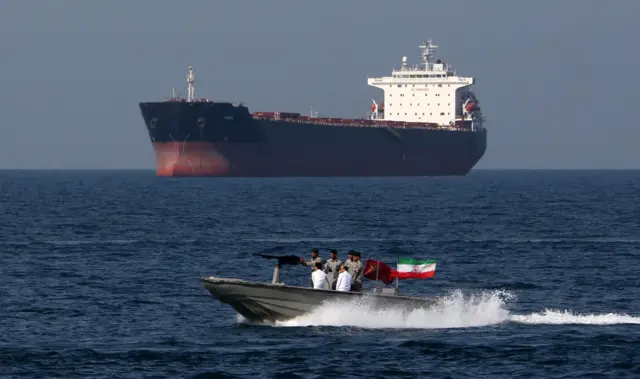
Wia dis foto come from, Atta Kenare / Getty Images
US Secretary of State Marco Rubio don call China make dem prevent Iran from closing di Strait of Hormuz, one of di world most important shipping routes.
Dis comments dey come afta Iran state-run Press TV report say parliament don approve plan to close di Strait but add say di final decision go lie wit di Supreme National Security Council.
China na di world largest buyer of Iranian oil and dem get close relationship wit Tehran.
Oil prices don rise following di US attack on Iranian nuclear sites, di price of di benchmark Brent crude don reach di highest level in five months.
"I encourage di Chinese goment for Beijing to call dem [Iran] about dat, because dem dey heavily depend on di Straits of Hormuz for dia oil," Rubio tok dis for one interview wit Fox News on Sunday.
"If dem [close di Straits]... e go cause economic suicide for dem. And we retain options to deal wit dat, but oda kontri need to look too becos e go affect oda countries dia economy dan ours."
Around 20% of di world oil dey pass through di Strait of Hormuz, wit major oil and gas producers for di Middle East, wey dey use waterway to transport energy from di region.
Oil prices don jump briefly wen trading start on Monday, wit Brent climbing to $81.40 a barrel. However, e don go back to around $78, up 1.4% on di day.
Di cost of crude oil dey affect everything from how much e go cost to fill up your car to di price of food for supermarket.
China in particular dey buy more oil from Iran dan any oda nation, dia imports from Iran dey pass 1.8 million barrels per day last month, according to data by ship tracking firm Vortexa.
Oda major Asian economies, including India, Japan and South Korea, also dey rely heavily on crude oil wey dey pass through di Strait.
Former head of UK intelligence agency MI6, Sir Alex Younger, bin tell BBC say im worst case scenario include blockading access to di water: "Closing di Strait go obviously become very big economic palava unto di effect wey e go get on oil price."
How much oil dey pass through Strait of Hormuz?
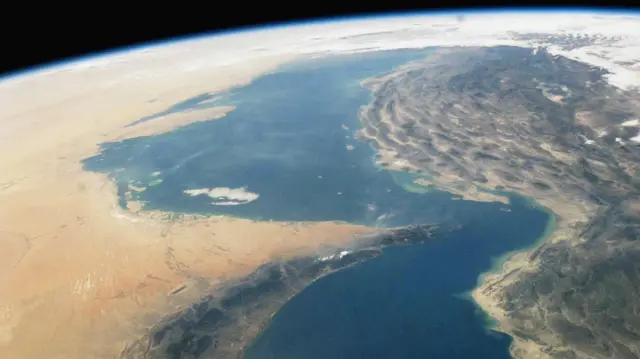
Wia dis foto come from, Stocktrek / Getty Images
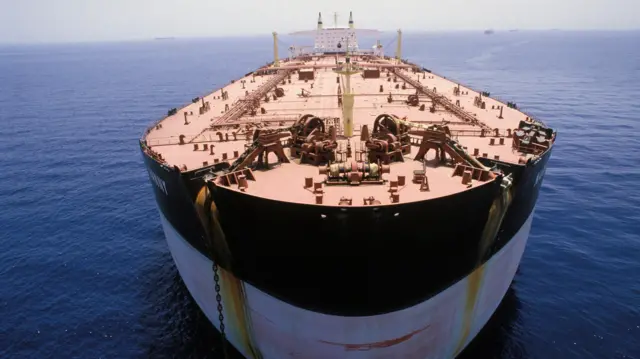
US Energy Information Administration (EIA) estimate say for di first six months of 2023 around 20 million barrels of oil na im bin pass through di strait per day.
Dat one equal to nearly $600 billion worth of energy trade per year wey dem dey transport through maritime routes.
Any disturbance for di waterway fit cause significant delays to di delivery of oil to di world, wit immediate hike on prices.
However, analysts dey warn say e fit get even more serious consequence and dat na say e go make di conflict between Israel and Iran worse.
How narrow Strait of Hormuz dey?
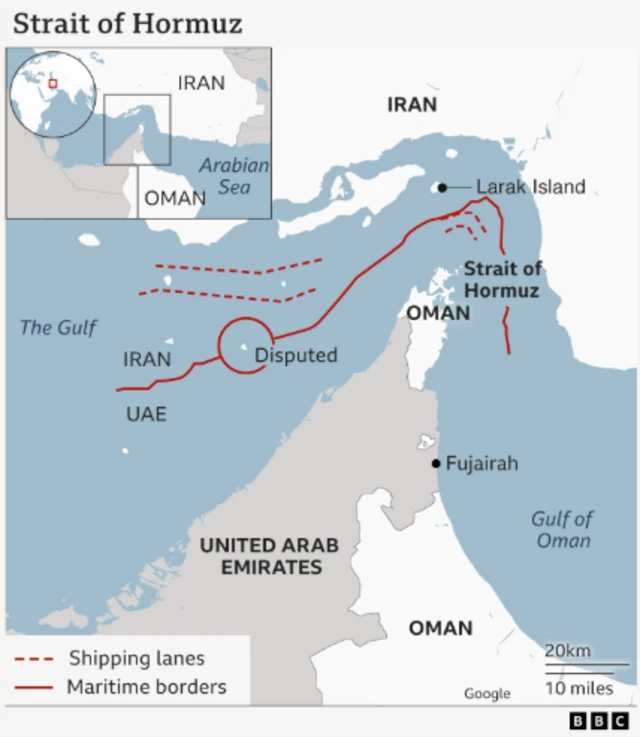
Strait of Hormuz na one length of water wey dey between Iran and Oman.
Im entrance and exit dey around 50km wide, and about 40km for im most narrow point for middle.
However, dis strait only dey deep enough for mighty ships if dem centre demsef for middle of di water.
Maritime navigation charts assign one safe lane for ships wey dey enta di strait, safe lane for di ones wey dey come out of am, and buffer zone between di two - all specifically for heavy oil tankers.
In total, very big ships must to navigate di channel wey dey only about 10km wide.
As tankers dey pass enta di Persian Gulf, dem dey near di islands of Greater and Lesser Tunb - dis na territories wey dey cause quarrel between Iran and Arab kontris.
Many sabi pipo dey reason am say di most likely method wey Iran go use disturb shipping for dat strait na through military action.
Na so e happun during di ran-Iraq war from 1980 to 1988.
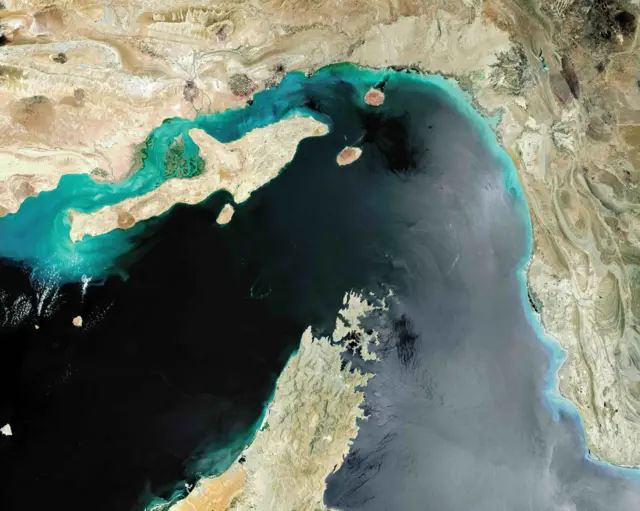
Wia dis foto come from, Gallo Images via Getty Images
Defensive doctrine?
Analysts say for Iran, closing Strait of Hormuz na wetin dem dey consider as a form of "deterrent power" - equivalent to having nuclear weapon.
Just as some kontris bin don dey opposed to Iran interest for military nuclear programme, major powers don tok many times say dem no go allow Tehran to use dia strategic geographical position to choke di world energy supply.
How Iran fit take close Strait of Hormuz?
Wia dis foto come from, NurPhoto via Getty Images
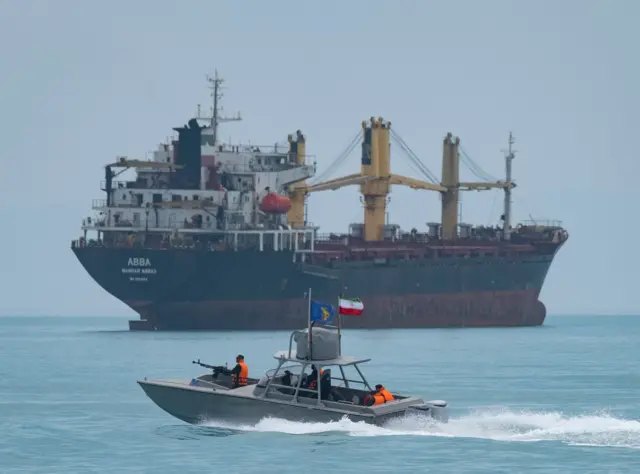
One 2012 report by US Congressional Research Service suggest say Iran fit pursue gradual approach. Steps wey dem list include:
- Announce ban make ships no follow di Strait of Hormuz, without clearly mentioning di consequences of disobeying di ban.
- Declare say dem fit inspect or seize ships wey pass di strait.
- Fire warning shots on di ships.
- Target specific ships wit military force.
- Put naval mines for di Strait and di Persian Gulf.
- Use submarines and missiles to target commercial and military ships.
Wia dis foto come from, AFP via Getty Images
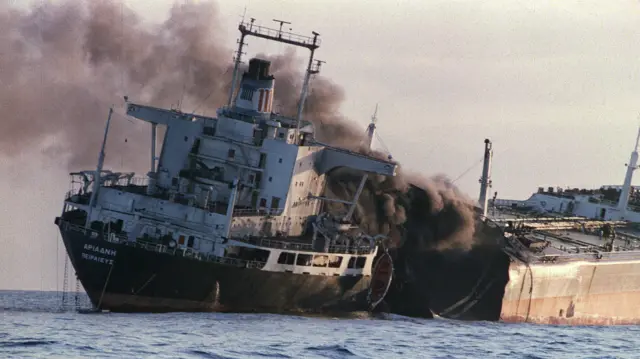
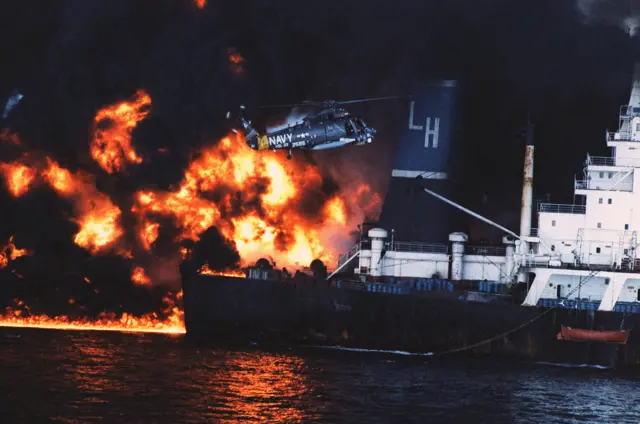
For di Iran-Iraq war, Iran send Silkworm missiles against oil tankers plus put naval mines for di Gulf waters.
One of dis mines strike di USS Samuel B Roberts, wey make US military to revenge.
Iran bin fail to fully close di Strait of Hormuz, but majorly raise di price of shipping insurance premiums plus cause expensive maritime congestion for di Gulf exit.
Wia dis foto come from, Norbert Schiller via Getty Images
Iran military capabilities
Two days before Israeli airstrike on Tehran kill Major General Hossein Salami, di den commander of Iran Islamic Revolutionary Guard Corps (IRGC), bin visit naval units wey dey for Strait of Hormuz.
E bin describe di Persian Gulf and im surrounding areas as one of di Islamic Republic most critical defensive zones.
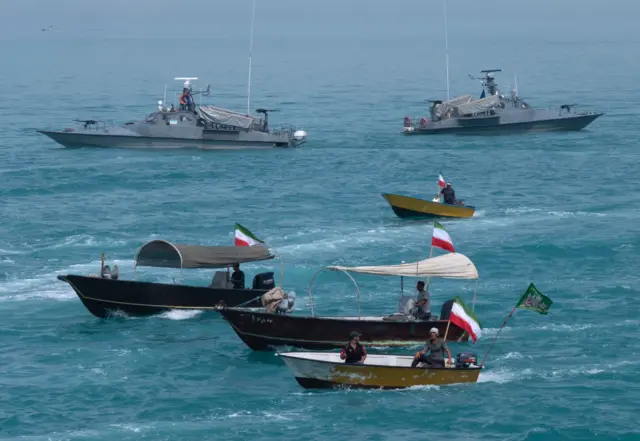
Specifically, im point to high-speed missile-launching vessels wey dey capable of travelling 10km in less dan three minutes.

Wia dis foto come from, NurPhoto via Getty Images
General Salami say dis fast attack craft, heavier combat vessels, and missiles na im dem go use for defensive operations.
Im also highlight anti-ship naval mines as "one of di most decisive weapons for naval warfare".
Salami say dem don expand di naval drones "in terms of range, capabilities, and mission diversity".
Wetin analysts dey predict?
Experts dey say one of Iran most effective ways to stop di 3,000 or so ships wey dey pass di waterway each month go be to put mines using fast attack boats and submarines.
Iran regular navy and di Islamic Revolutionary Guard Corps (IRGC) navy, fit potentially launch attacks on foreign warships and commercial ships.
However, large military ships also fit become easy targets for Israeli or US airstrikes.
Iran fast boats dey most times get anti-ship missiles, and di kontri dey also operate many surface ships, semi-submersible craft and submarines.
Currently, maritime tracking websites wey dey use satellite imagery dey report movements of Iran military vessels near di kontri southern maritime borders.
Wia dis foto come from, Getty Images
Which kontris go suffer am pass if di strait close?
Research wey analytics company Vortexa show say Saudi Arabia dey export around six million barrels of crude oil per day through Strait of Hormuz - more dan any neighbouring kontri.
China, India, Japan, and South Korea dey among di top importers of crude oil wey dey pass along am.
Di EIA estimate say for 2022, around 82% of crude oil and condensates (low-density liquid hydrocarbons wey dey typically occur wit natural gas) wey dey leave di strait dey go Asian kontris.
On 16 April 2025, just three days before Israel missile strike Iran air defences, Iran official news agency IRNA quote South Korean President Yoon Suk-yeol say 60% of of im kontri oil supply dey go through di Strait of Hormuz.
Di EIA say United States dey import around 700,000 barrels of crude oil and condensates from di strait per day - roughly 11% of im total oil import and 3% of im petrol consumption.
Europe total share of oil wey dem dey transport through di strait be like e dey less dan 1 million barrels per day.
As e be so, na Arab and Asian kontris go lose more from potential closure of Strait of Hormuz pass United States or European powers, wey don politically join Israel side for dis recent conflict.
Many Asian kontris get good or even close relationship wit Iran.
China influence
Wia dis foto come from, CFOTO / Future Publishing via Getty Images
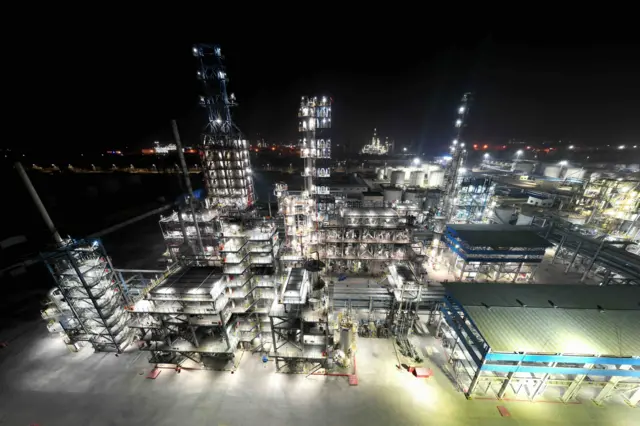
China na one of di largest consumers of oil wey dey pass through Strait of Hormuz.
Most of dis oil, na Iran dey sell give China at prices below international market rates - dis na vital economic lifeline wey dey help Tehran cope wit crippling US sanctions.
As major consumer of Iran oil, Beijing dey highly unlikely to welcome any rise for oil prices or disturbance to shipping routes.
China fit to use dia full diplomatic weight to prevent any closure of dis vital energy corridor.
Anas Alhajji, na partner for energy consultancy Outlook Advisors, im tell tori pipo CNBC say closing di Strait of Hormuz go harm Iran supporters more dan dia enemies. "Dem [Iran pipo] no wan do sometin wey go wound dem first," im say.
Wia dis foto come from, Chip Hires via Getty Images
Alternative routes dey to bypass di blockade?
Di persistent threat to close Strait of Hormuz over di years, don make oil-exporting kontris for di Gulf region to develop alternative export routes.
According to one EIA report, Saudi Arabia don activate dia East–West pipeline, wey be one 1,200km-long line wey dey capable of transporting up to 5 million barrels of crude oil per day.
For 2019, Saudi Arabia temporarily repurpose one natural gas pipeline to carry crude oil.
United Arab Emirates don connect dia inland oilfields to di port of Fujairah wey dey Gulf of Oman through one pipeline wit daily capacity of 1.5 million barrels.
For July 2021, Iran inaugurate Goreh–Jask pipeline, wey dem plan to take move crude oil to Gulf of Oman.
Dis pipeline currently fit carry around 350,000 barrels per day - although reports dey suggest say Iran never do am yet.
Di EIA estimate say dis alternative routes fit collectively handle around 3.5 million barrels of oil per day - roughly 15% of di crude wey dem dey currently ship through di strait.