World Food Day: We need ‘to get use to higher price of food’?
Wia dis foto come from, Getty Images
- Author, Saroj Pathirana
- Role, BBC World Service
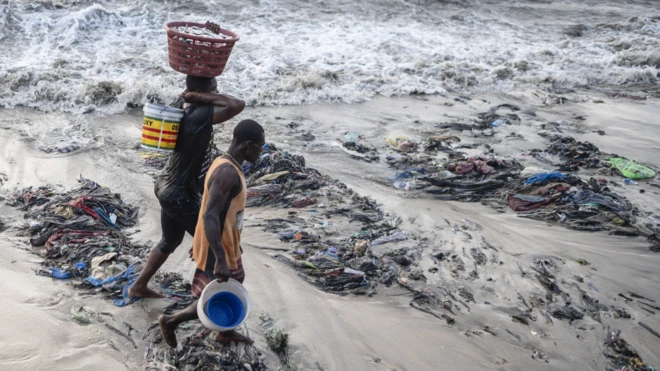
Kontris around di world celebrate World Food Day on 16 October wit warning from United Nations (UN) of "extraordinarily terrible levels of food insecurity," and as dem fear say price of food go seriously increase through out di world.
"Close to 500,000 pipo dey experience famine-like conditions for Ethiopia, Madagascar, South Sudan and Yemen.
For recent months, vulnerable pipo for Burkina Faso and Nigeria don already dey suffer di same conditions," UN tok for one statement.
Di UN dey call for immediate funding to support 41 million people for many kontris wey dey in danger of going into famine.
According to UK based charity, Di Hunger Project, while 690m pipo around di world dey live wit chronic hunger, 850m people dey at risk of poverty becos of Covid-19.
Out of dis 690m, 60% are women.
Here, we dey look at wetin higher food price mean practically for pipo all ova di world and which alternatives dey to consider to help elevate food poverty.
But first make we look at why food price dey rise in di first place.



End of Di one wey oda users dey read well well
Why price dey get higher?
Wia dis foto come from, Getty Images
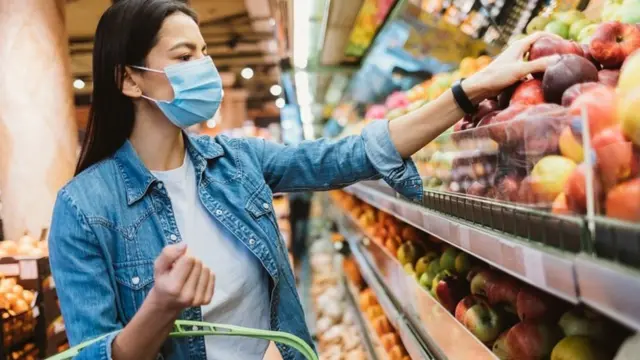
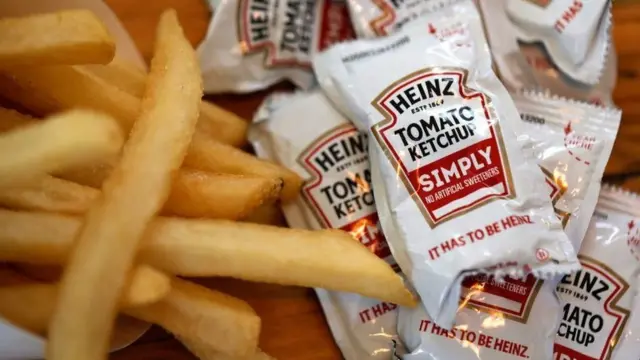
International food giant Kraft Heinz don war say pipo go need to "get used to higher food price" as a result of post-pandemic "across board" inflation.
Dr Sarika Kulkarni, Founder and Trustee of Raah Foundation, Mumbai, India, agree wit Miguel Patricio, di oga of Kraft Heinz say food prices go stay higher.
Dr Kulkarni and the Raah Foundation don dey work to make better, healthier and happier life for indigenous communities for India.
During the pandemic, many kontris experience say di price of production of raw materials, from crops to vegetable oils, fall. Measures to control di coronavirus, as well as di sickness, limit output and delivery.
As economies don restart di supply of dis products, many neva fit keep up wit demand afta dem return, and dis lead to higher prices.
Higher salaries plus price of energy also add to wahala wey manufacturers dey face.
"Prices get direct relationship wit demand and supply - while population dey increase and demand for food dey continuously rise - di number of acres of land wey dem dey farm dey reduce due to many challenges and problems wey include availability of water, ground wey im quality reduce, climate change and increasing extreme weather condition, newer generations no dey interested in farming as occupation etc…" na so poverty alleviation expert Dr Kulkarni tok.
"Di farmers dey face many challenges wey don dey reflect in di price of food wey continue to dey increase."
'Selling sex for food'
Wia dis foto come from, Getty Images
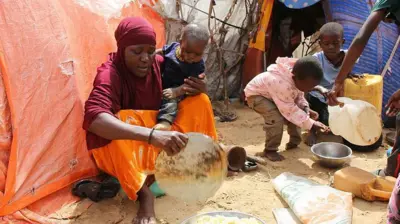
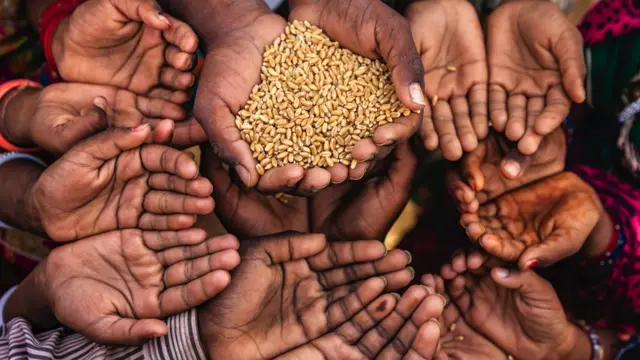
While pipo for developed world fit choose to reduce luxury items, less holidays abroad or even carefully manage dia budget, e no straight forward for some pipo for undeveloped kontris wey dey are so desperate most times dem dey forced to sell sex for food.
According to UN Under-Secretary General for Humanitarian Affairs, Martin Griffiths: "Wen famine finally open di door, e dey go viral in a way wey oda threats no fit."
Women and girls dey particularly vulnerable as a result of increasing poverty and higher food prices.
"Women tell us of di desperate measures dey must take to find food to feed dia families, including selling sex for food, early and child marriages, as I bin dey hear wen I dey Syria recently," im tok.
Wia dis foto come from, Susuma Susuma
Di UN, regional bodies and different goments fit use di traditional method to lift pipo out of poverty, to face di challenge of increasing food prices and many charities around the world are focusing on innovative methods.
Di Director-General of the Food and Agriculture Organisation, Qu Dongyu, say "supporting agri-food systems and providing long-term assistance, na di path to recovery, beyond just survival."
But Collacott tell BBC say moni alone no go solve food poverty: "We need radical reform of di systems and structures wey dey keep pipo for poverty."
According to Dr Kulkarni, di introduction of climate smart farming, improving way we adapt to climate change like improved rainwater harvesting storage capacities, decrease price of seeds and other farming related raw material, encourage farmers to keep enough wey dem go consume while dem dey make moni by selling di rest.
What now?
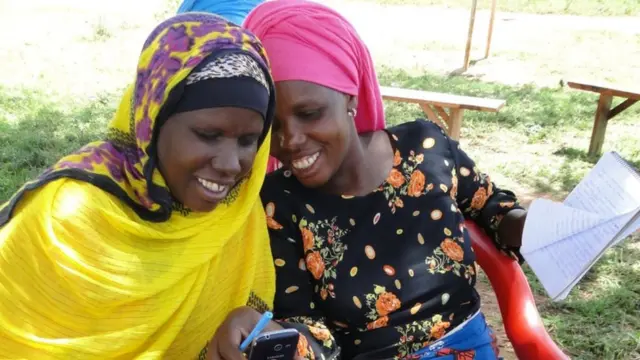
Wia dis foto come from, Susuma Susuma
While pipo for both developed and developing countries, fit dey wonder how to respond to increasing food price, activists believe say hope dey to avoid di crisis, as long as world leaders take quick and measured action.
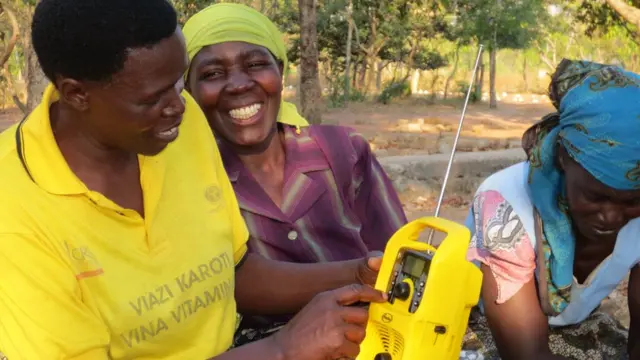
"Personally, I go say hope always dey," Karen Hampson, Senior Manager, Program Development for Farm Radio International tok, but only if:
"We listen to women, men and young farmers, we let dem lead and hear dia concerns, we include dem for policy dialogues, and we support dia efforts, weda through co-operatives, farmers and women groups or innovation.
"We put di focus on climate response and supporting marginalised groups especially and respond to dia needs - for equality of access to markets, access to credit, access to information."
Dr Kulkarni express similar opinion: "We have hope as time still dey to address di gaps as we sabi and identify dem." But she warn: "If we continue to ignore dem, we fit get problem and hope fit no dey."