The Battle of Britain
Summer 1940
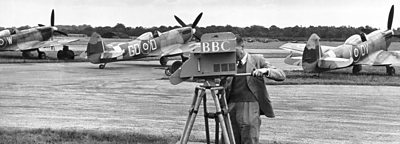
Image: After the resumption of the BBC Television Service in 1946, the outside broadcasting unit visited Biggin Hill, the RAF station in Kent which was the corner-stone of London's defence during the Battle of Britain in 1940.
During the Battle of Britain (10 July - 31 October) - when listeners could often see for themselves the effect of enemy action - BBC news had to strike a balance between truthful reporting of events and revealing specific information that would tell the Germans that they had found their target.
Outside broadcasts were possible with the use of mobile recording cars, but as only one disc recording machine would fit in each car, there was a limit of 4 minutes for each recording. Charles Gardner was able to report from Dover on an attack on a British convoy which was repulsed by fighter planes. The report of the dog-fight, which proved very popular, was nevertheless criticised as treating a deadly engagement "as if it were a cricket match or a horse race".
As the war progressed it became clear that there was a need for a consistently high standard of news reporting. Thus the War Reporting Unit was set up, which consolidated the notion, enduring to this day, that the story should be presented without unnecessary dramatisation. Further, the development of the Riverside Portable recorder - dubbed the Midget despite its 42lb weight - transformed reporting in the field, and enabled BBC reporters to file from the battlefields of Africa and Europe.
World War 2 and the BBC
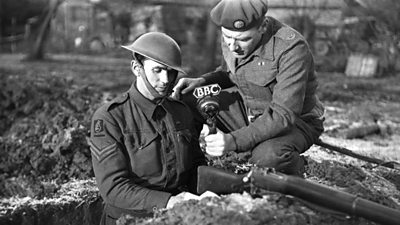
The BBC at War
The BBC reinvented itself during World War 2 and public perception of the institution changed dramatically. Explore its expansion into a global media network, the changing nature of its programming, and the way that war re-defined its relationship with both government and audiences.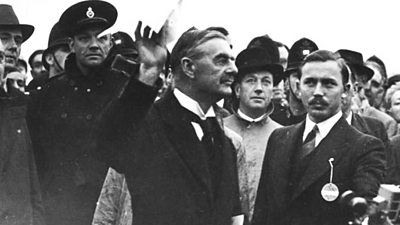
Chamberlain returns from Munich - 30 September 1938
Prime Minister Neville Chamberlain returns with a paper signed by Adolf Hitler.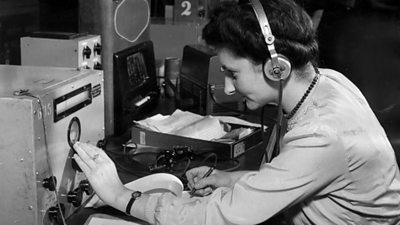
BBC Monitoring founded - 26 August 1939
As part of the intelligence war effort, BBC Monitoring gathered and interpreted international news from across the World.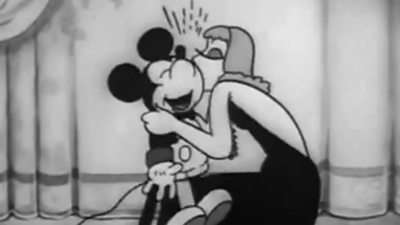
Close down of Television service for the duration of the War - 1 September 1939
Mickey Mouse is the last star seen on BBC Television for six years as the TV service is shut down for the duration of WW2.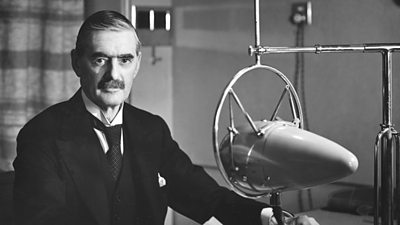
Chamberlain announces Britain is at war with Germany - 3 September 1939
"I have to tell you now that no such undertaking has been received, and that consequently this country is at war with Germany."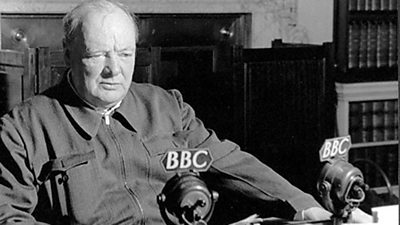
Winston Churchill's first wartime broadcast - 1 October 1939
Churchill delivers the first of many broadcasts which define the collective memory of WW2.
De Gaulle's first broadcast to France - 18 June 1940
General Charles de Gaulle broadcast to German occupied France, and rallied the French Resistance to him in London.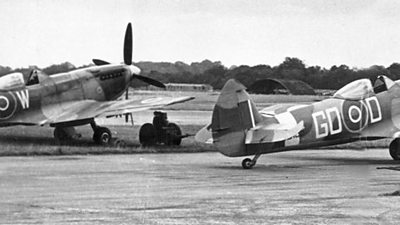
The Battle of Britain - Summer 1940
The BBC reports on the battle taking place in the skies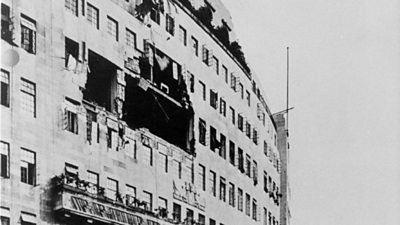
Bombing of Broadcasting House - 15 October 1940
A bomb lands on the BBC's headquarters, killing 4 men and 3 women.
The Queen’s Hall destroyed by bombing - 10 May 1941
The Proms loses its home, but rises from the ashes at the Albert Hall.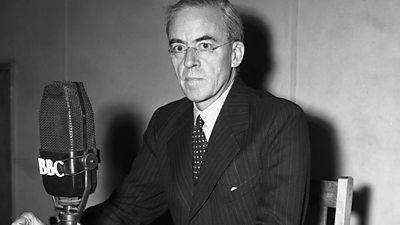
London Calling Europe began - 6 July 1941
London Calling Europe was one of many programmes broadcast by the BBC to occupied Europe.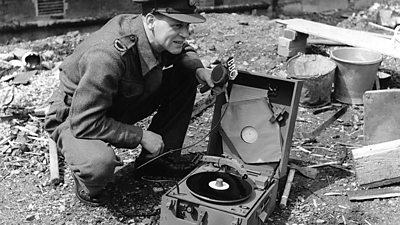
D-Day broadcasts - 6 June 1944
John Snagge announces that "D-Day has come..." as the Allies land on the beaches in Normandy.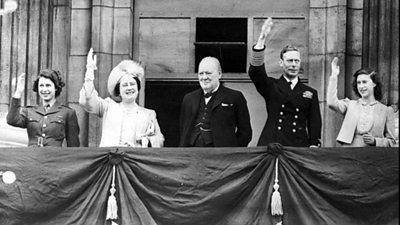
VE Day broadcasts - 8 May 1945
Winston Churchill announced the end of the War in Europe with a speech broadcast from Downing St, but the war in the Far East continues.


August anniversaries
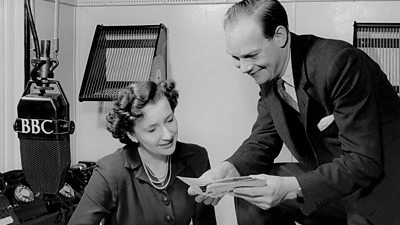
Family Favourites
1 August 1945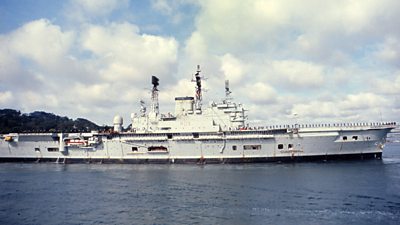
Sailor
5 August 1976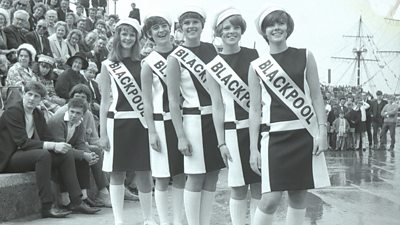
It's a Knockout
7 August 1966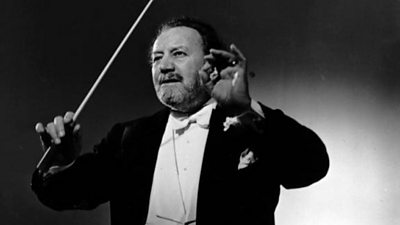
First BBC Promenade Concert
13 August 1927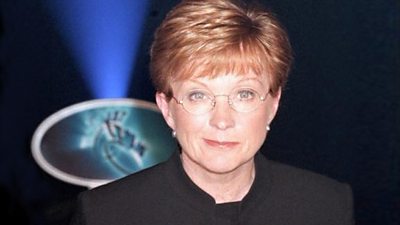
The Weakest Link
14 August 2000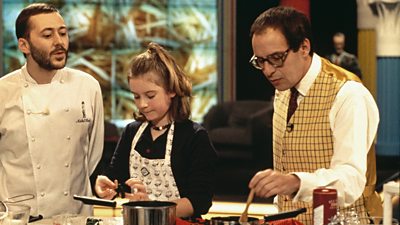
Junior Masterchef
14 August 1994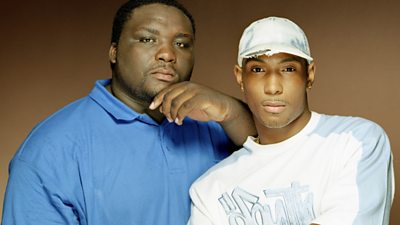
Launch of 1Xtra
16 August 2002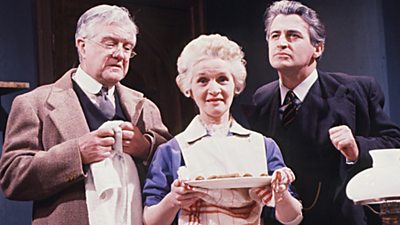
Dr Finlay's Casebook
16 August 1962
The Marriage Lines
16 August 1963
Observer reveals MI5 vetting of BBC staff
18 August 1985
Why Don't You...?
20 August 1973
The Moral Maze
20 August 1990
First experimental BBC TV Programme
22 August 1932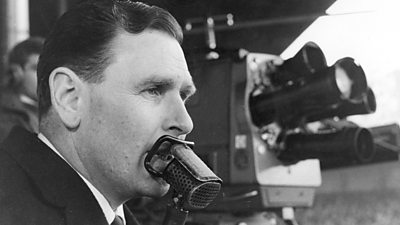
Match of the Day begins
22 August 1964BBC Monitoring
26 August 1939
Radio 5 launches
27 August 1990
First live TV from the continent
27 August 1950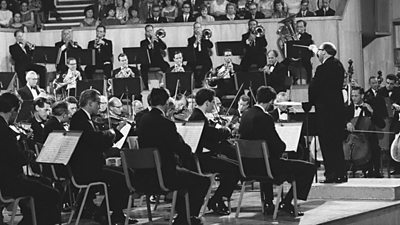
Start of experimental stereo broadcasting
28 August 1962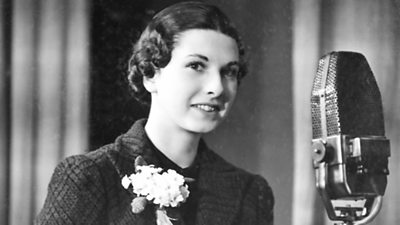
Elizabeth Cowell first female TV announcer
31 Aug 1936
The Monocled Mutineer
31 August 1986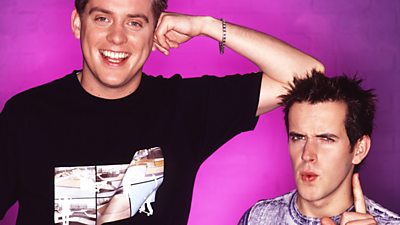
Dick and Dom in Da Bungalow
31 August 2002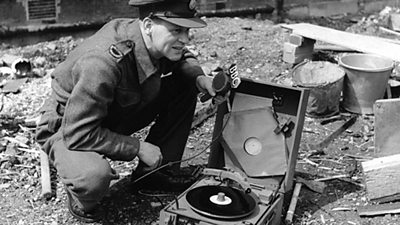
The Battle of Britain
Summer 1940


Search by Tag:
- Tagged with AugustAugust
- Tagged with RadioRadio
- Tagged with World War 2World War 2
