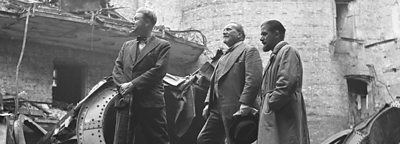
Image: The Australian composer Hubert Clifford, Sir Henry Wood, founder of the Promenade Concerts, and composer John Gough survey the wreckage of the Queen's Hall, London on 10th May 1941.
The Queen's Hall - located in Langham Place - was the premier concert hall in pre-war London. It was the home of the BBC Symphony and the London Philharmonic Orchestras. Every year it hosted the Promenade Concerts and its excellent acoustics and proximity to Broadcasting House made it ideal for outside broadcasts. On the night of 10 May 1941 the Queen’s Hall was hit by a single incendiary bomb and completely gutted. Nobody was killed but the venue’s days came to an abrupt end.
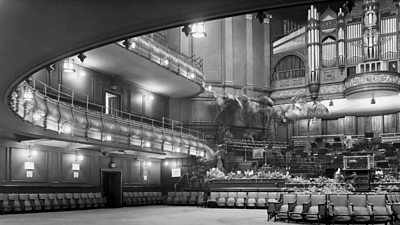
The 1939 Proms season had been brought to a close by the outbreak of war and the 1940 season not broadcast at all. But as the war progressed it became clear people wanted to hear music more than ever. After the destruction of the Queen’s Hall the determination for the Proms to continue saw them relocated to the Royal Albert Hall.
They were still titled the Queen’s Hall Promenade Concerts as Sir Henry Wood hoped the hall would be rebuilt. In the end the BBC broadcast 20 concerts in the 1941 season, including a special Anglo-American concert that was later heard in America.
Today the site of the Queen’s Hall is marked by a commemorative plaque. The BBC Proms are thriving at the Royal Albert Hall and every year a bronze bust of Sir Henry Wood - rescued from the ruins of the Queen’s Hall - is given pride of place on the stage.
Further listening
- The Sound That Burned: The Queen's Hall 70th AnniversaryAndrew Green tells the story of the last days of London's Queen's Hall, which was destroyed in the Blitz in 1941. It was one of the great concert venues in Europe.
World War 2 and the BBC
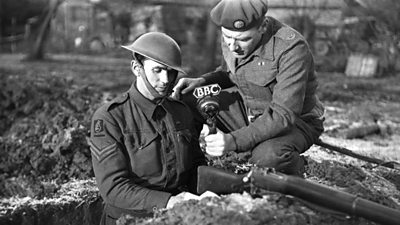
The BBC at War
The BBC reinvented itself during World War 2 and public perception of the institution changed dramatically. Explore its expansion into a global media network, the changing nature of its programming, and the way that war re-defined its relationship with both government and audiences.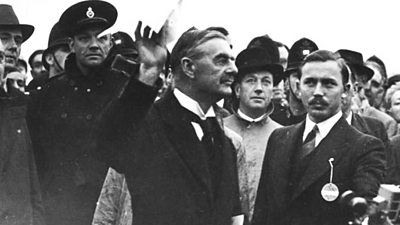
Chamberlain returns from Munich - 30 September 1938
Prime Minister Neville Chamberlain returns with a paper signed by Adolf Hitler.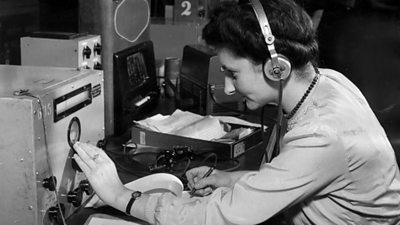
BBC Monitoring founded - 26 August 1939
As part of the intelligence war effort, BBC Monitoring gathered and interpreted international news from across the World.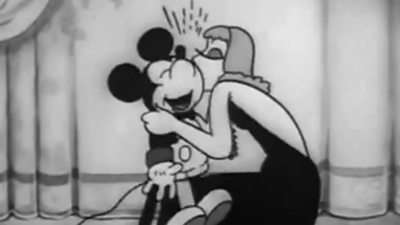
Close down of Television service for the duration of the War - 1 September 1939
Mickey Mouse is the last star seen on BBC Television for six years as the TV service is shut down for the duration of WW2.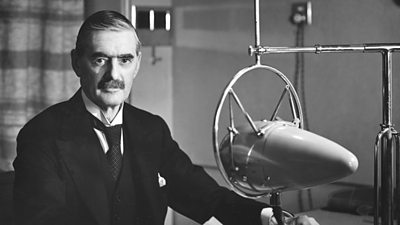
Chamberlain announces Britain is at war with Germany - 3 September 1939
"I have to tell you now that no such undertaking has been received, and that consequently this country is at war with Germany."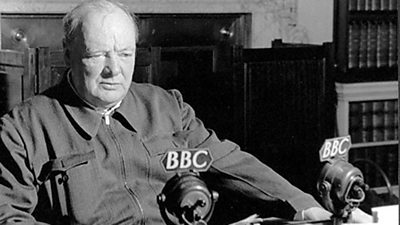
Winston Churchill's first wartime broadcast - 1 October 1939
Churchill delivers the first of many broadcasts which define the collective memory of WW2.
De Gaulle's first broadcast to France - 18 June 1940
General Charles de Gaulle broadcast to German occupied France, and rallied the French Resistance to him in London.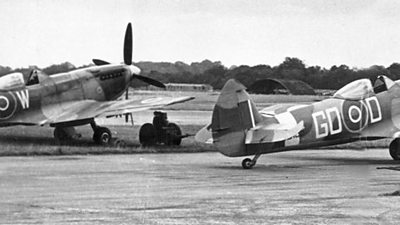
The Battle of Britain - Summer 1940
The BBC reports on the battle taking place in the skies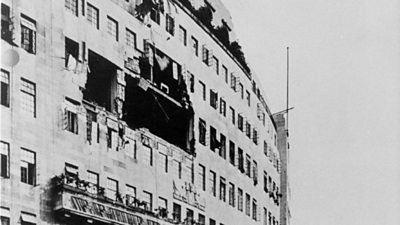
Bombing of Broadcasting House - 15 October 1940
A bomb lands on the BBC's headquarters, killing 4 men and 3 women.
The Queen’s Hall destroyed by bombing - 10 May 1941
The Proms loses its home, but rises from the ashes at the Albert Hall.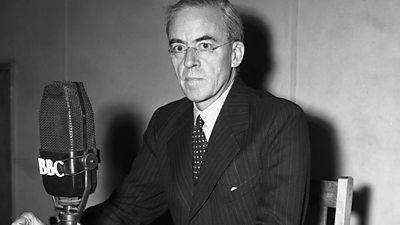
London Calling Europe began - 6 July 1941
London Calling Europe was one of many programmes broadcast by the BBC to occupied Europe.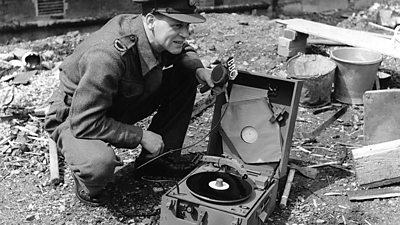
D-Day broadcasts - 6 June 1944
John Snagge announces that "D-Day has come..." as the Allies land on the beaches in Normandy.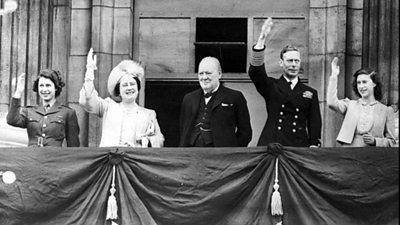
VE Day broadcasts - 8 May 1945
Winston Churchill announced the end of the War in Europe with a speech broadcast from Downing St, but the war in the Far East continues.


May anniversaries
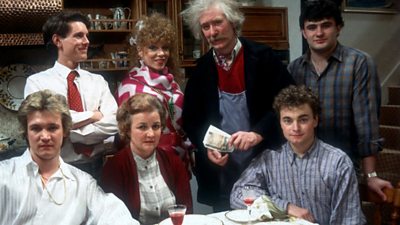
Bread
1 May 1986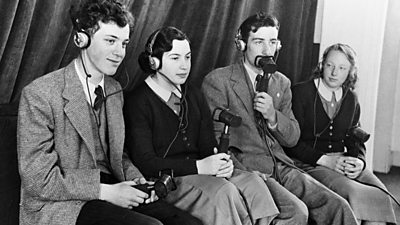
Top of the Form
1 May 1948
First VHF transmitter opens at Wrotham
2 May 1955
Horizon first transmitted
2 May 1964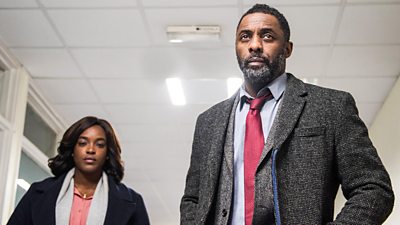
Luther
4 May 2010
The Ascent of Man first broadcast
5 May 1973
Wedding of Princess Margaret
6 May 1960VE Day broadcasts
8 May 1945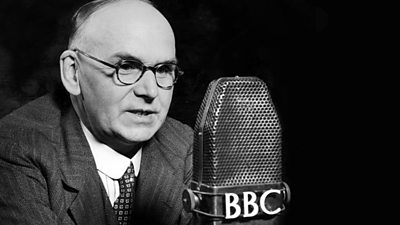
First gardening programme
9 May 1931The Queen’s Hall destroyed by bombing
10 May 1941
First episode of Bucknell's House
14 May 1962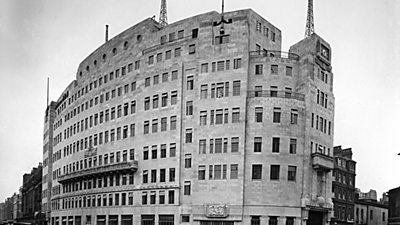
Broadcasting House opens
15 May 1932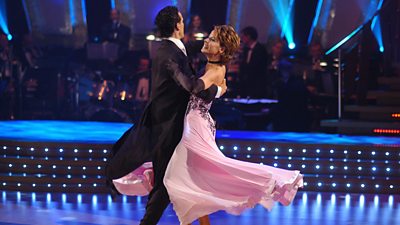
Strictly Come Dancing
15 May 2004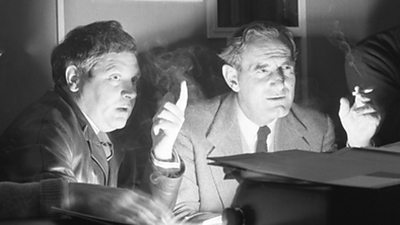
The Debussy film debuts
18 May 1965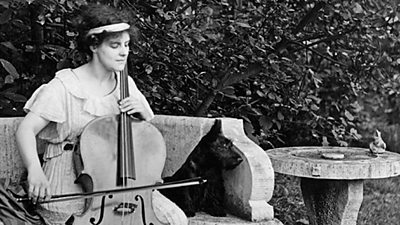
Beatrice Harrison, cello and nightingale duet
19 May 1924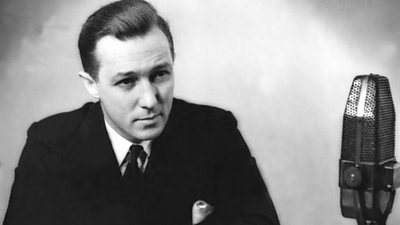
Thomas Woodrooffe at the Coronation Fleet Review
20 May 1937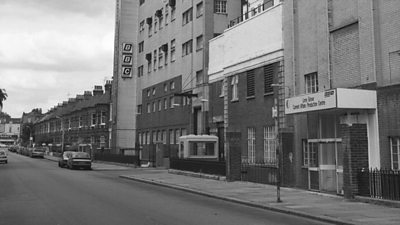
Opening of Lime Grove Studios
21 May 1950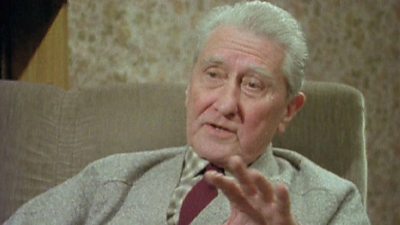
Eurovision first broadcast
24 May 1956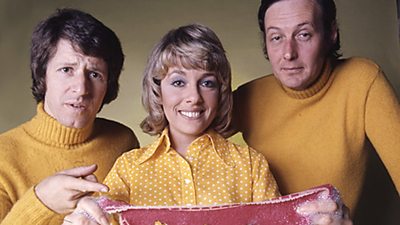
That's Life
26 May 1973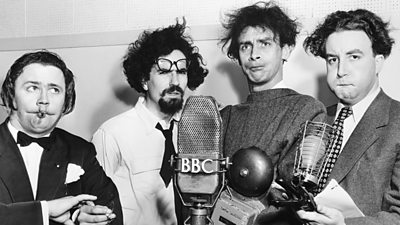
The Goon Show
28 May 1951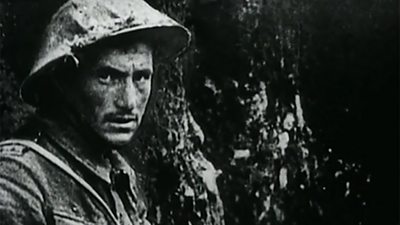
The Great War
30 May 1964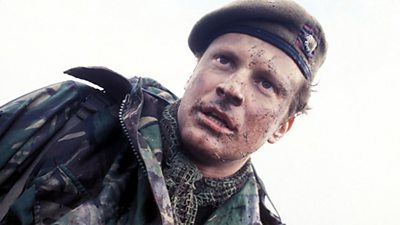
Tumbledown
31 May 1988