
British Indians’ contribution to the NHS and British culture is vital.
Introduction
Note: Indian and British Indian communities are vastly different from Pakistani, Sri Lankan, Bangladeshi and other ‘South Asian’ groups. We must be mindful and recognise these differences.
The Indian diaspora has long been established in the UK, with 43% of the UK’s Indian population born in the UK, and 38% of the population having arrived in the UK before 1981. British Indians are the largest ethic minority population in the UK today. Indian influences can be felt across the length and breadth of the UK from the NHS, through to food, yoga and music.
Read on to find out more about this remarkably diverse population.
It is possible to trace Indian migration to Great Britain for at least 400 years, in line with the East India Company’s first foray into India at the beginning of the 17th Century and right up to the present day.
History
The East India Company was initially created to serve as a trading body for English merchants to participate in the lucrative East Indian spice trade but gradually expanded, adding cotton, silk, indigo, saltpetre, tea and opium to its wares. Whilst they did start as a trading business The East India Company are largely viewed today as early colonisers who established military dominance over much of the country, taking control over India’s prominent states or forcing local leaders into becoming their subordinates.
Lascars (sailors) were recruited in large numbers to work on Merchant Navy vessels and many subsequently stayed in the UK. During the course of the 19th and 20th centuries, over 3 million Indians were transported to various colonies to provide support for infrastructure projects and plantations, working in various parts of the British Empire as far-flung as Fiji, Mauritius and the Caribbean. This period is often referred to as a new system of slavery within the British Empire.
The British Raj (1858-1947), the period of direct British rule over the Indian subcontinent brought about vast changes in India’s economic, political and cultural spheres. India’s independence from the British in 1947 was accompanied by the partitioning of India and Pakistan.
The huge role Indian soldiers played in supporting the UK army in both WWI and WWII remains largely under-appreciated, despite the fact that approximately 140,000 Indians served on the Western front with many subsequently coming over to the UK.
The period following the Second World War is generally considered the start of mass migration. With the British Nationality Act of 1948 enabling migration from the Commonwealth, more employment opportunities, better lifestyles and the start of the NHS made life in the UK an attractive proposition.
The Health Service would have collapsed if it had not been for the enormous influx from junior doctors from such countries as India.
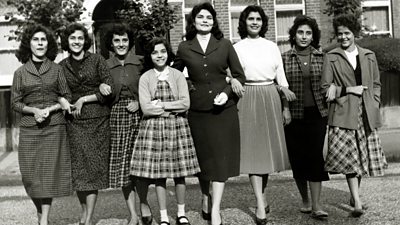
Britain looked to its colonies to reinvigorate the economy by employing people to work in industries like transport, the health service and cotton mills, where they often took on shifts in anti-social hours and did the jobs not favoured by the native population.
“One man lived in a four-room house with 28 other men – there were four people to a bed, and they took day and night shifts to sleep in the available beds. But they had no other option but to live there. Many landlords at that time stipulated ‘no dogs, no blacks, no Irish.” -Three Pounds In My Pocket, Radio 4 [2014]
This cohort of migrants were heavily involved in the development of the UK’s antiracist and trade union movements in the 1950s and 60s, drawing on experiences from anti-colonial struggles which were then applied to organise these communities in the UK.
The contribution of the Indian diaspora to public institutions such as the NHS was indispensable. The 1960s saw the arrival of more than 18,000 junior doctors from the Indian subcontinent, brought in to prop- up the struggling NHS. A number of British medical schools had been established during the colonisation of India which closely followed the training regime of British medical schools making their graduates ideal NHS employees.
Despite their enthusiasm many of these qualified doctors and nurses were forced into ‘Cinderella specialities’ – things like old age psychiatry or genitourinary medicine which were chronically overlooked and underfunded at the time. Many were also forced into working as GPs in deprived areas like mining communities or inner cities. In 2003, 73% of GPs working in the underprivileged Rhondda Valley in Wales were of South Asian origin.
“They are here to provide pairs of hands in the rottenest, worst hospitals in the country because there is nobody else to do it.” -Lord Harlow, House of Lords [1961]
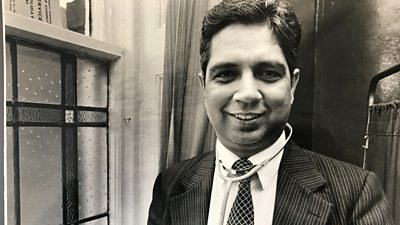
The open door immigration policy was in place until 1962 when members of the commonwealth had to then apply for work before arriving in the UK; permission to immigrate was granted based on the applicants’ employment prospects. However, due to laws which allowed family re-unification, the number of Indians began to grow as families re-united in the UK.
The second wave of migration occurred in the 1960s and 70s with people of Indian heritage arriving from some of the newly independent African countries like Uganda, Kenya and Tanzania, having been expelled or encouraged to leave. This wave is sometimes called the ‘twice migrants’.
Due to the fact many Indians had been employed by the ruling British in places like Kenya and Uganda in administrative roles and served in the police and the army, they functioned as a ‘subordinate ruling class’ and enjoyed success in business and finance.
As such, when this wave arrived in the UK they had the benefit of considerable wealth, alongside English language education, which allowed them to flourish under Margaret Thatcher’s retail ‘enterprise economy’. Pharmacists and newsagents owners were typical of this generation.
However, this was not the case for everyone. Many Indians from East Africa had been forced to move under difficult political circumstances and had to leave behind significant property assets and successful businesses. Due to this loss of wealth, some families had to adjust to a new and more financially difficult life in the UK with many becoming shopkeepers as they couldn’t find jobs in the professions they were originally trained in.
Changes to policy under new Labour from 1997 further encouraged Indian migration to the UK. The Highly Skilled Migrant Programme (2002), aimed to attract the ‘best and brightest’ via a points based system where factors like education and work experience were rewarded with higher scores. Indian nationals have been the largest foreign group to benefit from this scheme.
Pride, innovativeness, adaptability, harmony, modesty and light- heartedness are all central values of Indian culture.
Culture
India is home to around 18% of the total world population and is one of the most ethnically and religiously diverse countries in the world. Indian citizens are divided into various ethnic, religious, caste, linguistic and regional groups, making the realities of ‘Indianness’ extremely complicated.
This section covers ‘Indian culture’ more broadly and we are mindful that the UK’s Indian population is made up of diversities that exist within a common identity. Some of this diversity is reflected in clothing, which, like many parts of Indian culture varies by region and religion.
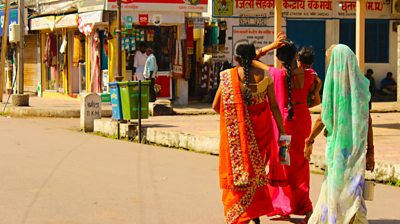
The Sari is the most common garment associated with India and is often worn as traditional dress for women. The sari is a strip of unstitched, often colourful cloth, ranging from four to nine metres wrapped in a variety of ways (dependent on the occasion) and paired with a fitted blouse. The Lehenga (a colourful long, cut and flared skirt paired with blouse tightly fitted at the waist) is another popular garment amongst women, especially in the Gujarati community. And the Salwar Kameez (a pair of light trousers paired with a long flowing top, often embellished with embroidery) is more common within the Punjabi community.
Many third generation British Indians grapple with the idea of identity, more than previous generations. They are part of Britain’s increasingly multi-cultural society where there is more individual choice over markers of identity, and simply identifying as British Indian is less straightforward when your connection to the sub-continent feels increasingly distant.
“Eventually I got a little older and figured out that I could be both English and Indian and identifying with one doesn’t erase the other. But establishing myself as someone who considers themselves as part of both cultures came with its own challenges.” -Sarah Praseedom, Former Author at The Tab [2016]
LANGUAGE
More than 19,500 languages or dialects are spoken in India as mother tongue. Hindi is the primary language, spoken by 615 million people, Bengali is the next most popular, followed by Urdu.
In the UK, those of Indian heritage tend to divide along both geographic and religious lines. The Punjabi and Gujarati communities are the largest and see themselves very distinct from each other; Gujarati is mostly spoken by Hindus and Punjabi by Sikhs. Gujarat is in the north-west of India and the Punjab region lies in the north of the country..
45% of British Indians identify as Punjabi, and subsequently Punjabi is the third most popular language in the UK after English and Polish. Gujarati is spoken by around 230,000 in the UK (0.4% of the UK population).
FAMILY
Indian culture is more group orientated than British Culture, with an importance placed on connectivity. People are also expected to uphold their responsibilities and obligations to the community or group.
In India, there is a heavy emphasis on family and clan (often aligned with socio-economic, religious or political lines) with the concept of family often extending beyond the traditional nuclear unit. Ties with extended family overseas are often much closer than those in western society and connection is often maintained through regular communication and sending remittances to provide financial support.
Due to the ingrained importance of family in Indian culture, many are conscious of how their behaviour will reflect on their family and community and therefore place a high value on harmony and unity with others.
The deeply entrenched respect for elders is a key part of Indian culture: older people are viewed as guardians of knowledge, and respect is shown through gestures like touching the feet of elders. In Indian society looking after older family members at home is seen as a duty and is a common practice, whilst the idea of sending the elderly to nursing homes is often deeply frowned upon.
Indians generally place a high value on harmony and unity with others - with many conscious of how their behaviour will reflect on their family or community. For example, Indians may speak indirectly to avoid conflict and maintain social harmony.
RELIGION
Many only refer to the Hindu identity and values when religion comes to mind but this view misrepresents the religious and cultural diversity of India which has six key religions. The three main religions of British Indians are Hinduism, Sikhism and Islam, each having sizable representations in their communities.
Although the majority of British Indians are Hindu (1.5% of the total UK population), the UK is home to the second largest Sikh community outside India (432,000 people). There are also significant numbers of Islamic and Christian British Indians as well as Ravidassia communities.
Religion has also impacted settlement patterns in the UK with Indian Hindus tending to live in different areas to Indian Sikhs. For example, in London, Hindus are clustered in the North West of the capital, whereas Sikh’s are based further west, with the home of the largest Sikh community in the UK being in Southall.
Because Hinduism and Sikhism share some similarities, Sikhism is sometimes thought of as a subset of Hinduism. However, it is a distinct and unique religion that was formed much more recently.
The religions do share some similarities such as the belief in:
- Atma or atman - the body is made up of both a physical being and an individual soul
- Moksha (Hindu) or Mukti (Sikh) – the cycle of rebirth
- Karma – a person’s actions affect the path of the soul in future lives
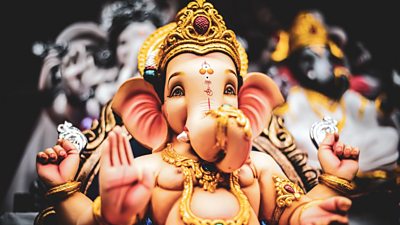
However, there are also key differences, Hinduism recognises the existence of thousands of deities which are frequently depicted in image or statues, whereas Sikhs believe there is only one god who has no form. The religions also follow different scriptures and have differing views on things like the caste system which was rejected by Sikhs who believe that all humans are equal.
The popular practice of yoga stems from the Indian sub-continent and the original practice was strongly rooted in spirituality.
FESTIVALS
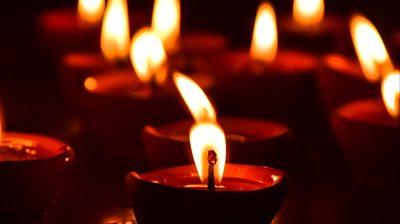
Diwali is a five-day festival of lights, celebrated by millions of Hindus, Sikhs and Jains (with celebrations varying by religion) across the world. Diwali, which for some also coincides with harvest and new year celebrations, is a festival of new beginnings and the triumph of good over evil, and light over darkness.
The festival is usually sometime between October and November, with the date changing each year. The festival is celebrated by the lighting of oil lamps on streets and in houses, as well as having decadent family meals. Fireworks are often a key part of Diwali celebrations- Leicester has some of the biggest displays outside of India.
The Sikh community also celebrates Baisakhi, or Vaisakhi, the festival which celebrates Sikh New Year and the founding of the Sikh community in 1699, known as the Khalsa. It is celebrated around the middle of April and began as a harvest festival in the Punjab before it became the Sikhs’ most important festival.
It is worth nothing that even within religions, different regions and communities have their own traditions and celebrations that may be celebrated by only a sub-set of the community.
FOOD
Food remains a prevalent connection between Britain and India. Thousands of Indian restaurants have popularised Indian foods all over Britain from the first curry houses that catered for Asian seamen and students opened over 200 years ago.
While restaurants multiplied in the 1950s and 60s to feed the newly arrived south Asian factory workers, their boom time only began in the 70s, when there was an influx of Bangladeshis who adapted their menus for the restaurants are owned and run by Bangladeshis.
Westernised versions of Indian dishes are routinely voted the nations favourite meal, such as the classic ‘Chicken Tikka Masala’ which is rumoured to have been invented by a Bangladeshi Chef in Glasgow in the 1970s.
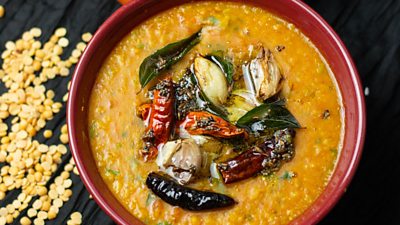
Whilst in the UK we have a generalised understanding of what ‘Indian’ food is, the food eaten by British Indian populations varies hugely and often closely relates to the region of India a family originates from. The food eaten at home by Indian families is often starkly different to the food served in Indian restaurants.
Names like Balti, Korma, and Jalfrezi are given in a commercial setting to differentiate spice level of curries and to help non-Indians, but within households recipes are often passed down through generations, sometimes referred to as ‘desi style’. (The Curry Crisis [2012])
SPORT
The game of cricket spread to African and Asian countries with the rapid expansion of the British Empire. The first cricket match in India was recorded in 1721 when a group of sailors gathered to play in Western India. The sport made a huge impact as cricket has become India’s most popular sport unifying people of all race, religion, caste, creed, colour, and gender. Celebrity cricketers are amongst the wealthiest members of Indian society. Sachin Tendulkar, Virat Kohli and Sunil Gavaskar are just a few to name.
Cricket is not only the most popular sport in India but also an important part of the Indian culture, played almost everywhere. BCCI is the Board of Control for Cricket in India and Indian Premier League, a professional Twenty20 cricket league is the most watched sports league in the world.
CASTE SYSTEM
An important element of Indian culture is the widely employed caste system used amongst the Hindu population. India’s caste system is one of the world’s oldest forms (3,000 years old) of social stratification, dividing Hindus into hierarchical groups based on their work and duty.
The Manusmriti, which is the most important book on Hindu law, acknowledges and justifies the caste system as the basis of order and regularity within society. This system has been widely criticised for being unjust and regressive and although today caste discrimination is a crime under the Indian constitution it remains a crude reality especially when it comes to key life events such as marriages, employment and education.
This may not always be the case: rigid caste discrimination is most closely associated with India’s rural communities, and as more Indians move to urban centres we can see attitudes changing, inter-caste marriages are rising, from 31% in 2007 to 55% in 2016.
The caste system divides society into five main categories. At the top are the Brahmins who were mainly teachers and intellectuals believed to have come from Brahma’s head, then the Kshatriyas, the warriors/rulers, from his arms. Third is the Vaishyas, the traders, created from his thighs. At the bottom are the Shudras who came from the feet and did mostly menial jobs. Outside of this caste system is the Achoots or Dalits known as the ‘untouchables’, often in jobs such as street sweepers.
To put this into perspective, the lower caste groups form around 70% of India’s population and remain under-represented in education and formal employment.
The history of Indian migration saw a wealth of professionals and well-educated middle class Indian professionals moving to the UK, suggesting that the Indian diaspora are largely from those upper-caste backgrounds.
EDUCATION
Those of Indian heritage are the most economically successful of all minority groups in the UK. Like the UK’s Chinese population, a strong emphasis is placed on the importance of education in Indian households, likely contributing to high levels of educational attainment amongst this group with 62% of Indian pupils achieving a ‘strong pass’ in English and maths at GCSE, compared with 42.7% of white British pupils.
Studies and official figures have shown that this group have some of the lowest poverty figures of the total population in the UK. Additionally, a report from the Joseph Rowntree Foundation forecasts that by 2022 the Indian ethnic group will come to be concentrated in the UK’s most highly paid occupations.
This has led this community (and the UK Chinese population) to be associated with the label of ‘the model minority’. A model minority is a minority demographic (whether based on ethnicity, race or religion) whose members are perceived to achieve a higher degree of socioeconomic success than the population average.
It’s interesting to see how much people still think he [Freddie Mercury] was a white British dude.

MUSIC AND FILM
When people think of Indian music, this usually conjures up images of high energy frantic workouts and Bollywood dance sequences. However, for decades Indian music has been adopted by Western musicians in a crossover style.
The influence of Indian music in British culture has often gone unrecognised. It propelled The Beatles from just an English boyband to greater heights with influences noticeable on their songs and albums from Rubber Soul to Let it Be, from Norwegian Wood to Within You, Without You.
In October 1988 the BBC launched The Asian Network (becoming a full-nationwide service in 1996) to promote British-South Asian music and here British Indian artists are celebrated for their worldwide appeal and impact on the British music scene. We have seen artists such as Freddie Mercury, Panjabi MC and Jay Sean gain worldwide appeal and through this provide a positive representation of the impact Indian culture has had on British music.
“If you grew up in a Parsi household, especially in the 90s and 80s, he (Freddie Mercury) was kind of a shining star. He was definitely held up as one of the examples that Parsis can do anything.” - Musician Pheroze Karai [2018]
Bollywood films have been shown in UK cinemas as early as the 1960s to cater for South Asian immigrants arriving in industrial British towns. Since then a number of major chains – such as Cineworld, Odeon, and Warner cinemas – have successfully been screening Bollywood films in recent years. In the early 2000’s, Bollywood films accounted for around 20% of Cineworld’s screens.
Media Portrayal
Due to the homogenisation of the ‘South Asian’ identity, and a general lack of well- developed, character-driven roles within film and television, representation in media isn’t often broken down by specific ethnicity, but we’ve aimed to focus on Indian representation and portrayal specifically where possible.
In the 1990s, Goodness Gracious Me was a popular comedy sketch written by and starring British Asians. However, more recent representation in the UK today has arguably taken a step backwards.
Today, the majority of the media’s portrayal of Indian communities, positive and negative, have focused on culture, marriages, religion, and integration.
Stories related to music, food or cinema are treated to a greater positive angle while the representation of arranged marriages in Indian society have garnered a higher degree of negative portrayals.
Today, the stereotypes many grew up with on UK and American TV are being questioned and scrutinised for the negative impact they may have had on the self-perception of younger Asian generations as well as perceptions of Indian and Asian cultures by white western audiences.
British Pakistani actor and rapper, Riz Ahmed discussed three stages of roles that minority actors must pass through: first characters that follow the stereotype; next, characters that acknowledge the established stereotypes and try to subvert them; and finally, characters to whom ethnicity is irrelevant. The characters of the final stage are three-dimensional and interesting beyond their specific backgrounds, but are currently hard to come by. Dev Patel (British Indian), BAFTA nominated for his leading role in Slumdog Millionaire, still struggled to find roles with depth even 10 years on.
“I did Slumdog and I didn’t know what I was doing. I was 17. I look back at that and I just see mistakes and bad accents and horrible skin. But after that I was expecting to find a role as meaty: ready to go prove myself somewhat, so let’s go and do another deep role. But there was nothing. So it took a while.” - Dev Patel On Playing David Copperfield [2020]
Tired stereotypes still exist in media - shopkeepers, terrorists and PHD doctors called Raj. Comedy can make jokes around‘Indianness’, from overbearing parents to marriage and ‘exoticness.’ However, some viewers are willing to overlook these characteristics because these are considered ‘soft stereotypes’ when compared to some of the more extreme stereotyping that can occur.
People from South Asia or the Middle East are often typecast in roles as: bloodthirsty terrorists, tyrants or religious zealots.
“It didn’t matter if you were Indian, Sri Lankan, Pakistani, Hindu, Sikh or Muslim – after 9/11, being brown meant being a potential terrorist.” - From Apu To Master Of None: How Us Pop Culture Tuned Into The South Asian Experience [2017]
Back in 2007, actor Kal Penn detailed how conflicted he felt choosing between refusing to be typecast as a terrorist and playing an interesting role that could advance his career.
“I have a huge political problem with the role. It was essentially accepting a form of racial profiling. I think it’s repulsive.” - The White-Castle Ceiling[2007]
Ridiculous though it may sound, I’d kill for a reality show featuring Indians where their lives don’t seem challenging, or inspirational (Jesus Christ), or where they aren’t maintaining the racist ideologies they’ve inherited from their parents.
In 2017, Penn also unveiled a pile of audition scripts from his early career, which included casting calls for ‘Gandhi Lookalike’, ‘Snake Charmers’ and ‘Fire Eaters’. Jasmine Singh, a private practice psychiatrist in California reinforced the need for a more diverse range of stories.
“There’s no one Indian story. There’re so many different parts of India — there’s so many different people. There’s so many stories, and the more representation we have, the more variety and stories we can showcase. I think that would be the best way for Indians to feel more accepted in the U.S.” - Indian Misrepresentation In Media[2020]
When it comes to Bollywood, Professor Rini B. Mehta believes Westerners would most likely be left with contradictory impressions of India from watching Bollywood films, TV shows or magazines aimed as representations of India.
“Bollywood has never mirrored reality or been mimetic. It has always been an industry of fantasy, hopes and romantic desires.” - No Longer Outsiders? On South Asian Representation In UK Culture [2016]
Viewing these films, audiences may be left with a perception of India as a nation with a thriving information technology industry, as a third-world nation overwhelmed by poverty and famine, or as a spiritual mecca with a mystical culture frozen in a more primitive time, of which the consequences of this can be seen in popular western entertainment.
A Shift in Media Portrayal
In the last few years we have seen more subtle, nuanced and confident portrayal appear on-screen, as more interesting characters are written more relevant stories are told, and more diverse celebrities emerge via social media.
On digital media platforms such as Instagram, TikTok, and YouTube, a new generation of South Asians have the chance to share their stories without approval from mainstream media tropes. Rather than be subject to traditional gatekeepers, people are now doing it for themselves.
“When someone tells us no, we can still say yes to ourselves.” - Krishna Kumar, a 26-year-old YouTuber [2017]
Canadian-Indian Lilly Singh – who used to go by the name IISuperwomanII online, was the third-highest-paid vlogger on YouTube (and the highest-paid female) in 2016, releasing videos such as The Rules of Racism and When a Brown Girl Dates a White Boy. Now, more South Asians are hoping to emulate her success through representing their identity, heritage, and culture.
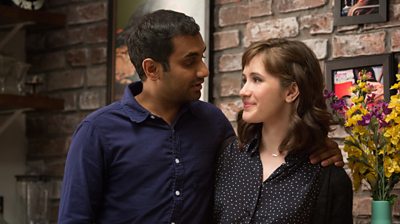
On TV, new content is being created by prominent stars such as Aziz Ansari, Mindy Kaling, and Hasan Minhaj, drawing from their real-life experiences while tackling the topics which interest them. In Master of None, Ansari portrays Dev, a first generation Indian immigrant and a struggling actor in New York City, but his heritage and ethnicity do not take centre stage—it’s a prism through which
Ansari tackles the topics that are of most interest to him. In an early episode titled Indians on TV, he draws from his real-life experiences to address a long running issue on American TV: the obvious stereotyping of Indian actors.
In the Mindy Project, created by Mindy Kaling, her characters background is rarely acknowledged or discussed other than as a throwaway joke. Mindy in a sari is the closest we get to a glimpse of Indian culture in the programme. There has never been dialogue on Mindy’s experiences as a dark- skinned Indian or a second-generation immigrant.
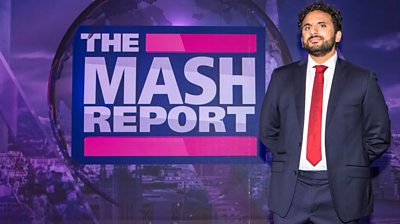
The BBC’s The Mash Report also spotlights stand-up comedian and radio presenter Nish Kumar. Kumar is known for his political gags that often explores the intersectional narratives around topics such as race, gender and privilege.
Never Have I Ever is a comedy about the life of a Indian-American teenage girl dealing with the death of her father. Written and directed by Mindy Kahling, the series has been a breath of fresh air for many. It’s Bollywood dance scene was praised for accurate portrayal which came from working with authentic Indian dance choreographers.
“Kaling has written a three-dimensional Indian character who has an identity outside of being Indian, as well as beautifully exploring the subtleties of diaspora culture.” - Maighna Nanu, Digital Spy [2020]
“The dance sequence...is monumental. The dancers are dressed in gorgeous, authentic Indian formal- wear — not just the recognisable sari, but lehengas and cholis and other outfits that make more sense for dancing.” - Proma Khosla, Mashable [2020]
In the UK film industry, Dev Patel recently appeared in the 2019 film The Personal History of David Copperfield, an adaption of a classic Charles Dickens novel. The film is noted as a landmark for ‘blind-casting’ and a challenge to the UK industry to embrace a more inclusive, and more representational picture of modern Britain on film – even when creating a period drama.
“… you’re making a statement about the fact that you’re going to cast actors who are capable of embodying the character as perfectly as possible, regardless of their ethnicity. I was standing on the side of the set the other day, watching a scene between three of the younger characters. I suddenly realised I was watching three young black British actors in a Dickens adaptation, none of which were written as black characters. And it didn’t seem odd. It’s just another scene in the film.”
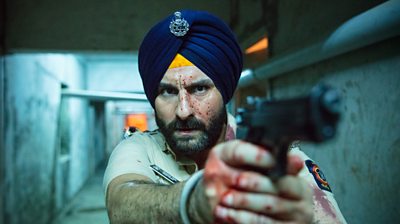
Netflix first Indian Original, Sacred Games, based on the novel by Vikram Chandra, is one such programme attempting to provide an authentic portrayal of Mumbai that breaks with the exotic and stereotypical ideas of India and Bollywood. It showcases the familiar elements of any cop-gangster programme, whilst also depicting the poverty, violence, corruption, and caste prejudices in Mumbai.
“There are clear flaws to Sacred Games (the story clichés, some avoidable poor decisions that characters make, etc.), but there’s also something riveting about India’s bleaker, darker heart being exposed as opposed to some upbeat, colourful explosion of dance scenes.” - Tim Goodman, Hollywood Reporter [2018]
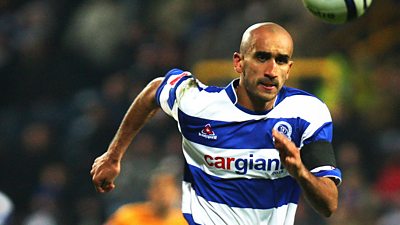
In English football, representation is conspicuous by its absence, by the end of the 2018-19 season, only four British footballers of South Asian descent had played in the Premier League- Neil Taylor, Michael Chopra, Hamza Choudhury and Zesh Rehman. This comes six years since the Football Association outlined its intention to come up with a plan to help British Asians make an impact on English football.
“There aren’t many British South Asian (BSA) coaches in the professional game, especially those with long- term industry knowledge, so BSA youngsters have not really had any prominent figures to look up to…There is nobody at the moment who can be that beacon of light.” - Taff Rahman, FA & UEFA Coach [2019]
The Indian population in England and Wales is the largest ethnicity after white with around 1.4m people, equating to around 2.5% of the population.
Life in the UK today
The Indian population in the England and Wales is the largest ethnicity after white with around 1.4m people, equating to around 2.5% of the total population.
India’s historic ties with Britain mean that different aspects of Indian culture like food, music and yoga have a strong influence on British life today. British Indians play a crucial role in medicine, academia, arts, business and politics in the UK and are widely considered Britain’s most economically successful ethnic minority.
Made up of 1.4 million people, the Indian community are the UK’s biggest ethnic minority group. They make up the largest subgroup of British Asians and are one of the biggest communities within the global Indian diaspora.
There is a mingling and interplay: British influences Asian, Asian influences British.
As with the UK’s other ethnic minorities, Indians in England and Wales are young, with 55% of the population under 35. However, the Indian minority also holds the highest percentage of people aged 65 and over of all ethnic minority groups (8%).
The British Indian population totals over half a million in London and is one of the capitals largest non-white ethnic groups. British Indians make up 26% of the population in Harrow and 19% of Hounslow and Brent. Leicester is set to soon become the UK’s first ethnic minority- majority city and Indians make up by far the largest ethnic group at 28% of the local population.
A ‘model minority’, British Indians have the highest employment rate of all ethnic minorities (76%) and the lowest poverty rate. They also have a high level of academic attainment with 96% of Indian pupils progressing into higher education, second only to Chinese students.
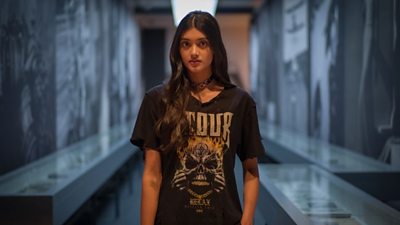
Young British Indians are also increasingly visible in entertainment, fashion and politics; Neelam Gill became the first British Indian model to be cast in a Burberry campaign and reach the top of the industry, and Chancellor Rishi Sunak holds one of the most powerful roles in the UK government.
Whilst British Indians are largely perceived as successful and assimilated, they continue to fall victim to stereotyping in the media. However, with a move towards blind casting and a proven audience appetite for diverse content, representation and portrayal appears to be improving.
When thinking about people of Indian heritage in the UK, we should remind ourselves of the variety of languages, religions, places, traditions and identities that are included in the word ‘Indian’. Whilst family, food and spirituality can represent general, uniting themes.


Discover more
Code of Practice Progress Report 2024/25
An update of progress on the BBC Creative Diversity Commitment
Elevate
Supporting deaf, disabled and neurodivergent talent in the TV industry.
Reflecting our world
Inspiring organisations around the globe to create content that fairly represents our society.

