
The Chinese democratised eating out after the Second World War.
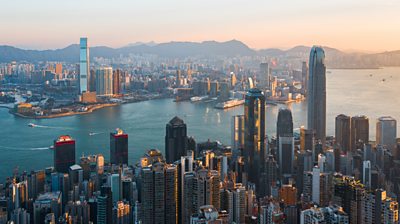
Introduction
This summary is about the UK’s Chinese population primarily from mainland China and Hong Kong. South East Asians are often grouped together and we need to be mindful they are all vastly different. While members of ethnic Chinese communities often share cultural practices and customs, it is worth noting that they do not always wish to identify themselves the same way - for example, Chinese people born in the UK may prefer to identify themselves as ‘British Chinese’, while Chinese people from Hong Kong are more likely to call themselves ‘Hong Kongers’ rather than ‘Chinese'.
Despite being a smaller ethnic group in the UK, the legacy of Chinese cultural influences permeate British society, evident in the food we eat, the celebration of Chinese New Year and the establishment of bustling Chinatowns in Birmingham, Glasgow, Manchester, Liverpool and London. Although we may take eating out for granted today, it was the Chinese community who introduced the concept of dining out after the Second World War by making new foods affordable to the masses.
The British Chinese community are affiliated with successful education and employment and often seen as a ‘model minority’. Due to their perceived success, people think that the Chinese don’t experience racism or discrimination when in fact, they endure some of the highest rates of racism of any ethnic group in the UK. A younger generation are now speaking-out in politics and the media industry.
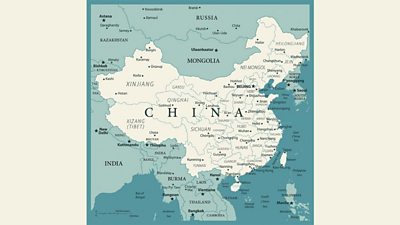
Britain’s Chinese diaspora is the oldest in western Europe. The waves of this migration can, in part, be traced to British colonialism. The First Opium War, from 1839 to 1842, led to China ceding Hong Kong to the UK and the expansion of British influence on the mainland.
History
Chinese sailors arrived in the UK in the 1850s and established communities in Britain’s port towns, predominantly Liverpool and London’s East End. Until the 1890s Chinese sailors stayed in temporary accommodation with other minorities brought to the UK by the shipping industry. It wasn’t until the late 1800s that Chinese shops and cafés opened, signalling a more permanent Chinese settlement in the UK.
London’s first Chinatown in the East End’s Limehouse district came about in the 1880s and in the last decades of the nineteenth century, Chinese laundries began to appear in London.Chinese sailors often struggled to get jobs on ships and received lower pay than their British colleagues. Laundry work was a safe alternative to life at sea and became a popular option for sailors who wanted to settle on dry land.
In the early decades of the 20th century, Britain was buzzing with Sinophobia (a sentiment against China, its people, or Chinese culture). In 1911, during the Chinese Revolution which saw the downfall of the Qing dynasty and China turning republic4, an article titled The Chinese in England: A Growing National Problem was published in the London Magazine. The article warned of ‘a vast and convulsive Armageddon to determine who is to be the master of the world, the white or yellow man’.
The author Herman Sheffauer expressed his concerns around the Chinese population and issued warnings of Chinese immorality and race mixing believing that Chinese homes and businesses were common places for Chinese men to tempt young English girls and host immoral activities of gambling, opium- smoking and plotting international conspiracies.
The Home Office found the article significant enough for it be distributed around. Sheffauer also spoke supportively of a Liverpool MP’s stated intention to introduce a bill to deport all Chinese in England.
The fear that East Asian countries would take over the West became known as ‘yellow peril’. After the First World War, visions of this ‘yellow peril’ were broadcast in cinemas, theatres, novels and newspapers. The notion of ‘yellow’ derived from labels coined in the eighteenth- and nineteenth-centuries.
The archetype of Fu Manchu is a fictional villain who looks Chinese and set in the early 20th century. The character represents the fear of the West toward the Yellow Peril, a racist metaphor describing the xenophobic theory of colonialism and still exists today.
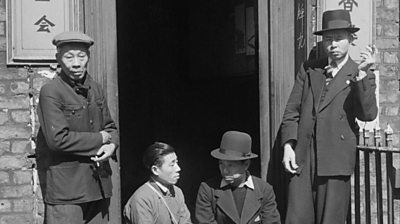
By 1946 nearly 5,000 seamen had been sent back to China from Liverpool
During WWII thousands of Chinese sailors from Shanghai, Singapore and Hong Kong12 were recruited to the British Merchant Navy to assist with the transport of supplies for the war effort and Liverpool became a reserve pool of Chinese Merchant sailors, further boosting the community in Liverpool.13 There are records of interracial relationships between Chinese sailors and British women in spite of the stigma mixed race relationships held at the time.
Despite the nearly 100 year establishment of the Chinese community in Liverpool, following WWII there was a drive from the Home Office to deport Liverpool’s Chinese seamen, referring to them as an ‘undesirable element’.
During WWII a number of Chinese sailors had taken part in a strike calling for higher pay for working in danger zones; this hadn’t been forgotten by their employers and as a result many had their contracts changed to now be stationed in China.
By 1946 nearly 5,000 seamen had been sent back to China from Liverpool, suddenly leaving many women without husbands and children without fathers. A plaque now stands in Liverpool remembering those who were deported.
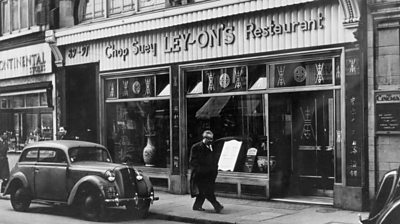
The 1950s and 60s saw a wave of rural migration from Hong Kong against a backdrop of political unrest and a swelling Hong Kong population in the aftermath of the Chinese Revolution won by the Communists in 1949 which caused hundreds of thousands from China to flee to Hong Kong. The agricultural economy collapsed following the civil war resulting in farmers seeking a new livelihood overseas.
Many of these migrants were the ones to open restaurants and start businesses across Britain and a firm chain of migration was developed between Hong Kong and the UK. The Chinese community democratised the culture of dining out after the Second World War, not only introducing new foods to a previously rationed nation, but making dining out affordable to all.
In the 1960s a large number of immigrants travelled to the UK from China & Hong Kong in search of work in hairdressing and catering, the restaurant boom in particular offering vacancies. The key difference between the Chinese immigrants and other immigrants at the time was that they already had jobs lined up before they arrived into the country.
My brothers and sisters in Hong Kong gradually came to England to earn a living and help out. I started fulltime work on the restaurant floor [of The Good Earth, in King’s Road, Chelsea] in 1981. I became expert at chopping-board duties, responsible for providing ingredients, chopping vegetables and meat, and measuring them.
Catering was a key area of employment for the Chinese community and by the 1970s nearly every small town had a Chinese restaurant, especially after the decline in the laundry industry. In light of the invention of the domestic washing machine, widespread laundrettes put Chinese hand-iron laundries out of business and forced Chinese laundrymen to look for jobs in other industries. By the 1960s many laundries had been turned into Chinese restaurants.
The movement out of cities and into smaller towns and villages where there was a gap in the restaurant market accounts for the geographical dispersal of the British Chinese community across the UK. The 1981 census shows there were approximately 154k Chinese people living in the UK at this point, with nearly 30,000 Chinese children in schools, 75% of whom were been born in the UK.
The Tiananmen Square massacre of 1989 in Beijing and the lead up to the British handover of Hong Kong to China triggered another wave of Chinese mass migration. The years leading up to the handover was an anxious period with thousands of Hong Kong citizens emigrating to Canada, the USA, Australia, the UK and New Zealand.
My shame is no longer in being Chinese. My shame is that I spent such a long portion of my life ignoring, rejecting and resenting my Chinese identity. I will not be scared or ashamed in being both British and Chinese. That is my identity, and that is my truth.
Culture
Second and third generation immigrants report feeling increasingly distant from their culture’s core values as they attempt to tackle the balance of being Chinese and British. However, we’re starting to see evidence of younger audiences celebrating their cultural heritage.
"I hated it, being British Chinese. It felt embarrassing to bring Chinese food into lunch, for my Chinese parents to speak Chinese in front of my friends. Now, I really love it. I love my heritage." - Johnny Luk ran for the ruling Conservative party in London in 2019
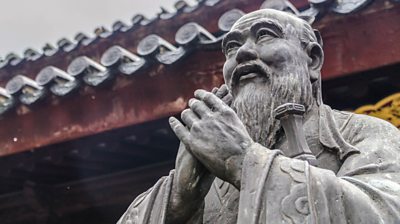
CONFUCIAN VALUES
The predominant religions in the British Chinese community are Christianity (19.6%) and Buddhism (12.6%) with 55.6% of the population classifying themselves as not religious.2 This sets the British Chinese community apart from the UK’s other dominant ethnic minorities where religion plays a significant role in shaping cultural values.
Arguably the most influential person in Chinese history, philosopher Confucius and his teachings continue to exert a deep influence on society even in modern China today.
Whilst Confucian cultural values are integral to conservative Chinese culture, they are not followed by everyone to the same degree. More modern families, or younger Chinese people in the UK, may not perceive these values in the same way as those who have adopted a more traditional outlook.
Those who follow a more traditional Confucian approach value collectivist ideals that prioritise the group (be it the family, society or state) over the needs, wishes and desires of the individual.
In order for Chinese society to operate smoothly, it is necessary to subject one’s own desires to the greater good of the group.
Confucianism stresses the importance of correct behaviour, loyalty and obedience to hierarchy. The manifestation of such values means that children are often perceived as being conformist, hardworking and high achievers; while their parents in turn are seen as strict, controlling, and guilty of placing high demands on their children to succeed educationally, leading to stereotypes like the ‘Tiger Mum’.
‘Face’ refers to a cultural understanding of respect, honour and social standing which centres around collectivism. ‘Face’ is embedded in most Asian cultures, representing a person’s reputation, influence, dignity and honour.
Individuals usually act deliberately and with restraint to protect their self-worth and to positively influence how they are perceived by their peers. Conservative conduct is the norm, as people don’t want to stand out or risk losing ‘Face’ by doing something that is considered culturally inappropriate.
FAMILY
Chinese culture has been influenced by Confucianism and for some ‘Face’ plays an important role as an individual’s success—and shame—belongs to the whole family.
Family obligation centres around the obligation of respect and to be good to one’s parents; to take care of one’s parents and to engage in good conduct not just towards parents and older family members, but also outside the home so as to bring a good name and reputation to one’s parents and ancestors. Chinese children are expected to look after their elders in old age.
The nuance of respect and family was subtly executed in Netflix’s animation Over the Moon in a scene where the character Fei Fei is angry with her stepmum but still says a polite thank you for the gift she is given.
This sense of familial obligation and generational betterment is illustrated through first and second generation immigrants often working in labour intensive industries in order to provide opportunities for their children. In a film by BBC Stories about children who grew up in British Chinese Takeaways, contributors discuss how hard their parents worked to ensure they had the chance to progress.
FOOD
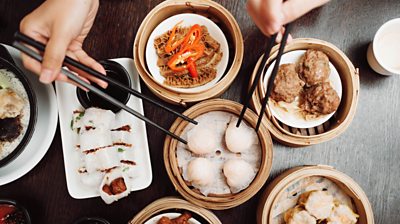
When it comes to food, Chinese families share dishes rather than have one dish for one person. This ritual of eating is evident in Dim Sum, a style of Cantonese food that has grown increasingly popular in the Western world in recent years where small dishes are shared.
Dim Sum is also known as ‘yum cha’ which literally translates as ‘drinking tea’. The concept dates back to when those who travelled along the ancient Silk Road through China would often need a place to rest before continuing on their journey. Teahouses opened up along the roadsides of southern China. These teahouses began offering bite-sized snacks as an accompaniment after discovering that tea aids digestion.
It’s worth noting that in the late 1950s Chinese restaurants adapted their recipes to fit with British tastes: crispy duck, sweet and sour pork and egg fried rice. These have become known as stereotypical ‘Chinese food’ as acknowledged by Ken Hom, the Chinese chef who had his own BBC cookery series. But as times change, so do expectations.
EDUCATION
Confucius is known as the first teacher in China who wanted to make education broadly available and who was instrumental in establishing the art of teaching as a vocation; indeed as a way of life. As such the values of education are important which explains why it is held in high regard by the UK’s British Chinese population.
Chinese students have the highest rate of entry into higher education of any ethnic group. Furthermore, other Confucian values are also thought to contribute to the success in education as obedience and diligence means children are taught to follow the rules and work hard.
Parents of British Chinese children are known to build in additional learning opportunities outside of school to further the education of their children - including weekend Chinese schools and private tutors.
However, the success of the Chinese population in the field of education has contributed to the perception of the British Chinese population being seen as a ‘model minority’. A model minority is a minority demographic (whether based on ethnicity, race or religion) whose members are perceived to achieve a higher degree of socioeconomic success than the population average, thus serving as a reference group to outgroups.
This has been referred to as ‘a blessing with a curse’. Some argue that this leads people to think Chinese people don’t experience racism or discrimination. As a result, they are rarely called up to speak about their experiences despite enduring some of the highest rates of racism of any ethnic group in the UK.
A 2015 article by Newsbeat reported that some of the British Chinese community do not think that racism against them is taken seriously enough and is not helped by the lack of understanding around the words that Chinese people find offensive. Mistrust in the police and the cultural understanding that you shouldn’t worry other people with your issues also contribute to the under-reporting of racist incidents.
Learn as though you would never be able to master it; hold it as though you would be in fear of losing it.
FESTIVALS
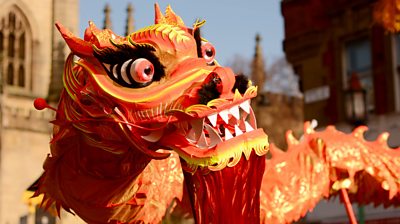
Chinese New Year is widely celebrated in the UK, with the first celebration of the Lunar New Year taking place in 1963 in London’s Gerrard Street.
Lunar New Year traditions are about spending time with friends and family and the rituals during this period give us an insight to some of the beliefs and values upheld in this cultural tradition.
The giving out of red envelopes with money symbolises good luck and is thought to suppress evil spirits and give the recipient a long healthy life. Fireworks are used to drive away the evil in China and a few days before the Chinese New Year, people will do a complete cleaning of the house and house wares which signifies removing the old and welcoming the new. Red is the lucky colour in Chinese culture (as is the number 8) so many of the decorations are red in colour.
The annual Dragon Boat Festival, also known as Duanwu Festival, is the second largest cultural event in the Chinese calendar. The legacy is a celebration that commemorates the death of patriotic statesman and poet Qu Yuan of the third century. An annual festival takes place in London where competitive races and carnival style celebrations take place.
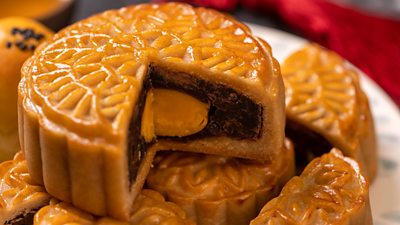
Another festival which isn’t widely celebrated in the UK but is common in the Chinese community is the October Mid-Autumn Festival which celebrates coming together as a family and giving thanks for the harvest.
The moon is thought to be the biggest and roundest on this day, symbolising family togetherness. One of the most common ways to celebrate is by eating mooncakes - a dense, sweet pastry that’s baked or steamed and typically enjoyed with tea.
Netflix recently released its animation Over the Moon with a modern twist on the legendary moon goddess. To celebrate its launch, Netflix invited British Chinese vloggers like Shu Lin to its event staged in London’s Chinatown.
LANGUAGE
Mandarin is the primary language spoken in China. In the UK, however, Cantonese is spoken by the majority of the British Chinese population, followed by Mandarin, then Hakka Chinese. This could be explained by historical immigration from Hong Kong where Cantonese is the main spoken language.
It is also worth noting the numerous dialects spoken across China so it is likely that many of the British Chinese population have their own subdialects and regional variations linking back to ancestral roots.
Growing up, children are often encouraged to speak Chinese in the home and to attend Chinese School at weekends.
Mandarin is now the top non-European language that UK parents would like their children to study, reflecting the growing importance of China and its relationship with the UK economy.
I went into a casting for a part, it was for a Chinese girl that grew up in Manchester and they said ‘she has a difficult relationship with her parents because her parents don’t understand why she went to university and became a forensic scientist. They don’t understand why she won’t take over their takeaway emporium. This is how I know a white guy wrote this. Any Chinese parents would NEVER say this, they would be so proud of that scientist daughter and they’d never want her to take over their takeaway!
Media Portrayal
Due to the homogenisation of the ‘East Asian’ identity, and the lack of character development within film and television, this section covers ‘East Asian’ portrayal. Where possible,we’ve aimed to focus on Chinese representation and portrayal specifically where possible.
A report published in 2020 by Equity looking at diversity in broadcast TV concluded that actors from East Asian backgrounds were severely under-represented in programming, with rates of appearance ranging from 0%-3% depending on genre. Historically there have been very few mainstream shows starring British Chinese or British East Asian acting talent.
Mixed-race British East Asian actor Daniel York Loh has said the argument that East Asians are a small percentage of the population so they should only have a small percentage of media representation is flawed. For example in hospital dramas there is often only one East Asian character, whereas in reality, metropolitan hospitals in places like London and Liverpool are likely to have a high proportion of East Asian doctors and nurses.
Whitewashing is still a problem today when it comes to East Asian representation and portrayal on television with the portrayal of East Asian actors played by white actors. The practice of excluding East Asian actors from roles, or casting white actors to play them, has been coined as ‘yellowface’.
“We’re talking about the kind of practice that would be unthinkable for other ethnicities - for example, the idea of a white actor playing a black role by donning costume and make-up would be completely unthinkable.” Dr Ashley Thorpe, A Senior Lecturer In Drama, Theatre And Dance At Royal Holloway University
Things haven’t seemed to progress in film. In 1944 Katherine Hepburn portrayed the Chinese heroine in Dragon Seed and Mickey Rooney portrayed Mr. Yunioshi, a bucktoothed man with a loud, thick Asian accent in Breakfast at Tiffany’s in 1961. From 1965-1969 Christopher Lee played Dr Fu Manchu.
The film industry today has also been accused of whitewashing roles to ensure famous names can play key roles.
“It all results in the dehumanization of people of colour; and, in the specific case of yellowface, in the dehumanization of Asian people.” - Keith Chow, Nerds Of Colour blog [2018]
For a group that rarely gets any screen time, the list of tropes goes on. Criminal gangs, immigrants, prostitutes, waiters, submissive females, tiger mums, geeky Asian men and Kung Fu tropes are just some of the common themes we see played out on screens. Playing into these stereotypes is a common criticism of British Chinese representation on television. As part of the BBC CDX series, actress Aoife Hinds said race specific roles themselves are not always an issue; the issue comes from the fact that East Asian parts often lack individual personalities and depth of character, only appearing in a handful of scenes with little or no additional context.
Actress Lucy Sheen and York Loh, the head of Equity’s Race Quality Commission, have both highlighted the crude stereotypes often attributed to East Asian roles.
“Women are generally depicted as slim, petite, long-haired, submissive ‘lotus blossom’ types, prostitutes, or illegal immigrants, while East Asian men are portrayed as asexual or effeminate.”
“East Asian males are brutish or geeky with no inner life, no charisma, wit, romantic inclinations, nothing.”
Recently the hashtag #StarringJohnCho went viral, re-imagining the Korean-American star as the lead of rom-coms and action films.
"When people see Asian prostitutes on their screens time and time and time again and that constant dehumanising of East Asian bodies, it means that people think they can treat me like that in my daily life."- East Asian Female, BBC CDX Moving Beyond Yellowface [2020]
The continued reinforcement of negative Chinese & East Asian tropes on TV can contribute to real world negativity experienced by the community; as Aoife Hinds said in the BBC CDX panel, “the continued portrayal of a dehumanised body passes on into real life”.
The ‘Fu Manchu’ trope is a stereotype that lives on and is frequently applied to Asian roles, the archetype of the evil mastermind.
Gangster? Check. Waiter? Check. Enemies of the Chinese state? Check.” -Benedict Wong, Actor [2013]
A lack of understanding of cultural differences and Confucian values has created the association of East Asian families with strict and controlling parenting styles. Whilst on the whole, Chinese communities place significant importance on education, ‘tiger parents’ are seen by some as an exaggerated and unnecessary stereotype.
A Shift in Media Portrayal
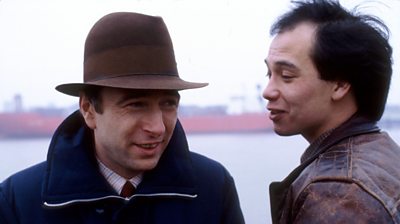
2021 will mark the 40th anniversary of the BBC drama The Chinese Detective – a police drama starring Liverpudlian actor David Yip as a Detective Sergeant taking on London’s seedy underworld. At the time the show was lauded as ‘ground breaking’ but Daniel York Loh says there has been little to compare with it since. “We have gone backwards if anything.”
In the UK, we are starting to see Chinese and South East Asian actors appear in roles outside of the usual stereotypes where their ethnicity isn’t relevant, but these roles are still sporadic - whether that’s Gemma Chan starring as an artificial synth in Humans, Katie Leung in Harry Potter as Cho Chang or Sandra Oh (who is actually Korean) as the infamous Eve in Killing Eve.
East Asian actors are rarely cast in non-race specific roles which has been described as feeling like the ‘perpetual foreigner’ and frequently being expected to put on a false Chinese or Japanese accent when acting, ignoring the nuances of identity amongst the British East Asian population.
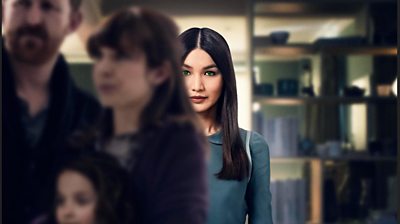
Things looked more positive in 2018 when Crazy Rich Asians launched, the first major Hollywood picture with an all-Asian cast since The Joy Luck Club in 1993. Also in 2018, Gemma Chan played the historically white character of Bess of Hardwick in the Oscar nominated film Mary Queen of Scots. In 2019 Chan starred in Refinery29’s Mr. Malcolm’s List, a short film set in early 19th century England. This received significant praise for its subtle handling of such a diverse cast.
In 2020, Parasite, a Korean film won Best Picture at the Academy Awards and more recently, Netflix’s branch into animation with Over the Moon also gave a platform for Chinese communities and identity.
The US entertainment industry is said to be ahead of the UK when it comes to East Asian representation and portrayal. For example sitcom Fresh off the Boat was praised for its depiction of a Taiwanese-American family, while My Crazy Ex- Girlfriend cast an East Asian as the male romantic lead - something critics noted was unusual.
Netflix rom-com To All The Boys I’ve Loved Before starring Vietnamese-American actress Lana Condor was praised for its depiction of the Asian-American experience and not making the character’s ethnicity a plot point or focus.
The 2020 HBO show Love Life has received similar praise for its understated inclusion of diversity and its portrayal of South East Asian men as attractive and desirable.

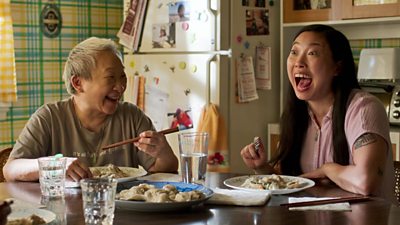
The Farewell, featuring Chinese-Korean actor Awkwafina, is a film about a Chinese girl and her dying grandma. It encompasses representation on many levels, from the detailed portrayal of Chinese family life to the struggles of culture clash.
“Wang’s powerful exploration of the space between the two cultures is what makes the film feel like a miracle for those of us who have lived this experience of straddling identities. I grew up in the U.S. with Chinese immigrant parents, and there were so many moments that felt instantaneously familiar to me. I have spent — and will continue to spend — my entire life navigating that space, an existential struggle that few people in my life really understand and a difficult dilemma to articulate. Every visit to China presents a minefield of anxiety and frustration, moments that become lost in translation.”
“I wanted to show a family that was very culturally specific, but also very American at the same time. A family that both feels very Chinese, but also still feels very, very American — and in a character that feels very, like, iconic New Yorker.” - Lulu Wang Director of The Farewell [2019]
Nora from Queens also featuring Awkwafina focuses on culture clashes of being Asian American but also brings comedy to authentic and cultural nuances.
“We always wanted to do a backstory episode for the grandma and we were excited to do that. When we were figuring out the format for that episode, we thought it would be really fun to do a K-drama. The exciting thing about that was learning about the cultural revolution —talking to parents and grandparents about their experiences which some don’t like talking about at all. It was good to have a little authenticity through these true life experiences.” Teresa Hsiao, American Television Writer And Producer [2020]
The Chinese community in England and Wales is made up of around 400,000 people, equating to around 0.7% of the total population.
Life in the UK today
The UK’s Chinese population is more geographically dispersed than other dominant ethnic minority groups. Interestingly, the Chinese population in Northern Ireland is the largest minority ethnic group in the nation, closely followed by Indians.
In recent years, the primary reason for Chinese migration, mainly from mainland China to the UK is education. This increasing population is shaping the modern Chinese Britain and Chinatowns today.
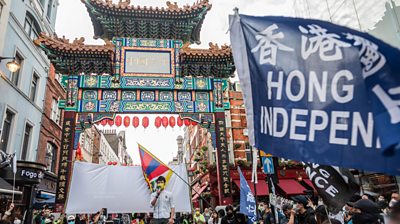
In the wake of a National Security Law recently imposed by China, following anti-government protests in Hong Kong, the UK government announced that Hong Kong citizens with British National Overseas (BNO) passports can live and work in the UK for five years, and eventually become eligible to become full British citizens. The Foreign Office predicts that up to 200,000 Hong Kong citizens could relocate to the UK over the next five years.
A social mobility study showed that people from working class Chinese backgrounds do better than people from professional Pakistani and Bangladeshi backgrounds. A 2018 ONS report showed that employees from the Chinese ethnic group earned 30.9% more than white British employees.
Despite their success, a 2020 report from YouGov found that 76% of ethnic Chinese questioned said they had experienced someone using a racial slur directly against them on at least one occasion. Sixty percent said that it had happened to them multiple- times, much higher than the average percentage across all ethnic minorities at 31%.
The coronavirus pandemic, which was first reported in China, led to an increase in anti-Chinese sentiment in many parts of the world, including in the UK, where the rate of hate crimes against Chinese people between January and March 2020 was nearly three times that of the previous two years.
For a community that has often been seen to be more reserved, things may be changing as a generation of younger British Chinese people are speaking out to help establish more prominence both in the media and in politics where they have been heavily under- represented.
Anna Lo, who became a member of the Northern Ireland Assembly in 2007, was the first Chinese- born person to be elected to a legislature anywhere in Europe. Alan Mak, for the Conservatives, became the first British Chinese MP in 2015.
76% of ethnic Chinese people said they had experienced someone using a racial slur directly against them on at least one occasion


Discover more
Code of Practice Progress Report 2024/25
An update of progress on the BBC Creative Diversity Commitment
Elevate
Supporting deaf, disabled and neurodivergent talent in the TV industry.
Reflecting our world
Inspiring organisations around the globe to create content that fairly represents our society.

