
Culture is a place where you can put yourself in someone else’s shoes and a one size shoe shop just doesn’t make any sense.
Executive Summary
Over the last year, we’ve experienced unprecedented circumstances - from the tragic murder of George Floyd, increased hate crimes against East and South East Asians as a result of the pandemic, to Covid-19 itself and the impact of lockdown. The spotlight on inequality, diversity and inclusion has amplified. These events forced both society and brands - including the BBC - to prioritise the importance of ethnically diverse groups and to acknowledge the difference in their experiences and cultures.
Furthermore, in Ofcom’s Representation and Portrayal on BBC Television 2018 Research, amongst many findings, there was a key emphasis on one point: “Our findings advocate a more nuanced approach to understanding and measuring representation and portrayal. Labels that group people together based on certain characteristics are not always helpful and can mask important details and differences. It is also important that programmes reflect more diversity within groups as well as between them. A more granular approach to analysis helps broadcasters better understand their audiences.”
This research specifically starts to unpack the acronym ‘BAME’ to bring a more nuanced understanding of some of the largest ethnic minority groups in the UK. While this research specifically focuses on people that fall within the ‘BAME’ categorisation, work is underway to address other aspects of diversity. After all, identity is intersectional and a single label doesn’t define who we are and how we identify.
Due to data limitations this research covers the six largest ethnic minorities in England and Wales as categorised in the 2011 UK Census:
Indian (2.5%)
Pakistani (2%)
Black African (1.8%)
Black Caribbean (1.1.%)
Bangladeshi (0.8%)
Chinese (0.7%)
Please note:
- UK Census data categorises ethnicities differently per region and as such, we cannot get a cumulative view on ethnicities for the whole of the UK. The figures in this report are from the 2011 Census which covers England and Wales. Click to see figures in Scotland and Northern Ireland.
- These categorisations alone are incredibly broad and do not capture other important distinctions within groups, for example, black African and black Caribbean omits those of Indian and Chinese descent who also fall into the ‘BAME’ categorisation.
- Due to availability of data & sample sizes, we were unable to give the same depth of detail to all groups. This is an industry wide issue.
- This research doesn’t look at mixed ethnicities or mixed heritage which will have important nuances too.
- It also isn’t possible to cover every example from culture to talent, and all forms of representation across different genres.
This is a ‘think-piece’ tool to help build our understanding of ‘BAME’ groups in the context of history, society, culture and media.
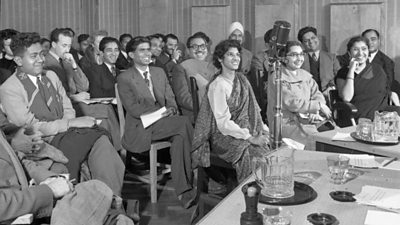
Purpose
INTRODUCTION
Firstly, we take a moment to understand where the term ‘BAME’ stems from and the sentiment towards this term and other homogenous labels associated with these ethnically diverse groups.
The report then goes on to shine a light on the following nuances for each of the 6 largest ethnic minority groups:
HISTORY
This helps us better understand the role that ethnically diverse groups have played in the UK and their contribution to British society.
CULTURE
Culture can define and/or shape attitudes, behaviours and beliefs and the influence of culture varies across generations. We’ve found that younger audiences are becoming more distant from their culture but nevertheless it is still an important part of their multifaceted identities.
MEDIA PORTRAYAL
There isn’t a singular view point when it comes to portrayal. Acknowledging a range of views on how people feel about media portrayal in a wider historical and social context can help us better understand the sentiment and in some instances, programmes (non-BBC and BBC) have been challenged by audiences. Where possible through the document, there is mention of drama, entertainment, factual and comedy but it’s not an exhaustive list.
POSITIVE PORTRAYAL
Reflecting on what has gone well from the BBC and outside, we hope to inspire and nurture our creativity through these positive examples.
LIFE IN THE UK TODAY
Discrimination still exists today and it’s important to acknowledge this and to remind people there are positive stories too.
WHAT IT IS
- It is a think-piece. It is intended as stimulus and to inspire more research, learning and new ideas. It informs action in a different way, it should challenge preconceptions and fuel creative ideas and action that sparks thinking in a way that changes our thought processes. If you walk away from this research re-evaluating what you previously knew and asking more questions, that’s a good thing!
- It isa way to help us reflect on and appreciate the complexity of ‘BAME’ and even ‘black’ and ‘Asian’ and other all-encompassing labels. It can help us to be more conscious of homogenous labels and stereotypes.
- It is a curation of available industry-wide research from a variety of sources including census data, university studies, academics, news sources, articles etc
- It includes insight and opinions from thought leaders, media experts as well as everyday consumers.
- It is a starting point to help unpick the nuance of a richly diverse acronym so we can all embrace difference.There is much more we can do to build greater understanding among each other. This research is one tool in a wider BBC creative diversity toolkit that will launch in 2021 following June Sarpong’s BBC Diversity and Inclusion strategy announcement in December 2020. You can read more about this plan and the other tools that are in progress here.
WHAT IT ISN’T
- It’s not the full story and it’s impossible to be reflective of everyone’s experiences. Our identity is nuanced and unique to us. We’ve brought together lots of research to help build a better understanding of the cultural differences (or similarities) between groups, but these will not be universal truths.
- It is not a singular lens through which audiences of ethnic heritage should be viewed. Ethnicity is only one part of someone’s identity and we must be careful not to stereotype people further.
- It isn’t a critique of previous creative decisions. We can learn something going forward that can challenge us and elevate our abilities to be more consciously creative. Media portrayal is examined in the wider historical, cultural and social context and it is important to read any given example in full context to understand the bigger picture.
- It isn’t a review of positive representation and portrayal in the industry. We do acknowledge BBC and non-BBC examples throughout the research but it isn’t possible to list all of our historical activity. However, you can read how the BBC story of diversity has changed over time here.
The Process
Audience staff from ethnically diverse backgrounds volunteered to research, write and edit this research. With the help of the teams in Creative Diversity, Diversity and Inclusion and Embrace, the BBC’s Internal Staff Network for ethnically diverse staff, we have also consulted with several people from each background to ensure as accurate reflection as possible. We have also consulted with TV Editorial Policy teams and a BBC Broadcast Historian on the content examples highlighted in this research and the historical and social context that surrounds them.
Navigating this report
In each chapter we’ve taken care to include historical, cultural and social context that is crucial to understanding portrayal and representation. Each chapter is intended to be read as a whole in order to build a nuanced understanding.
HOW MIGHT I USE IT?
- Stimulus and reflection, inspiring more research and learning.
- Inspiration for new ideas around the stories we can tell about our audiences.
- New ideas around formats/culture pieces/ marketing ideas
- As stimulus for the language and images we use in our outputs
- A way to build a richer understanding of culture which may be useful for managers and team members to aid conversations in the workplace.
- Reading in smaller teams and getting together to reflect on learnings, questions and ideas.


Discover more
Code of Practice Progress Report 2024/25
An update of progress on the BBC Creative Diversity Commitment
Elevate
Supporting deaf, disabled and neurodivergent talent in the TV industry.
Reflecting our world
Inspiring organisations around the globe to create content that fairly represents our society.

