Public Health reform - 1861-1900
After 1860, the popular Translated as ‘leave well alone’ or ‘let the people choose’. A government policy of interfering as little as possible in social and economic policy. attitude was being challenged. By 1900, there had been more effective public health reforms. The 1875 Public Health Act was the most significant change at the national level, but there were local initiatives too.
Understanding of disease
Louis Pasteur’s germ theory, 1861
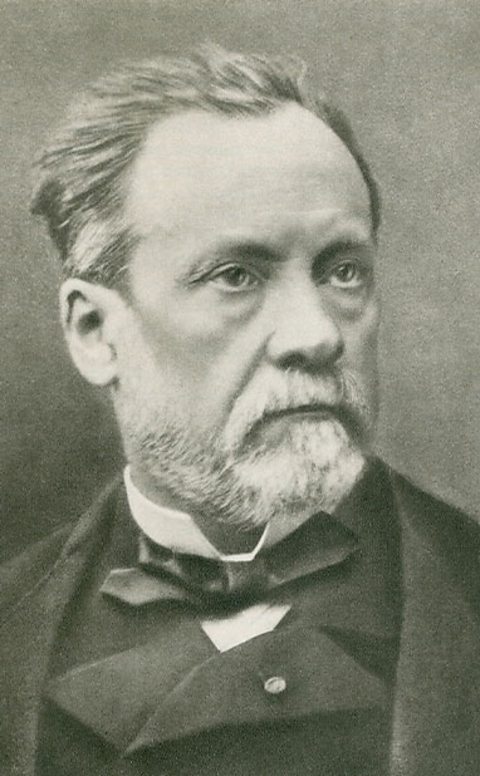
Louis Pasteur was a French scientist who worked for a brewing company. In 1861 he published a theory saying that it was germs (known now as bacteria) that made liquids like beer turn bad. In a series of experiments in 1864, Pasteur proved that it was germs that caused decay and disease. This became known as Louis Pasteur published this theory in 1861 to prove that bacteria caused disease. The theory was widely accepted by the 1880s.
Although Pasteur’s work was not widely accepted until the 1880s, it convinced most scientists that disease was caused by germs, not Smells from decomposing material, such as animal and human waste, that were thought to cause disease. It also gave support to the earlier ideas of people like John Snow. By 1900, people were more willing to pay money to improve public health.
Another cholera epidemic, 1865-66
This outbreak of cholera was less severe than the previous epidemics, but there were still over 10,000 deaths. One particular incident was a reminder of the danger of dirty water: the London Water Company accidentally polluted its water supply with sewage from an area where there had been an outbreak of cholera. Around 7,000 people died.
Acts of Parliament
The 1867 Reform Act
In 1867 the Reform Act gave working-class men in towns the right to vote. This shifted some of the power to elect Members of Parliament. and town councillors to the working class, who were now the biggest group of voters.
Benjamin Disraeli was determined to win the support of the new working-class voters. He appealed to them and promised that public health would be top of the Conservative agenda before he was elected as Prime Minister
“Pure air, pure water and the inspection of unhealthy houses. It is impossible to overrate the importance of these subjects. The first consideration of a Minister should be the health of the people.”
- From a speech Prime Minister Benjamin Disraeli gave in Manchester in 1872.
The 1875 Public Health Act
The 1875 Public Health Act was much stronger than the 1848 act. All local authorities had to:
- appoint medical officers and sanitary inspectors
- take responsibility for sewers, water supplies, rubbish collection, public toilets and public parks
- ensure all new houses had piped water, proper toilets, drains and sewers
- inspect slaughterhouses and shops
The 1875 Artisans’ Dwellings Act
The 1875 Artisans’ Dwellings Act gave local councils the power to buy up A run down area where people live in very poor conditions. areas to clear and rebuild them. They could borrow money from the government in order to do this. However, only ten towns had used their powers by 1881.
The 1875 Sale of Food and Drugs Act
The 1875 Sale of Food and Drugs Act set basic standards for the quality of food. It also introduced harsh punishments for those who sold Mixing one product, such as food, with other products to bulk it out. or contaminated food.
Local initiatives
Rochdale
Rochdale’s town council introduced ‘pail A toilet located in a small shed outside a house or other building.’ in 1869. Instead of people using An underground pit used for collecting human excrement. the council provided small outhouses. These had a portable bucket placed under the seat. The local authority collected and replaced the pails with clean ones on a regular basis. By 1900, many towns had followed Rochdale’s example.
Birmingham
In 1875, the mayor of Birmingham, Joseph Chamberlain, introduced many improvements to the city:
- He used ratepayers’ money to buy up the city’s water supplies. The council took control of them and improved their quality.
- He organised slum clearance and rehoused slum-dwellers. He even contributed £10,000 of his own money toward this initiative.
Manchester
In 1875, the Manchester authorities organised clearance of some of their worst slums. They built grand buildings in their place and provided residents with clean shared facilities such as laundries and rubbish chutes.
They also organised the building of a dam on Lake Thirlmere in the Lake District. A 96-mile aqueduct was built to carry the water to Manchester. This took eight years to complete and was a remarkable achievement.
Towards the end of the 19th century, many towns and cities spent huge sums of money on building schemes. They did this to show off the prosperity of their towns, making them beautiful for everyone to see. Towns such as Manchester constructed grand new housing, squares and reservoirs.
