Key public health problems in medieval Britain
Food supply
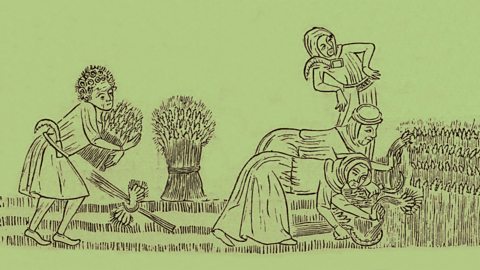
In medieval Britain, everyone’s life depended on the harvest. There was always the danger of bad weather and poor harvests, which could cause hunger and An extreme shortage of food. Around 10 per cent of the population died in the Great Famine of 1315-1316.
Problems in towns
Towns were more crowded than the countryside and generally more unhealthy places:
- At the end of a market day, the streets were full of food waste and animal dung.
- Most people shared An underground pit used for collecting human excrement. Many cesspits had no lining and excrement would leak into other houses’ cellars.
- A person who cleaned out cesspits. emptied cesspits but some merely dumped the waste into local streams. This contaminated the water supply and caused diseases such as An infection spread in contaminated water. Symptoms include stomach pain and diarrhoea, both of which lead to extreme dehydration.
Plague
The A disease that spread across Europe killing up to half of the population. first struck Britain in 1348. Although this first plague An infectious disease which spreads rapidly to a large number of people in a short period of time. had died down by 1350, plague was a constant threat. It returned in 1361-1362 and on 20 more occasions before 1500. The disease frightened the population of Britain, especially because medieval people did not know its true cause.
