Key public health problems in Britain since c.1900
Food and diet
Changes in people’s diet resulted in new health problems:
- The invention of the microwave and increases in the number of working parents have led to more families relying on ready-made meals or convenience food. These processed dishes are not as healthy as fresh food.
- As processed foods became more readily available, people were more likely to consume more calories,sugar and saturated fats. This caused The medical term for being very overweight, owing to the excessive accumulation of body fat. and associated problems.
- Smoking tobacco also grew in popularity. By 1950, 80 per cent of men and 40 per cent of women smoked. However, governments began to take measures to encourage people to stop smoking after the link between smoking and diseases, such as lung cancer, was scientifically proven.
Air
Air pollution has caused many health problems in the 20th and 21st centuries. In the first half of the 20th century, factories and power stations burned coal, as did most people in their homes.
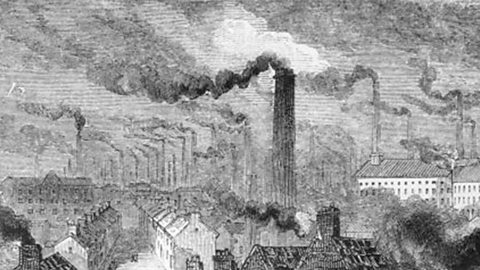
The air in big cities was polluted by the smoke. In certain weather conditions this produced A type of pollution that is a mixture of smoke and fog. which caused health problems such as bronchitis,pneumonia and asthma. In December 1952, 12,000 people in London died as a result of the week-long ‘Great Smog’.
Later in the century, coal pollution was replaced by pollution from cars, leading to health problems caused by exhaust fumes.
Inactivity
Levels of activity have dropped since 1900 for a number of reasons:
- More people started to travel by train and car rather than on foot.
- Increasing wealth has enabled people to spend more on sugary and fatty foods.
- Labour-saving devices, such a dishwashers and microwaves, have become more affordable.
- New technology such as televisions, game consoles and tablets have had an impact on people’s leisure time. They have increased the amount of time during which people are Taking little or no physical activity as part of everyday living.
- More jobs are carried out by sitting at desks in front of screens. Fewer jobs involve manual labour.
Epidemics
Several An infectious disease which spreads rapidly to a large number of people in a short period of time. have affected Britain since 1900.
- The Spanish flu
- This struck Britain between October and December 1918 and again between February and May 1919.
- Local authorities were mainly left to respond in their own areas.
- Although there were many useful responses, they still struggled to contain the spread of the virus.
- Around 25 per cent of the British population caught the Spanish flu and 228,000 of those people died.
- HIV and AIDS
- This emerged in the 1980s.
- The cause of Human Immunodeficiency Virus, a disease which damages cells in the immune system. and Acquired Immune Deficiency Syndrome – a disease of the human immune system caused by infection with Human Immunodeficiency Virus (HIV). was not well known to begin with.
- The British government took a long time to develop effective responses.
- By 1995, around 25,000 people in Britain had been diagnosed as HIV positive. Around 12,000 of these people had developed AIDS and around 8,500 had died.
Comparing public health problems
Question
How far do you agree that the problems of public health were the same in medieval Britain and Britain since c.1900?
- Identify two continuities in public health problems, ie problems that were the same in both periods.
- Identify two changes in public health problems. These could be problems that had disappeared by 1900 or new problems that only emerged after 1900.
Two examples of continuity are:
- Pollution - In medieval towns, pollution mainly existed on the streets and in the water supply. In the 20th and 21st centuries, the problem of pollution has not gone away, although now it mainly consists of air pollution. For example, in 1952, the burning of coal led to a smog that killed about 12,000 Londoners.
- Epidemics - Both periods have experienced widespread epidemics that have been difficult to contain. In the medieval period, the Black Death hit in 1348. It was spread by fleas on rats but people did not know that. Similarly, in 1918 the British people struggled to prevent the spread of Spanish flu.
Two examples of change are:
- Food - Problems with food have changed considerably. In the medieval period, the population was very reliant on the quality of the harvest. Hunger and famine were common when harvests failed. However, by the 20th century, there were very different kinds of problems with food. People eat more convenience and processed food, which can lead to obesity and A disease caused by lack of vitamin D in the diet. Symptoms include soft and deformed leg bones.
- Inactivity - Inactivity is a new health problem of the 20th and 21st centuries. In the medieval period, most people led active lives, working on the land and carrying out physical work by hand. After 1900, levels of physical activity dropped as technology improved. Labour-saving devices were used at home and more jobs were carried out at desks. Even entertainment became more sedentary with the invention of computers and televisions. This has meant that more people are overweight, leading to problems such as diabetes and heart disease.
Extent of continuity
On the whole, there has been more change than continuity. The 20th- and 21st-century problems linked to food are of a completely different nature to the problems of the medieval period. This is because in the medieval period many more people were affected by hunger, which was a much worse problem than convenience food.
