Living conditions - housing and food
Working-class housing was crowded together near the factories and other places of work. The conditions varied, but much accommodation was extremely unsanitary and unhealthy. Workers’ diets were poor as they could not afford much fresh or nutritious food.
Housing
Back-to-back houses
Landlords and builders took advantage of the lack of building regulations. They packed as many houses as they could onto small plots of land. Some better-off working-class people rented ‘through’ houses, which had their own outside spaces.
However, many houses were built in terraced rows that were joined to the row behind. These back-to-back houses were often built around an enclosed yard. The poorest families rented this kind of accommodation. They often had just one room downstairs and another upstairs.
Houses like this were very difficult to ventilate, so they were often damp, which caused chest infections. Diseases such as A bacterial infection (also known as TB) spread through breathing in tiny droplets from the coughs or sneezes of an infected person. thrived in these conditions.
Lodging houses
Single people tended to rent out rooms in lodging houses. These were large houses that had been divided up into smaller rooms. Sometimes families stayed in lodging houses while they found a house of their own to rent.
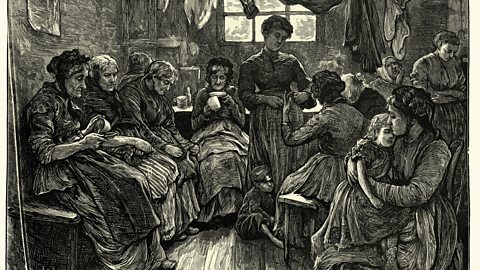
Many lodging houses were dirty and overcrowded, with people packed into a single room and sharing beds or sleeping on the floor. It was very difficult to keep bodies or clothes clean, so fleas and body lice were common. This caused A bacterial disease usually passed from rats, cats, etc. to humans via lice, fleas and ticks. It spreads in areas of poor sanitation and through close contact between people. Possible complications include loss of hearing, organ damage and gangrene. to spread.
Cellar dwellings
These were small and damp spaces underneath other people’s houses, with no sunlight at all. They sometimes flooded with rain or even sewage from the street above.
Food
The diet of the urban working class was unhealthy for a number of reasons.
Diet
- In the second half of the 19th century, the railways started to have a real impact on the food supply. However, in the first half of the century, it was difficult to get enough fresh food (eg fruit and vegetables) into the towns to feed the growing population.
- Workers’ housing had limited facilities for cooking and storing food safely.
- The wages of unskilled workers could be very low, so they struggled to buy enough food to feed a whole family.
- Workers relied on basics such a bread, potatoes and weak tea, with the tea leaves used multiple times. Occasionally they might have bacon or Cheap meat. if they could afford it. This was a fairly unbalanced diet and caused A lack of proper food, which causes illness and disease.
Quality of food
- There were no laws regulating the quality of food.
- Some butchers and street sellers sold meat from diseased animals.
- Food Mixing one product, such as food, with other products to bulk it out. was a widespread practice. For example, milk was sold mixed with chalk and water to make it go further. Copper was added to butter to alter its colour.
- This led to diarrhoea and food poisoning.
