Living conditions - waste and water
The urban areas were overwhelmed with the influx of new residents. Methods of sewage disposal and water supplies were placed under severe pressure. Neither local councils nor landlords took responsibility for making sure everyone had clean water and proper sewers. This often had fatal consequences.
Waste
The disposal of human waste from so many people was a major problem. Sewers were not usually built to service the new working-class houses. As in previous periods, A toilet located in a small shed outside a house or other building. were used. Some people had their own privy because they had their own yard. However, back-to-back houses had to share a privy, sometimes between ten houses or more.
Privies
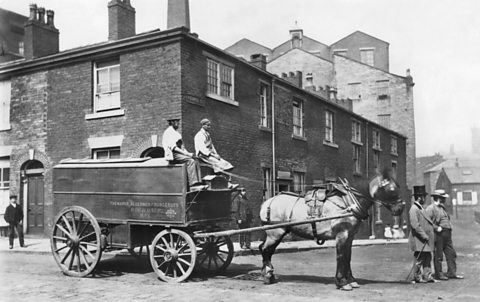
Privies were not connected to sewers but to An underground pit used for collecting human excrement. By this period, cesspits were usually built of brick and about six feet deep. Landlords paid A person employed in the industrial period to remove human excrement from privies and cesspits. to empty the cesspits and take the waste away to sell to farmers as manure. This was arranged directly between landlords and night-soil men. Therefore, if landlords did not pay, cesspits overflowed into the streets and yards in stinking pools.
Cesspits and sewers
Cesspits often leaked as well. Some were actually designed to do this so that only the more solid waste was left behind, as this was easier to collect. This had a deadly impact on the water supply and caused outbreaks of diseases such as A bacterial infection caused by contaminated drinking water.
Some sewers did exist, but they had originally been built to take away rainwater rather than human waste. They emptied straight into the rivers, where drinking water often came from. When flushing toilets later became popular, they were connected to the sewers, making this situation even worse.
Water
All water was unsafe throughout the 19th century. This was because the water companies took water from the rivers, which were contaminated by human waste and pollution from industry. Even rainwater might be unsafe as it had fallen through the smoke from factories. People had not made the link between germs living in dirty water and diseases such as typhoid and cholera.
Piped water into homes was not usually available in working-class areas. Instead, water companies supplied water to be shared between a An area of ground surrounded by one or more buildings. or a street, accessed by a water pump. It was therefore normal for many houses and families to share a single pump. In addition, many landlords were unwilling to pay more than the minimum fee to the water companies, so the water was only available for a few hours per day.
If there was no water pump at all, working-class families collected water from their town’s river or pond. Some people collected rainwater in a water butt or barrel.
