The creation of the Berlin Wall
The Berlin Wall crisis
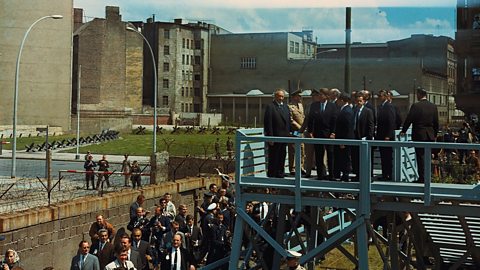
Throughout the 1950s, increasing numbers of people from East Germany crossed into West Berlin and from there into West Germany to escape from poverty with the hope of a better life in a capitalist country. By January 1961, 20,000 East Germans were Moving from one area to another, normally because of a preference for a way of life or political beliefs. Eg people defected from East to West Germany to the West every month. Since the end of the war, 2 million people, who were mostly skilled workers, had left communist Europe in this way. This is sometimes referred to as the Highly skilled workers and intellectuals who fled the harsh conditions in Eastern Europe. East Germany could not afford to lose its brightest citizens.
Nikita Khrushchev had become leader of the Soviet Union in 1956. In August 1961, he decided to build a wall around West Berlin to stop people escaping to there from East Germany. He gambled that the US president, John F Kennedy, would not try to stop him. He was proved right as Kennedy pulled American tanks in Germany back from a confrontation. The wall significantly reduced the number of people escaping to the West. However, many were still prepared to take the risk even though they risked being shot or imprisoned.
The Berlin Wall became a physical symbol of the division between the communist and capitalist worlds. In 1963, Kennedy visited West Berlin and made a speech explaining how the city had become a symbol of freedom in the world.
Freedom has many difficulties and democracy is not perfect, but we have never had to put a wall up to keep our people in.
