The use of transportation from the 1770s to the 1860s
From 1654, some convicts were sent to the British colonies in America to work instead of being executed. This punishment became more common after the 1717 Transportation Act. Convicts were sent to America until the outbreak of the American War of Independence.
Transportation to Australia began in 1787, 17 years after the British explorer Captain Cook landed in Australia. The first 11 ships departed from Portsmouth in May 1787 with 736 convicts on board. During the eight-month journey to Botany Bay, 40 people died.
- Transportation was often a punishment given to people found guilty of theft.
- Around 80 per cent of transported convicts were convicted thieves.
- Most of the people transported were repeat offenders.
Transportation was also a punishment given to protesters. Some of the Luddites, the Rebecca Rioters and the Protesters in the town of Tolpuddle in Dorset. They formed a trade union to protest about their low pay. Trade unions were illegal at the time and the leaders were transported for seven years. were transported. Only 15 per cent of transported convicts were women. Many judges used transportation as an alternative to the death penalty at the time of the The name given to the British legal system in the 18th century. It was called ‘bloody’ as many crimes were capital crimes. Sentences were for 7 years, 14 years or life.
Hulks
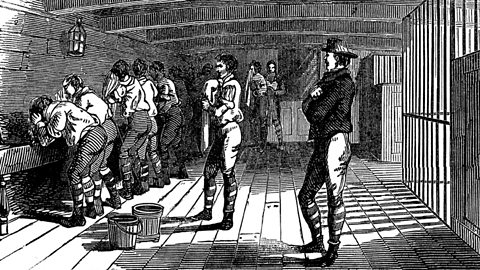
Convicts awaiting transportation were held in prison, known at the time as gaol, or on a A disused warship that was used as a temporary prison. They would then be transferred to a ship and the journey to Australia could take several months. The first ship took over eight months to reach Australia. Conditions on the journey were often cramped and some convicts died on the way. Convicts were often chained up using leg irons on board convict ships.
Once in Australia, some convicts were made to work building roads or breaking rocks. Many convicts were assigned to a free settler to work. For the well-behaved convicts, this life may not have been too bad.
Punishments were harsh and convicts were whipped if they disobeyed the rules. Those who refused to follow the rules were sent to the more remote settlements to work in chain gangs, where convicts were chained together when working.
For good behaviour, some convicts could secure early release after four years through a ticket of leave. Others were given a conditional pardon and were then able to find paid work of their own for the remainder of their sentence.
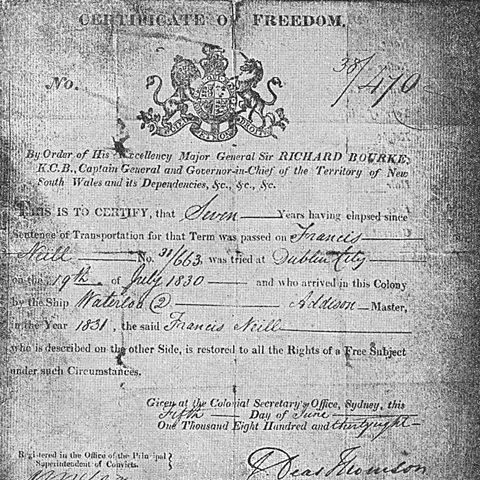
However, many served the full time of their 7- or 14-year sentence. These people received a certificate of freedom at the end.
Once they were free, many people settled in Australia and did not return home. This was partly because few could afford to pay for the return journey.
