New prisons in the later 19th century
In the 19th century, the number of people in prisons grew dramatically. Prison sentences became a far more common punishment as many forms of corporal punishments were no longer in use.
Many new prisons were built in the mid to late 19th century. These new prisons were purpose built. Many followed a similar design. The prisons were secure and allowed for prisoners to have individual cells. In these prisons, two different regimes were used to try to reform prisoners.
The separate system
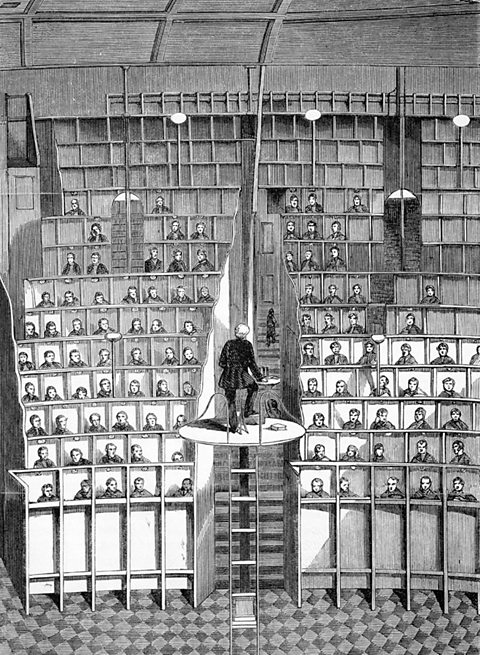
Some of these new prisons were run as separate prisons. In the separate prison system, prisoners were:
- isolated from each other in individual cells
- kept alone in cells for weeks
- put to work sewing mailbags and coal sacks
- only allowed out of their cells for exercise and church services
- made to wear masks when exercising
Education and attempts to reform
Prison chaplains would visit prisoners' cells and try to encourage them to live a more Christian, crime-free life.
Special chapels were built with booths to keep them physically separate. The chapels were used for church services and as a school for adult prisoners.
The silent system
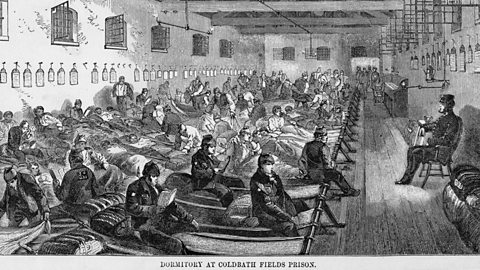
In prisons using the silent system, prisoners were not kept physically separate but they were not allowed to communicate. Inmates were forced to do boring, repetitive and sometimes pointless tasks in complete silence. They were made to Unpicking and untwisting old pieces of rope, often so that the individual fibres could be sold for reuse. This task was carried out in prisons and workhouses. walk on treadwheels or turn crank handles thousands of times.
The idea was that the silence and boredom would allow prisoners to reflect on their crimes. The silent system prisons led to increased rates of prisoner suicide and mental health conditions.
The end of the separate and silent systems
These separate and silent systems did not lower the reoffending rate in the way it had been hoped. In 1877 the government brought all prisons under its control. By the 20th century, the separate and silent experiments were ended.
Prisons also began to discontinue the use of pointless hard labour eg treadmills and cranks. The use of the treadmill was formally abolished in 1902.
