The need for prison reform
In 1553, Edward VI converted the royal palace of Bridewell into a house of correction. During the Tudor period, some Someone responsible for maintaining law and order in a county. Often abbreviated to JP. began to use houses of correction, also called House of correction – a type of prison. as places to attempt to To make changes to something or someone, for improvement. inmates through supervised work.
However, before 1700, prisons were more commonly just holding stations for suspects before trial or for criminals awaiting punishment. By 1700, there were 14 prisons in London, some of which were designated for different types of crime. For example:
- The Clink, Southwark, was for religious prisoners.
- Newgate was for general criminals.
- The King’s Bench, Southwark, was for debtors.
In 1750, there were only around 4,000 people in prisons in Britain. These numbers had been kept low by the use of To send a convicted criminal to a prison camp overseas, such as in America or Australia. to America. However, when this ended in 1776, prison populations rose dramatically and became a cause for concern.
Prisons were run by towns and counties, and there were no rules about how they should be managed. Many prison buildings were not purpose built and had inadequate water supplies and sewers. Most were just large rooms where prisoners were held together.
Conditions in prisons were poor. Many prisoners died from disease. Typhus, a disease spread by lice and fleas, was known as ‘gaol fever’. Around 25 per cent of prisoners died in prison each year. Jailers (gaolers) and guards were not paid, so to make a living they took money from prisoners. More wealthy prisoners could afford to pay the jailer for beds, blankets and better food.
John Howard
In 1777, John Howard published a report on prison conditions. His main observations were:
- prisoners were not separated by gender or type of crime
- many prisoners were dying of illness and disease
- jailers were often corrupt
- too few people were employed to make the prisons secure and safe
- jailers required fees to release prisoners, and many prisoners stayed in prison beyond the end of their sentence as they could not afford these fees
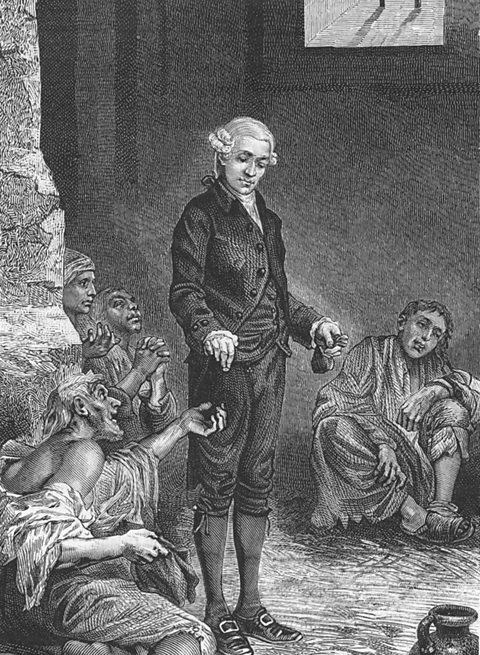
To compile his report, Howard had visited many prisons across the country. These included Caernarfon and Swansea Gaol. He said Caernarfon had “neither drainage or fresh water” and commented that the inmates were “housed in tiny windowless cells”.
Howard believed that if prisoners were made to work, and spend time silently reflecting on their crimes, they could be reformed. He recommended changes to prisons that included:
- running water
- clean and hygienic conditions
- access to medical treatment
- improved standard of food
- payment of jailers
- visits from churchmen
Sir George O Paul
Sir George O Paul was another prison reformer. He designed a new prison in Gloucestershire that was secure and hygienic, had separate areas for male and female prisoners, and had a chapel, workrooms and exercise yards. He also published a book in 1784 called Thoughts on the Alarming Progress of Gaol Fever. His prisons included isolation sections to check new inmates for typhus, good ventilation and an exercise yard. He believed that fever could be controlled through his design.
Elizabeth Fry
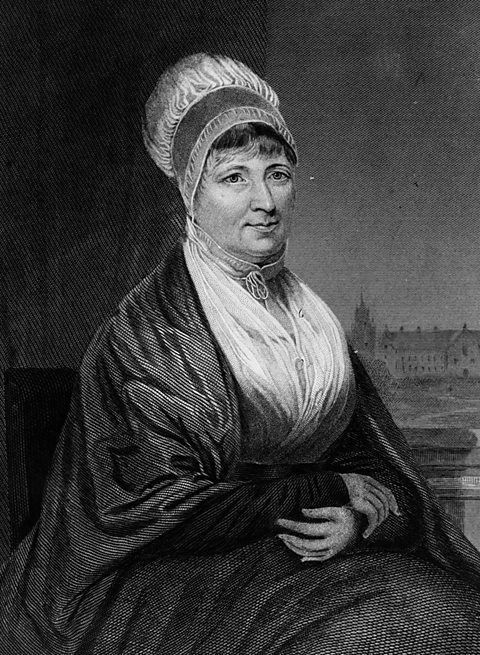
The pressure for reform of prisons continued through Elizabeth Fry’s work in the early 19th century. Fry was a Quaker, a member of the Society of Friends, a Christian group. She and was outraged at the conditions faced by female prisoners in London’s Newgate Prison.
Fry saw hundreds of women imprisoned together in wards. Convicted criminals were mixed with those still awaiting trial. Prisoners were sleeping on cold floors with no blankets or bedding.
Fry visited Newgate Prison regularly. She provided clothes and bedding, and began to teach inmates skills such as sewing and literacy. She set up a chapel and a school in the prison.
In 1817, along with other Quakers, Fry founded the Association for the Reformation of the Female Prisoners in Newgate. Fry also gave evidence to a House of Commons committee on prison conditions. Although this did not have immediate consequences, many of her ideas influenced the 1823 Gaols Act.
1823 Gaols Act
The 1823 Gaols Act stated that “prisons should be made secure; jailers should be paid; female prisoners should be kept separately from male prisoners; doctors and chaplains should visit prisons and lastly, attempts should be made to reform prisoners.”
