Industrial disorder during the Industrial Revolution
There was an increase in protests and riots during the 19th century. Their causes and motives varied.
Some focused on getting political rights, whereas others were a reaction to the enormous changes of the Industrial and Agricultural Revolutions.
Many of these examples of disorder were of great concern to the government. Across Europe, revolutions were threatening the elite ruling classes. The British government had seen the brutality that followed the French Revolution of 1789 and was determined to crush any form of protest or disorder.
Luddites
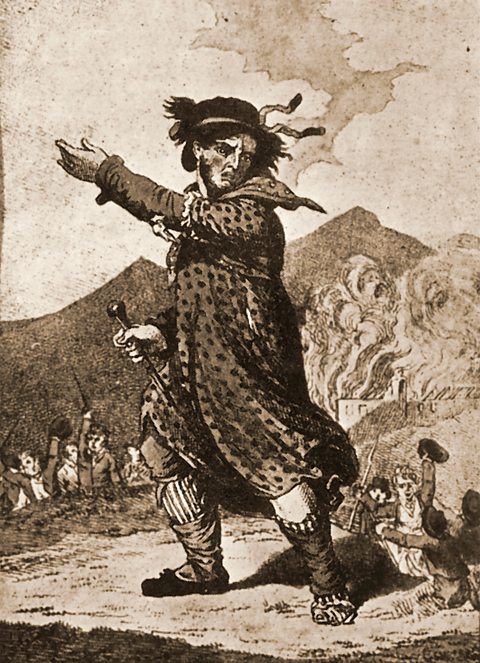
New machinery was introduced into textile mills. The machinery produced cloth more quickly and far more cheaply than weavers could do in their own homes.
In 1811, gangs of weavers and textile workers smashed up 1,000 new machines in Nottingham and Derbyshire. Between 1812 and 1813, similar groups began smashing factory machinery in Yorkshire and Lancashire. They attacked at night.
These groups became known as Luddites. Their protest failed. The government sent in soldiers, who fought a gun battle with the Luddites near Huddersfield in June 1812. In 1813, 14 Luddites were hanged. The movement quickly dwindled afterwards.
Chartists
In 1838, a group of people met in Birmingham and drew up a list of six proposed changes to the voting system. The proposals included votes for all men over age 21, secret voting, annual elections, equal size constituencies, pay for Members of Parliament and that potential MPs should not have to own property.
This list was called the People’s Charter. The people who supported the demands were known as Chartists.
The Chartists drew up a petition to show the support for their changes. They presented it to Parliament twice, but each time it was turned down.
The movement turned violent. In Llanidloes, Wales, in April 1839, three leaders were arrested during a peaceful protest by weavers. An angry crowd broke into a local hotel where the three leaders were being held, freed them and gained control of the town. After five days, troops were sent in and 33 Chartists were punished.
In Newport in 1839, around 3,000 iron workers and coalminers met to show their support for the Chartists. Soldiers opened fire and 20 Chartists were killed. In addition, 500 Chartists were imprisoned and the leaders were initially sentenced to death at Newport. However, they were ultimately A form of punishment during the 18th and 19th centuries, in which convicted criminals or other people considered undesirable were sent, or 'transported', to work in colonies in Australia, America or the Caribbean islands. to Australia instead.
Chartism died down after a final failed attempt to present a petition to Parliament in 1848.
Merthyr Rising
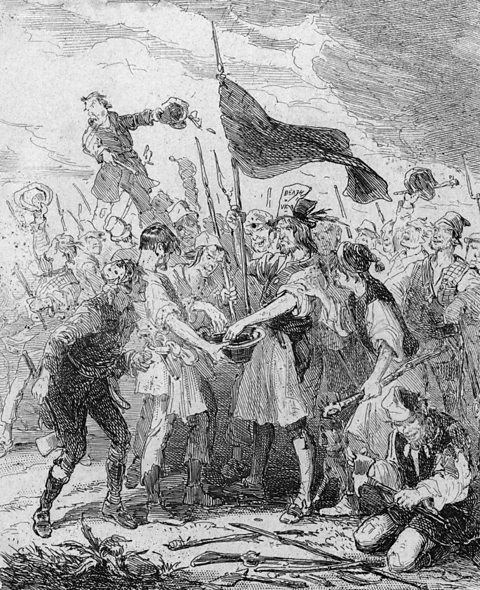
From 1 to 7 June 1831, there was an armed Rebellion against the Government or an authority. in Merthyr Tydfil, Wales. The rebellion was caused by unemployment, low wages and the confiscation of property.
Between 7,000 and 10,000 rebels joined together to symbolically raise the red flag of rebellion and took over much of Merthyr Tydfil. Violent clashes occurred, and troops were sent in by the government to regain control.
A total of 26 people were put on trial. Several were transported but only their leader, Richard Lewis, known as Dic Penderyn, was executed.
