Crimes connected with urbanisation in the 19th century
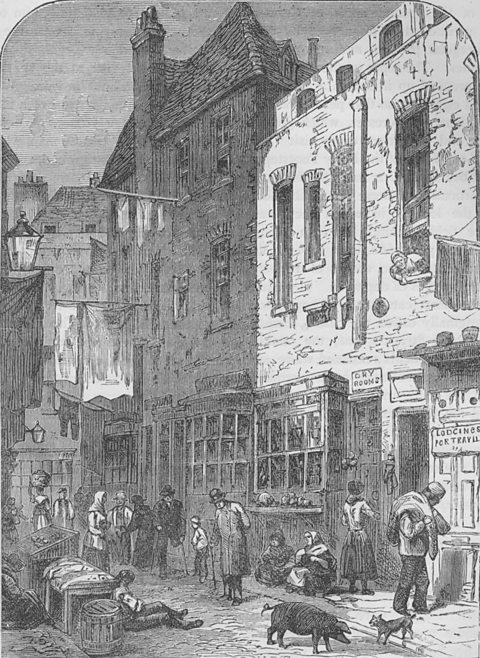
Urbanisation led to people living much more closely together than in the countryside, often in conditions of extreme poverty. As a result, there were more opportunities for crime, which led to an increase in the number of crimes.
Urban crimes
Theft was the most common crime in the new industrial towns and cities. Many crimes were concentrated in areas known as A slum area in a town or a city where rates of poverty and crime were high. Areas such as St Giles, Saffron Hill and Bermondsey in London were examples of rookeries.
Types of urban theft
Pickpocketing was one of the most common types of theft in industrial cities. It was not a new crime, but the size of the cities gave pickpockets more opportunities.
They worked wherever there was a large crowd, eg at public executions. They would steal purses, pocket handkerchiefs, pocket watches from their chains on waistcoats, and pins and brooches from ladies’ dresses.
Fraudsters were given more opportunities following the development of the railways. They tricked investors and made false financial dealings in railway companies.
Prostitution
Prostitution was not new in the 19th century, but there was greater concern about the exploitation of girls at brothels in London. A Select Committee report of 1882 stated that prostitution was increasing in London and that young girls were increasingly being drawn into prostitution.
Murder and the Whitechapel murders
The murder rate across Britain was less than 400 per year and it decreased further after 1890. Murder was not a common crime, but interest in the crime of murder increased during the 19th century. Many people followed murder trials in the newspapers while others visited the Chamber of Horrors at Madame Tussauds, a waxworks museum on Baker Street in London.
In the 1850s and 1860s there was a series of Strangulation with a very thin wire. that led to public panic.
In the 1880s, the actions of a murderer, who came to be known as Jack the Ripper, attracted the widespread attention of the press and public at the time. Five women were murdered and mutilated in an area commonly known as the Evil Square Mile, which included Whitechapel, Aldgate and Spitalfields. This was a slum area, full of smoke from factories and narrow streets and alleyways. The murderer's identity was never discovered and they were never caught.
