Highway robbery in the 18th century
Robbery was a common crime in the 18th century. Highway robberies often happened on the streets and roads approaching London.
A robber on foot was called a footpad and was often part of a gang. They would rob people travelling on foot and they could be very violent.
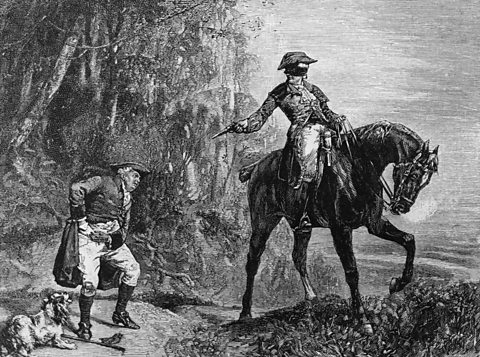
Highwaymen were robbers on horseback and they usually worked alone or in small groups. They attacked travellers in carriages or on horseback.
Highwaymen increased in number in the early 18th century. They targeted stagecoaches, carriages, farmers returning from market and the mail coaches. Highwaymen were usually armed with pistols and wore masks. They are famous for the phrase “stand and deliver”. They usually did not have to use force, as asking for valuables at gunpoint was enough to make most people hand them over.
Highwaymen are often glamorised in books, poems and films. Indeed, some were certainly courteous to their victims, and it was widely believed at the time that highwaymen tried to ensure that they did not rob poor people. However, highwaymen could also be bloodthirsty. One highwayman cut out the tongues of his victims so they could not describe him to the Someone responsible for maintaining law and order in a county. Often abbreviated to JP. (JP).
Dick Turpin
The most well-known highwayman in Britain was Dick Turpin. Before turning to highway robbery, he was a butcher who joined a gang of robbers. He stole cattle, burgled houses and stole money from people.
He later turned to highway robbery in Lincolnshire with his partner, Tom King. After shooting his partner, he fled to Yorkshire and changed his name to John Palmer. In 1739, he was caught and jailed for horse theft in York.
While in prison he wrote to his brother. The handwriting on the letter was recognised by his old teacher, who informed local JPs that they had Dick Turpin in custody. He was hanged in York in 1739.
Dick Turpin was widely glamorised. Poetry written after his death tells of Turpin's activities, including allegedly riding his horse, Black Bess, from London to York in record time. His story was used as inspiration for a musical, film and comic books.
Other notable highway robbers
John Rann was a highwayman who was arrested six times for highway robbery but was not convicted. However, in 1774 he robbed a chaplain and was hanged.
Brothers Tom, Dick and Harry Dundson of Oxfordshire were known as the Burford Highwaymen. They robbed farmers on their way to market and the passengers on the Gloucester-to-Oxford coach. One brother went missing after a failed robbery at Tangley Hall and the other two were caught and hanged after getting involved in a fight in a pub.
The end of highway robbery
Highway robbery declined in the late 18th century, mainly due to:
- the Bow Street Horse Patrol actively targeting highwaymen after 1763
- JPs beginning to refuse to license inns and taverns that provided highwaymen with sanctuary
- continued urbanisation leading to fewer isolated stretches of road
- the development of banking and people carrying less money
