The growth of crime in the 20th and 21st centuries
The crime rate increased in the 20th century, particularly after the 1960s. Many new crimes have emerged due to rapid technological, social and economic change.
Car crime
The first motor car in Britain arrived in 1894. An 1896 act of Parliament set the speed limit at 14 miles per hour. For safety reasons, it was decided that someone had to walk in front of the car waving a red flag. To begin with, only very rich people could afford cars. However, over time the price fell and by the 1930s thousands of people in Britain owned cars. Due to a large number of deaths on the roads, the government introduced safety measures, including further speed limits, driving tests and pedestrian crossings. An increase in the number of cars on the road has led to an increase in the amount of car-related crime.
There are many crimes linked with cars. They include:
- dangerous and careless driving
- parking violations
- speeding
- car theft
- road rage
- Stealing a car and driving it around at speed in a reckless way.
- Using of physical force or threats to violently steal an occupied car.
- driving without a licence, insurance, road tax or MOT
- failing to stop after or report an accident
- drink driving
- refusing to do a breath test
- not wearing a seatbelt
- using a handheld mobile phone
Technology crime
Cybercrime is crime or illegal activity on the internet.
| Cybercrime | Activity |
| Hacking | Accessing other people’s or organisations’ files and/or databases. |
| Fraud | Stealing from a person, eg stealing from their bank account online, or using someone else’s credit card details online. Fraud often involves identity fraud, which means pretending to be someone else to access their bank accounts and credit cards. |
| Using malicious software | Using a computer virus to destroy files or information on someone else’s computer. Sometimes the software is delivered via a phishing scam, using spoof emails with links to the malware. |
| Cybercrime | Hacking |
|---|---|
| Activity | Accessing other people’s or organisations’ files and/or databases. |
| Cybercrime | Fraud |
|---|---|
| Activity | Stealing from a person, eg stealing from their bank account online, or using someone else’s credit card details online. Fraud often involves identity fraud, which means pretending to be someone else to access their bank accounts and credit cards. |
| Cybercrime | Using malicious software |
|---|---|
| Activity | Using a computer virus to destroy files or information on someone else’s computer. Sometimes the software is delivered via a phishing scam, using spoof emails with links to the malware. |
Computers have also allowed new ways for criminals to commit old crimes.
| Computer crime | Activity |
| Sexual crimes | The internet may be used to meet and groom vulnerable people, such as children. The internet may also be used to share illegal images of abuse. |
| Cyberbullying | Threatening and abusive behaviour using the internet. |
| Theft | Computer, laptop, tablet and smartphone theft has increased. |
| Computer crime | Sexual crimes |
|---|---|
| Activity | The internet may be used to meet and groom vulnerable people, such as children. The internet may also be used to share illegal images of abuse. |
| Computer crime | Cyberbullying |
|---|---|
| Activity | Threatening and abusive behaviour using the internet. |
| Computer crime | Theft |
|---|---|
| Activity | Computer, laptop, tablet and smartphone theft has increased. |
Drug-related crime
There are many crimes connected to the production, supply and use of illegal drugs in Britain. The Misuse of Drugs Act (1971) makes it a criminal offence to possess, produce or supply controlled drugs. Drug-related crimes include:
- Drug trafficking – smuggling illegal drugs into the country or transporting them within Britain. Organised crime groups often use ‘county lines’ networks to move drugs from cities into smaller towns.
- Manufacture of drugs – growing or producing illegal drugs, such as cannabis farms or the production of synthetic drugs in illegal laboratories.
- Distribution and supply – selling drugs locally or online, including through encrypted messaging services or illegal online marketplaces
- Possession of illegal drugs – it is a criminal offence to be found in possession of controlled substances.
Violent crimes
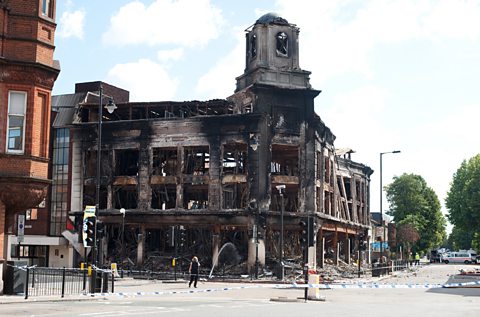
Violent crime often receives significant media attention, although it represents a smaller proportion of total recorded crime than offences such as fraud or theft. Violent crimes include:
- Football-related disorder - incidents of violence connected to football matches increased in the late 20th century. Whilst still present today, it is less common than in previous decades.
- Riots - for example, riots took place in London and other cities in August 2011, following the fatal police shooting of Mark Duggan. Shops were looted and buildings were damaged.
- Knife crime - offences involving knives or sharp objects remain a focus for police. Recorded cases have fluctuated in recent years but continue to be monitored closely. In the year ending March 2025, there were around 53, 000 police-recorded offences involving knives or sharp instruments in England and Wales, with most involving assault or robbery.
- Gun crime - firearm offences are much less common than other types of violent crime in Britain, but are treated as serious criminal offences. Gun crime - and knife crime - can have fatal consequences.
Terrorism
Since the 1960s, the terrorist threat to the UK has developed significantly.
The Terrorism Act, passed in 2000, defines terrorism as:
‘The use or threat of action which is designed to influence the government or an international governmental organisation, or to intimidate the public or a section of the public, and which is used to advance a political, religious or ideological cause.’
In the UK, counter-terrorism policing works with intelligence agencies, including MI5, to prevent and investigate terrorist activity. In recent years, there has been increased focus on preventing online radicalisation and lone-actor attacks. Terrorist activity in Britain has included:
- Islamist extremist terrorism – attacks carried out by individuals or groups motivated by extremist interpretations of religion.
- Extreme right-wing terrorism – attacks motivated by racism, nationalism or hostility towards particular communities.
- Northern Ireland-related terrorism – violence carried out by loyalist and republican paramilitary groups, particularly during the late 20th century. Although greatly reduced since the 1998 Good Friday Agreement, some threat remains.
- Other ideological extremism – smaller numbers of attacks motivated by single issues or mixed political beliefs.
