The 'inspiration' behind popular characters
When we read books or watch films and television, we often get wrapped up in the lives of the characters who are portrayed before us. No matter what genre or when they were created, there are so many characters that are loved for being bold, brilliant, intelligent, fearless, extraordinary and everything in between.
But are they too good to be true? Well, it’s no surprise that so many iconic characters are based on, loosely inspired by or give a nod to real-life people, becoming muses in a way for storytellers through time.
Here, BBC Bitesize takes a closer look at just a few famous fictional characters that are named after, loosely based on or said to have been somewhat inspired by real-life people. From classic novels to animated features, see how many you recognise.
Who is Buzz Lightyear based on?
Created by Pixar Animation Studios, Disney’s Toy Story franchise has been loved by generations of children and adults alike for over 30 years. All the animated features follow the various adventures of a group of toys that come to life when humans are not present.
In the film series, we meet a pull-string cowboy doll called Woody, voiced by Tom Hanks, and a space ranger action figure called Buzz Lightyear, voiced by Tim Allen. Other fan favourites include Rex the dinosaur, yodelling cowgirl Jessie, Mr and Mrs Potato Head, Hamm the piggy bank and more.
Toy Story was released in 1995 and from there, three more sequels were birthed – with a fifth on the way. The first film was such a success that the following year in 1996, one of the must-have toys for Christmas was Disney’s Buzz Lightyear toy.
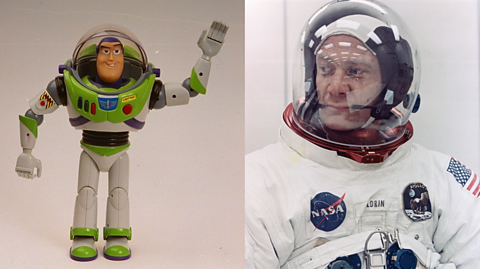
But did you know that the much-loved character was named after a real-life astronaut? The initial concept for the character was a one-man band toy called Tinny, who later became a space ranger with different names, such as Lunar Larry, before Buzz became the final choice.
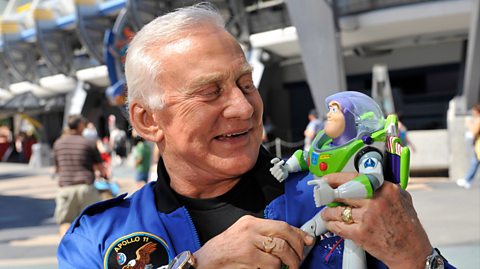
Buzz was named in honour of Apollo 11 astronaut Buzz Aldrin, who was the second person to walk on the Moon. The Pixar character and the famous American astronaut share the same name, a love for space travel – and have crossed paths.
In 2008, it was widely reported how Aldrin had ‘briefed’ a 12-inch action figure of Buzz Lightyear before it was launched into space for 15 months aboard space shuttle Discovery.
When is Toy Story 5 released?
Directed by Andrew Stanton and co-directed by Kenna Harris, Toy Story 5 is set to be released on 19 June 2026. The toys are back as they take on their biggest challenge yet: tech.
Who is Dracula based on?
A staple of the Gothic literature genre, Bram Stoker’s Dracula is likely the most famous vampire character in history. The book of the same name was published in 1897 and follows a Transylvanian count who enlists the help of solicitor Jonathan Harker to conclude a real estate transaction and move to London.
But Harker soon discovers his client is a vampire and as a result is held prisoner in his castle in Transylvania. With a thirst for blood, Dracula travels to England to spread vampirism.
He begins with the killing of Lucy Westenra but is later stopped by a group led by Abraham Van Helsing who destroy the vampire. The novel was originally called The Un-Dead and the title character also had a different name.
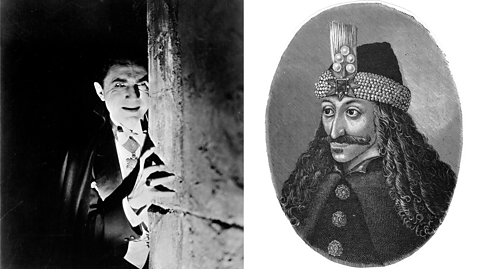
Count Wampyr (an old variation of the German ‘Vampir’) was the first choice by Stoker, which may have given the storyline away to readers. It was later changed to Dracula, a name usually associated with historic ruler Vlad Tepes.
Born in Transylvania, Vlad III was a Wallachian Prince known for his brutality. He is also commonly referred to as Vlad the Impaler for his preferred method of execution.
The prince was the second son of Vlad Dracul, meaning dragon, who belonged to the Order of the Dragon, a Christian crusading order. It is widely believed that Bram Stoker loosely based Dracula on Vlad III and there are similarities in terms of the name, the connection to Transylvania and the cruel reputation of the historic prince.
BBC Bitesize previously took a closer look at the history of the novel and cited how Stoker only noted seeing the name Dracula in Whitby's public library. The author thought it translated to 'devil' in Romanian – which it does.
Who is Miranda Priestly based on?
The Devil Wears Prada was released back in 2006 and today remains an iconic 00s classic full of fashion, pop culture and more. The hit film follows Andrea "Andy" Sachs, a young aspiring journalist who lands a job as the assistant to the editor-in-chief of a major fashion magazine in New York.
However, Andy, played by Anne Hathaway, quickly learns about the ruthless nature of the industry and her tyrannical boss, Miranda Priestly, played by Meryl Streep. In the beginning, Andy has no interest in fashion or the Runway magazine and struggles to keep up with Miranda’s demands and schedule.
After a make-over, she adapts better to the glamorous fashion world but loses some of her identity along the way. Like many popular films, The Devil Wears Prada is based on a novel of the same name published in 2003 by author Lauren Weisberger.
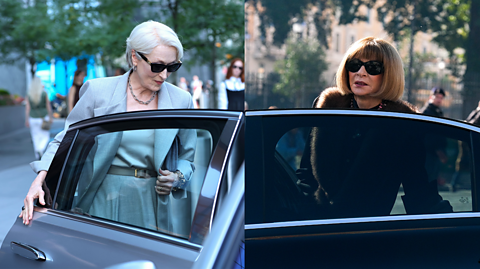
The book was also a huge success but attracted attention for one of the characters in particular. Author Weisberger had previously worked as assistant to the editor-in-chief of Vogue, Anna Wintour, and she is widely believed to be the inspiration behind the iconic character Miranda Priestly.
Much like the protagonist, Wintour worked as the head of a powerful fashion magazine and is British, as Priestly is portrayed in the book. Many fans of the book and film have also made comparisons to her style, such as her love of big sunglasses and her personal life, as the real-life editor and fictional character are both mothers-of-two.
The author is said to have not publicly stated that she directly based the character on Wintour. However, given the story is from the perspective of the assistant and some of the similarities stated, it is widely believed she was the main inspiration.
Meryl Streep's portrayal of Miranda Priestly got her an Oscar nomination in 2006. Anna Wintour now acts as Condé Nast's global chief content officer and Vogue's global editorial director, after serving as Vogue's editor-in-chief from 1988 to 2025.
Ahead of the release of the highly anticipated sequel The Devil Wears Prada 2, Wintour appeared alongside Streep on the May 2026 cover of Vogue. Both dressed head to toe in Prada, the images were photographed by Annie Leibovitz, and the pair were interviewed by director Greta Gerwig.
According to DNA testing company Ancestry, it was also revealed in April 2026 that Streep and Wintour are distantly related. A genealogy report claims they are sixth cousins.
When is The Devil Wears Prada 2 released?
The highly anticipated sequel to The Devil Wears Prada is scheduled for released on 1 May 2026. The new film will see the return of Meryl Streep as Miranda Priestly, Anne Hathaway as Andy Sachs, Stanley Tucci as Nigel and Emily Blunt as Emily Charlton.
Who is Edna Mode based on?
The early 2000s saw many amazing Pixar animated films come to the big screen – including The Incredibles. The 2004 film is set in a retro-futuristic version of the 1960s and follows a family of undercover superheroes who are hiding their individual powers from the public.
Mr Incredible (Bob Parr) and Elastigirl (Helen Parr) have three children – Violet, Dash and Jack-Jack. But when Bob takes on a secret mission, the family are lured to fight against villain Syndrome.
Its sequel, Incredibles 2, was released in 2018 and in both films, fans have been introduced to several superheroes and villains along the way. But one of the most popular characters in the film franchise is not a member of the Incredibles family, but an eccentric fashion designer called Edna Mode.
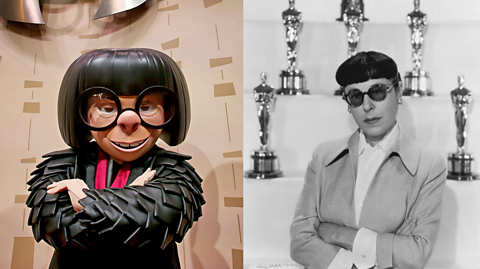
Voiced by Brad Bird, Edna designs and creates stylish and practical suits for the superheroes and is loved for her mantra “no capes.” But her look and expertise in the fashion industry is said to be inspired by real-life designer Edith Head.
The American film costume designer worked on hundreds of films spanning her six-decade career and holds the Guinness World Record title for being the most credited fashion designer. Working with style legends such as Audrey Hepburn and Elizabeth Taylor, she headed the wardrobe department on 432 Hollywood productions, which also earned her 35 Oscar nominations and 8 Oscar wins.
Both sharing a signature look of dark bobbed hair with a fringe and round glasses, Edna Mode is widely thought to be primarily based on Head. However, over time there has been wider speculation of other influences on the loved character.
Some claim Edna was inspired by Q, head of the research and development division in the James Bond franchise. Others claim she was loosely based on, or has similarities to, Vogue’s Anna Wintour.
Who is Sherlock Holmes based on?
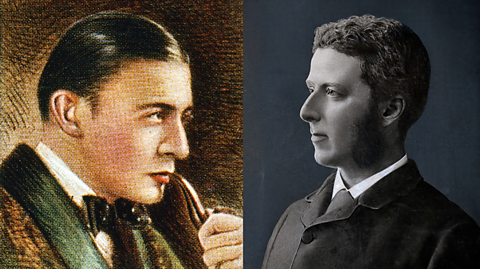
Born in Edinburgh in 1859, author and physician Sir Arthur Conan Doyle is best known for the Sherlock Holmes stories. The fictional character was created in 1887 and made his first appearance in A Study in Scarlet, which was published in Beeton's Christmas Annual.
Holmes, the legendary “consulting detective,” is known for his incredible analytical skills and deductive reasoning. Often assisted by Dr. Watson, he operates from 221B Baker Street in London and together they solve complex mysteries.
In his life, Doyle wrote four novels and 56 short stories about Holmes, with the majority being narrated from the perspective of Watson. Among the most famous books are The Hound of the Baskervilles and The Sign of the Four.
As of 2012, Sherlock Holmes is also the most portrayed literary human being in film and TV, according to Guinness World Records. But the famous detective is also said to have been heavily inspired by one person in Sir Arthur Conan Doyle’s life.
Holmes was based on Dr. Joseph Bell, a surgeon and professor at the University of Edinburgh. Bell met Doyle when he was a medical student and later, Doyle worked for him as a clerk.
Dr Bell was known for his observation skills, which informed one of the key characteristics of Holmes. But it has been widely speculated that others helped inspire the character generations have come to know.
Sir Henry Littlejohn of the University of Edinburgh Medical School is also said to have inspired the title character. Littlejohn taught forensic medicine to Doyle.
Who is Alice in Wonderland based on?
One of the most famous books in children’s literature, Alice’s Adventures in Wonderland was written by author Lewis Carroll (real name Charles Lutwidge Dodgson) and published in 1865. The classic tale follows a young girl called Alice who falls down a rabbit hole into a surreal world – Wonderland.
It is there that she meets iconic characters like the White Rabbit, the Mad Hatter, the Cheshire Cat and the Queen of Hearts and has several odd experiences and adventures before waking up from what is revealed to be a dream. In 1871, a sequel was published by Lewis Carroll entitled Through the Looking-Glass, and What Alice Found There, followed by numerous film adaptations in the decades that followed.
But the title role of Carroll’s famous work is also widely believed to have taken inspiration from a real-life girl. While working as a university lecturer, Carroll, real name Dodgson, became good friends with Henry Liddell, the Dean of Christ Church, Oxford.
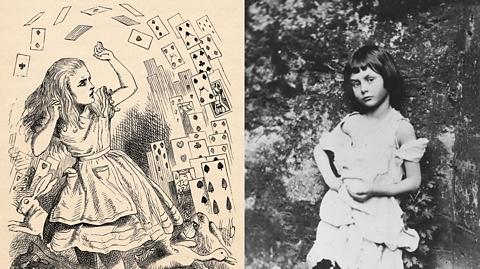
Legend has it that one afternoon he took Henry’s daughters on a boat ride when one of the little girls, Alice Liddell, requested he tell them a story. Using the name of Alice for the lead character, the story was so good that the real Alice begged Dodgson to write the tale down.
Dodgson is believed to have later given Alice a manuscript called Alice’s Adventures Under Ground – which was later published as Alice's Adventures in Wonderland, under Dodgson's penname Lewis Carroll. Alice Liddell shares her name with the title character, but the final book illustration by Sir John Tenniel did not portray her likeness.
The author is said to have denied the character was based on Alice Liddell and other scholars agree. However, it is widely accepted that she was, due to the connections stated.
There is also a hint to the real-life Alice in the book’s sequel, Through the Looking-Glass. If you look closely at the poem A Boat Beneath a Sunny Sky, it is an acrostic with the first letter of each line of the poem spelling out Alice Pleasance Liddell.
This article was written in February 2026
Learn more about literature in film and TV
- Modern films you might not know were based on classic literature
- 'Based on true story' films that aren't actually accurate
- Five fab film or TV adaptations of books you may have read at school
- Six movie adaptations that are completely different from the book
- Did Robin Hood really exist? When historical fact and fiction blur
