Modern films you might not know were based on classic literature
Film has adapted literature since the very beginning of cinema, taking stories found in novels, plays and short stories, and transposing them to the screen for a new audience.
Some film adaptations are extremely faithful, filming almost page-for-page adaptations of the source material on which they're based. Others take more artistic licence, twisting and turning the tales from which they're taken in any which way they please.
There are many successful examples of both styles, with some adaptations going on to be so famous, people even forget the stories they were based on. So, here at BBC Bitesize, we thought we'd take a look at the classic basis for some of your favourite films. At the end, you can try our quiz to see how good you are at guessing the literary inspirations for a selection of famous flicks.
What is Clueless based on?
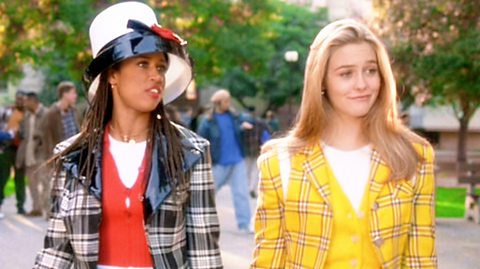
Clueless, written and directed by Amy Heckerling, has become a pillar of the teen movie genre since its 1995 release. The film follows Cher Horowitz, a popular, wealthy high school student, and her good-natured exploits as she learns to navigate the trials and tribulations of life as an adolescent.
Cher, played by Alicia Silverstone, acts as a matchmaker for her teachers, before turning her attention to 'clueless' transfer student Tai. Cher gives Tai a makeover, and makes it her mission to find Tai a boyfriend, realising along the way that she'd like a boyfriend of her very own - found in the form of the eternally youthful Paul Rudd.
If that story sounds somewhat familiar, that's because it's loosely adapted from the Jane Austen classic 'Emma'. Austen's witty, gentry-born protagonist also fancied herself a matchmaker - who in her determination to find a partner for another, ends up finding one of her own. Heckerling had read the story in her youth, and found the central character's good-natured attitude and matchmaking misgivings translated perfectly to the form of a coming-of-age teen movie, transposing the time and setting from 1800s England to 1990s Beverly Hills. Clueless shares many similarities with Emma, including the overall plotting, the joyful ending and the starting situation of the central character.
When creating Emma, Austen wrote that she wished to create a character "whom no one but myself will much like". The opening line of the novel reflects this, listing the many privileges life has afforded Emma, from her wealthy background to her substantial beauty. Heckerling does much the same with Cher, taking a notable archetype of the teen movie (a popular, wealthy, and frequently blonde, high school student) and flipping it, setting Cher apart from the likes of Mean-Girl-in-chief Regina George.
Other characters in the film have a novelistic equivalent too. Paul Rudd's John is a teenage take on the novel's Mr Knightley, while clueless transfer student Tai takes her cues from the character of Harriet.
What is She's All That based on?
Teen movie adaptations of classic works of literature were all the rage in the late 90s and early 2000s, with a spate of teenage twists on classic tales released in quick succession.
1999 was an especially fruitful year for such films, with beloved flicks like 10 Things I Hate About You and Cruel Intentions looking at classic tales from an adolescent angle. Among the pack in 1999 was She’s All That', a romantic comedy about a popular high school student, Zack, who bets that he can turn any girl in the school into the prom queen in just six weeks.
Zack's target is Laney Boggs, an awkward and unpopular art student, who Zack slowly begins to fall for across the course of the film. The story is based on George Bernard Shaw's Pygmalion, a 1912 play that also provided the inspiration for the Audrey Hepburn classic My Fair Lady.
Pygmalion follows Professor Henry Higgins, as he takes on a bet to turn a cockney flower girl into a 'refined young lady', by polishing her manners and vocabulary. Shaw's play itself takes inspiration from Greek myth, and has gone on to loosely inspire a number of other films including Educating Rita and 2014's film Kingsman: The Secret Service.
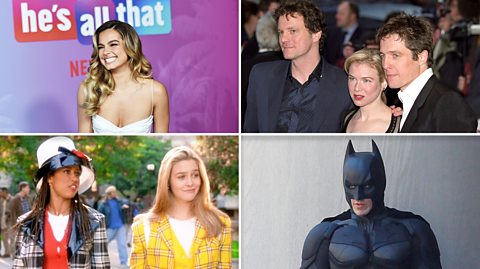
Such is the cycle of entertainment, She's All That has now become an inspiration in its own right, providing the basis for a 2021 remake He's All That, starring influencer and musician Addison Rae.

What is Bridget Jones' Diary inspired by?
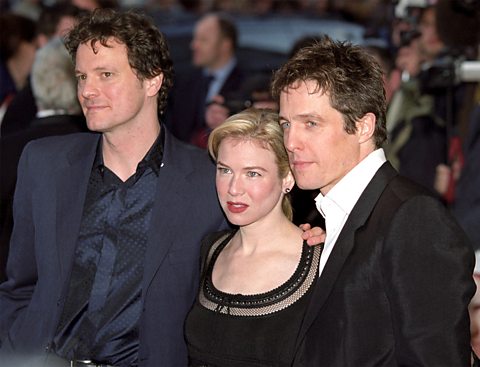
While it isn't a direct adaptation of the Jane Austen classic, 2001's Bridget Jones's Diary was heavily inspired by Pride and Prejudice.
Based on the novel by Helen Fielding, Bridget Jones's Diary centres on the eponymous Bridget Jones, who is writing a diary about how she wishes to change her life, until two men - each vying for her affection - enter her orbit and change her perspective. Prior to the novel, Fielding had written a number of Bridget Jones columns for The Independent, which she then sought to spin out into a book.
During her writing process, Fielding was watching the 1995 BBC adaptation of Pride and Prejudice, finding herself infatuated with it, and realising it could be a story skeleton on which to hang her Bridget Jones columns. Fielding admitted to BBC News that she "stole the plot" of Austen's classic, but felt that the author wouldn't have minded, and saw enough difference in the central characters of Bridget and Elizabeth to get by.
As such, both stories revolve around a spirited, single young woman under intense societal pressure to couple up, and her blossoming romance with a reserved, English gentleman with the last name Darcy. Both stories feature something of a scoundrel who enters our protagonist's life, casting aspersions about the Darcy character which we come to find are false. Both tales have a similar overall structure, and end with our protagonist and Darcy entering into a relationship. And, in adaptation, both feature swoonworthy performances from Colin Firth.
Read more about Pride and Prejudice with this study guide from BBC Bitesize.
What is The Dark Knight Rises inspired by?
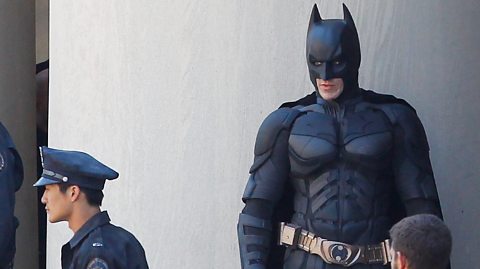
In some ways, The Dark Knight Rises is a very obvious adaptation, taking Bob Kane and Bill Finger's caped crusader and giving him another battle on the silver screen.
What you might not know, however, is that a Charles Dickens classic also provided significant inspiration for the film's story and tone. A Tale of Two Cities, a Dickens novel set in Paris on the brink of the French Revolution, was a major reference point for writer and director Christopher Nolan, who intended to depict Batman's home of Gotham on the brink of a revolution of its own. Nolan would even go on to say that the film was "as close as I'll get to adapting A Tale of Two Cities".
There are a number of parallels between the two stories, though The Dark Knight Rises is not a direct adaptation. Both focus on the conditions of a city on the brink of revolution, centring on the disparity in living conditions for the citizens within it. The novel's opening line, "It was the best of times, it was the worst of times", frequently voted amongst the most famous of all time, are as true of Gotham in the film's opening as they were of Paris in Dickens novel. The fictitious city is going through a time of unprecedented peace, but peace built on a terrible lie. The city's rich grow richer by the day, whilst the poor are forced to live in squalor, with orphans thrust out onto the street due to lack of funding at a local orphanage. Even the two stories' endings are similar, both seeing their central characters make the ultimate sacrifice.
To acknowledge the use of Dickens' French revolution classic when crafting a revolution of his very own, Nolan included some additional nods to the book. The film's villain, Bane, can be seen knitting during certain sequences, a reference to the villain in A Tale of Two Cities, Madame Defarge, who herself enjoyed a spot of knitting. And in the film's most direct nod to the Dickens tale, Gary Oldman's Commissioner Gordon reads a passage from the book's ending during a eulogy.
What is Anyone But You based on?
Despite being written some 400 years ago, the works of William Shakespeare still resonate today, as can be seen in the box office success of Anyone But You, a modern adaptation of the Bard's Much Ado About Nothing.
The Sydney Sweeney and Glen Powell vehicle took home over 200 million dollars upon worldwide release, helping cement both as fixtures in Hollywood for years to come. The links to Much Ado are fairly plain to see, the central characters of Anyone But You, Bea and Ben, take their names from those in Much Ado, Beatrice and Benedick.
Both stories centre around a bickering pair of leads, whose previous romantic entanglement went awry, going from enemies to lovers whilst another love story takes place simultaneously (Claudia and Halle in the film, Claudio and Hero in the play). Both feature exotic locales, eavesdropping and witty repartee sharper than any sword or dagger.
