The 'based on a true story' films that don't tell the whole truth
When we watch a film that we know is based on a true story, it's hard not to get wrapped up in the narrative and believe that everything we see on the big screen is the real deal. Over time, it might even mean that the real tale is forgotten, or muddled. Here's three films you might have seen before, without realising that they… stretch the truth and even at points, change history completely.
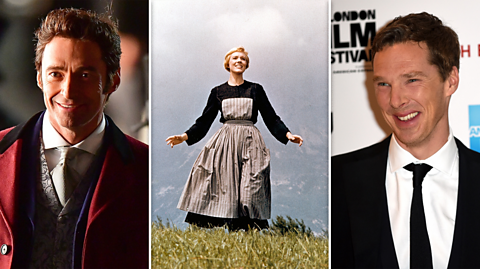
Is Pocahontas a true story?
Many of us will be familiar with the 1995 Disney film version of Pocahontas, the story of a young Native American woman who, after 17th Century British settlers arrive in Virginia searching for gold, finds herself falling for Captain John Smith. Her father, Chief Powhatan, is dismayed, and wants her to marry a native warrior. Meanwhile, the British plan to steal gold from the tribe, eventually leading to John Smith's capture. Just before war breaks out, Pocahontas manages to convince her father not to fight and to spare John's life. Eventually John returns to England, though Pocahontas makes the difficult decision to wave goodbye to her love and stay behind with her tribe to keep the peace.
So what is the true story?
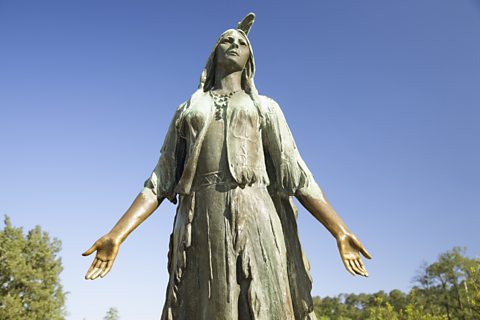
Well, Pocahontas was a real girl, born around 1596, though her real name was Amonute. Pocahontas was actually a nickname which meant "playful one", said to have been given to her because she was curious and full of energy. She was also the daughter of Chief Powhatan and they lived in what is today known as Virginia.
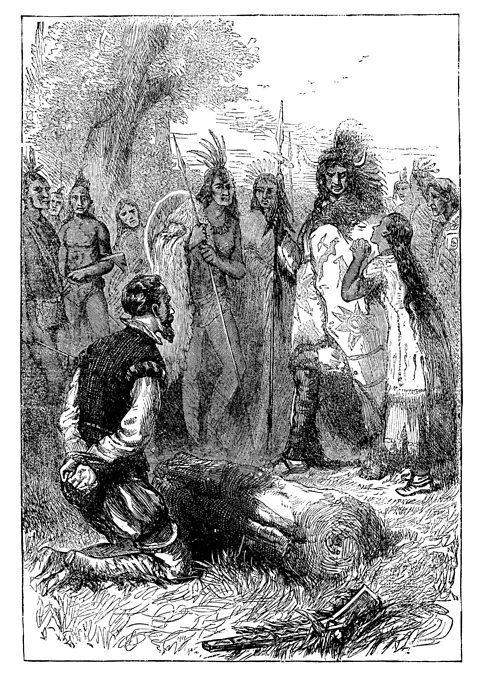
But this is sort of where the accuracies end. For a start, when English settlers arrived in Virginia, Pocahontas was not a young woman, in fact, she was only 10 or 11 years old. There is no documented relationship between Pocahontas and Captain John Smith, though he was captured by her father's men. Smith later wrote that he was placed on the ground with his head on two stones while a warrior prepared to strike him. According to Smith, young Pocahontas rushed in and put her head over his to save him. But historians aren't sure if this actually happened or if it was part of a ceremony he didn't understand.
The stories say that Pocahontas did act as a keeper of the peace between settlers who built a fort at Jamestown and her own people, but later, during a time of conflict, Pocahontas was taken captive by English settlers. While living with them, she learned their language and customs. She became a Christian and took the name Rebecca and eventually married an Englishman named John Rolfe, at the age of around 17 or 18, with many viewing their marriage as a sign of peace. She gave birth to a son, Thomas Rolfe, around one year later.
Sadly, Pocahontas did not live happily ever after. After travelling to England, where many people were curious to meet her, she was preparing to return home when she fell ill and died at the age of just 21.
How accurate is The Sound of Music?
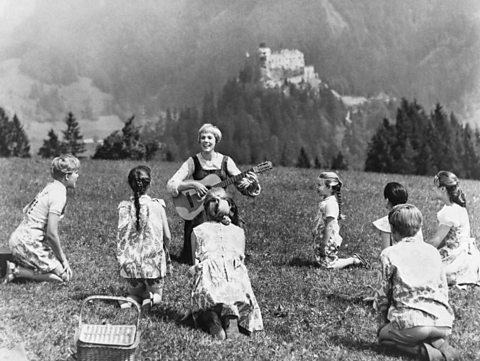
Think about The Sound of Music and you probably remember sweet soon-to-be nun Maria who becomes a governess for the strict widowed naval captain and his seven children. Upon meeting the von Trapp family, Maria falls in love with the children, bringing music and joy back into their lives after the death of their mother, before she eventually falls in love with the captain himself and the pair get married. The 1965 musical film, set in Austria around the time of World War Two sees Maria, played by Julie Andrews, and the von Trapp family forced to escape the Nazi regime when Germany annexes Austria and the captain is ordered to serve in the Germany army, which he refuses. The family uses a singing performance at the Salzburg Festival as a cover to escape, fleeing across the mountains, believed to be towards Switzerland, supported by the nuns.
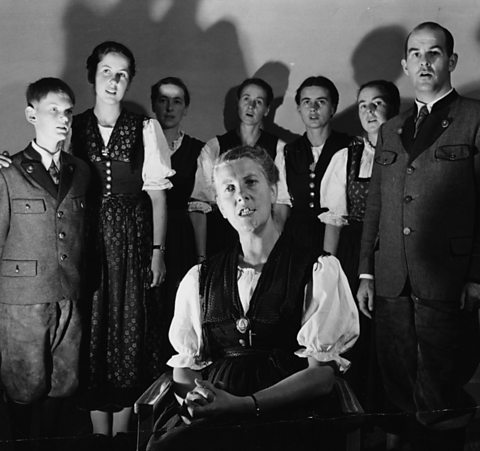
So what actually happened?
Well, turns out the story we're all so familiar with doesn't quite follow the real tale…
For starters, Maria, shock horror, was allegedly not as sweet as our Julie Andrews vision. While she was indeed caring and loved the Von Trapp children, the real Maria was known to be quite strict and have a pretty fiery temper.
And another thing… the love story we remember between the slowly softening Captain von Trapp and Maria is… well pretty fabricated unfortunately. The real Captain von Trapp asked Maria to marry him after seeing how much she cared about the children, but far from being enamoured with the captain, Maria was actually terrified by the proposal from a man 25 years older than her. She fled back to the abbey to ask their nuns for their advice, but they told her the marriage was God's will and she should accept. Far from being happy about her nuptials, according to her memoir, Maria was actually pretty unhappy on her wedding day. She wrote that she "really and truly was not in love" with the captain. She added: "However, I loved the children, so in a way I really married the children." Not quite the love story we all thought!
Finally, remember in the film when the family escape over the mountains, suitcases in hand? Yep, you guessed it, that didn't happen either. The real "escape" wasn't anywhere near as dramatic, with the family simply taking a train to Italy before making an onward journey to England and finally the United States, without the Nazis in pursuit. Their home in Austria was however used by the Nazis as Heinrich Himmler's headquarters.
Fact or fiction? The real history behind The Greatest Showman
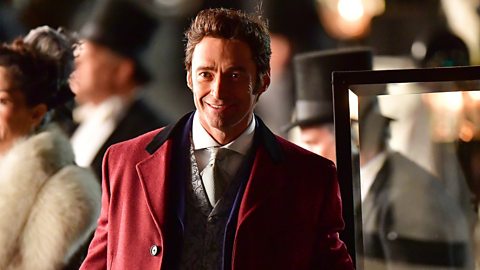
The Greatest Showman, set in the 1800s, introduces the character P.T. Barnum, played by Hugh Jackman, who has a natural talent for promotion and publicity. After losing his job, Barnum decides to take a risk and enter the world of showbusiness, opening "Barnum's American Museum" featuring wax figures. Ticket sales are slow, and eventually Barnum turns his museum into a live circus show featuring unique, marginalised individuals, including a bearded lady, a little person, and trapeze artists. Barnum's mesmerising spectacle soon takes the world by storm to become the greatest show on Earth.
So what's real and what's not?
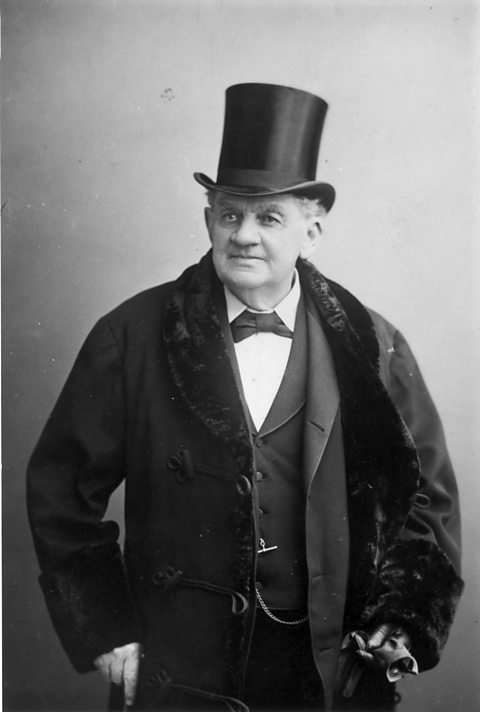
One of the more significant (and sadly, disappointing) inaccuracies of The Greatest Showman is the character of P.T. Barnum. In the film, he is portrayed as a loving hero who fights against inequality. In reality, he was a self-proclaimed "humbug" with many believing he took advantage of and exploited people with physical disabilities for the sake of his show.
Another issue - and hold your breath here - two of the central characters in the film, Phillip Carlyle (Zac Efron) and Anne Wheeler (Zendaya) who share a love story, did not even exist in real life. Nor did Barnum have an affair with performer Jenny Lind, as is portrayed in the film. In fact, his wife, Charity, never left him, they were married for over 40 years.
A further inaccuracy is Barnum's age at the time the film is set. In reality, he did not set up his circus until later in life, many years after his museum had burned down. And another thing, in the film, the museum fire is started because of protesters. In real life it was said to likely be due to arson.
The truth behind The Imitation Game
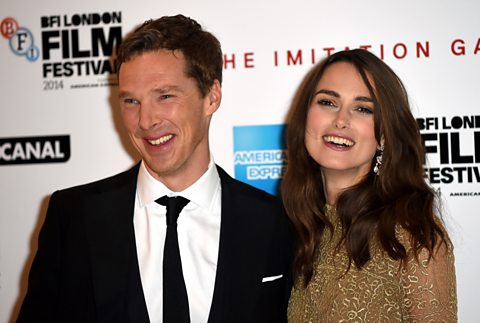
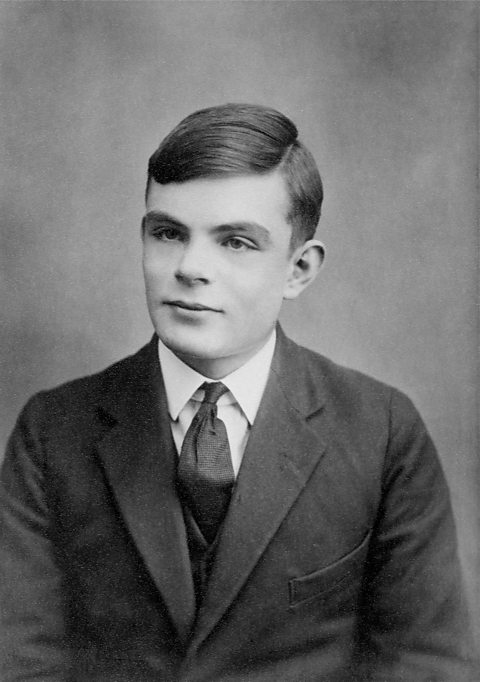
The 2014 film, starring Benedict Cumberbatch, is set in 1939 at the outbreak of World War Two and follows the story of impressive mathematician Alan Turing, who is recruited to Britain’s codebreaking efforts at Bletchley Park to help crack Nazi codes, including Enigma, which was thought to be unbreakable. With his team, including Joan Clarke - played by Keira Knightley - Turing creates a machine to decipher the codes. They finally succeed and become heroes, but in 1952, Turing's reputation is thrown into disgrace when it is revealed he is gay and he is sent to prison.
What's the truth?
Well, the film uses a fair bit of artistic licence to create its narrative and there are several inaccuracies when compared to the true story.
The film focuses on Turing building one machine (named "Christopher" in the film, it was really called "Bombe") to break Enigma but, in reality, hundreds of machines were built to help crack the code and Turing was part of a large team, not a solitary inventor. The film also ignores critical, earlier codebreaking work completed by Polish mathematicians, who first broke key components of the Enigma system in the early 1930s, work that was later shared with Britain and formed the foundation of Bletchley Park’s wartime efforts.
When it comes to Joan Clarke, she sadly didn't win her job on the team by completing a crossword competition, instead she was recommended by a supervisor, which is a lot less poetic, we'll admit.
Turing's demeanour in the film is also said to be exaggerated. He is portrayed as being eccentric and socially isolated, but in reality colleagues had described him as a warm and approachable man.
Turing’s sexuality, and the injustice he faced because of it, shaped the final years of his life, something The Imitation Game touches on only briefly. At the end of the film, it is suggested that Turing took his own life after being subjected to what was then described as ‘hormone therapy’. In reality, he was convicted for having a sexual relationship with another man for which he was given oestrogen for a year, or chemically castrated. While some historians, including Turing expert Professor Jack Copeland, have argued that Turing appeared to cope outwardly during this period, others note the severe physical and emotional toll such treatments often caused. Turing lived another year after the treatment had finished.
An inquestdid originally conclude that Turing took his own life, believed to have poisoned himself with cyanide, after it was widely reported that a half-eaten apple was found by his bedside. But the apple was never tested for the poison by police. Turing's mother also suggested that his cyanide poisoning was an accident as a result of the experiments he conducted from his home. Friends had said he was in "good spirits" before his death and had left himself a list of tasks that needed to be completed after the weekend, indicating that he perhaps didn't intend to take his own life.
Discover more about the life of Alan Turing on BBC Sounds.
*This article was written in February 2026 and was updated on 3 March 2026 to reflect further details about Turing's life.
