This is a significant year in the legacy of the mathematician Alan Turing. Almost 70 years after his death, his face will appear on the new £50 note, marking his contribution to UK history.
Although he is best known for his codebreaking work during the Second World War, Turing published papers and theories regularly until he passed away in 1954. This included a groundbreaking link he suggested between maths and biology which has led to further research into the subject decades after he passed away.
To find out why Turing continues to be so inspiring and intriguing to maths experts in the 21st Century, BBC Bitesize spoke to Dr Natasha Ellison, a maths biologist at the University of Sheffield.
Maths in the fields and forests
“Alan Turing never just looked at one part of mathematics,” Dr Ellison said, “He looked at everything.” This included using a mathematical theory to explain the patterns in nature.
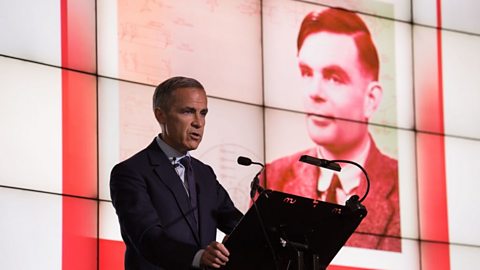
She continued: “He was a codebreaker, and he was involved in the mathematics behind the computers we use today, but he also looked at things like sunflowers and how they get their spiral patterns. It was just his way of using mathematics to describe nature. He wasn’t a biologist, he wasn’t a chemist, he was a mathematician.”
She added: “That is what really drew me to mathematics. I would not be doing it without his work in nature.”
You can find out more about Alan Turing’s contribution to computing here.
How the animals got their spots (and stripes)
Alan Turing’s theory into maths biology attempted to explain why some creatures have certain patterns on their skin. He believed that there are two chemicals operating inside their bodies, ones which work against each other.
Dr Ellison said: “Imagine the animal’s skin to be like a really dry forest floor, where fires pop up all over the place. That’s one chemical starting a reaction, then the other comes in and stops those fires from spreading, and that causes a spot, like a leopard’s spot.”
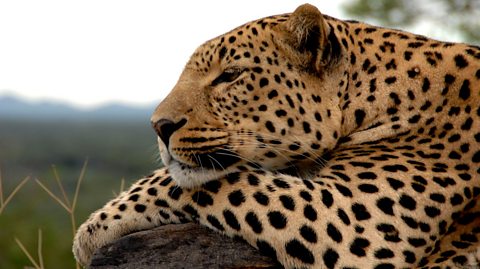
It is the patterns seen on creatures such as leopards, tigers, zebra and aquatic animals like the pufferfish, which Turing thought could be explained through maths.
Dr Ellison continued: “His pioneering research showed that certain mathematical equations can explain the way these chemicals react and how the patterns form.”
The types of sums involved to explain the patterns are pretty advanced, but can be broken down into thousands of calculations. To mark the inclusion of Turing on the £50 banknote, Dr Ellison led a project where children across different primary schools completed their own calculations to work out the pattern on a pufferfish.
His biological theory isn’t just restricted to animal skin. Dr Ellison explained how it can also be applied to the stripes the waves leave on the sand, or the pattern of the hairs on our arms, legs and head.
Sums are for everyone
Dr Ellison also hopes that Turing’s approach to maths will encourage others to consider studying it, or even making it their career.
“Maths get more and more interesting, even if you find it challenging at school. If you enjoy PE, for example, there are people out there working on the mathematics behind all sorts of mechanisms inside the body.
“You don’t need to be the best in the class at maths to be able to enjoy it. No matter what career you’re thinking of going into, it’s still useful to be able to learn some mathematical tools early.”
Quiz: How well do you know the UK’s coins and notes?
As the 50p celebrates its 50th birthday and the new £20 note is unveiled, we ask: how well do you know the UK's notes and coins?

The LGBT icons you need to know about
They took a stand in an attempt to bring about change.
Eight blockbuster films that got history wrong
Some of these are Oscar winners too, but they're not getting any prizes for knowing their history.