Watching a movie and then reading the book that it’s based on can be a bit of a revelation.
Often lots of material, even whole characters, has to be cut for a movie screenplay simply because of time. But sometimes the changes are more radical, and make reading the book and watching the film very different experiences.
On rare occasions, unofficial adaptations can take place. Nosferatu, a silent horror movie released in 1922, was an unofficial adaptation of Bram Stoker's Dracula. Florence Stoker, the wife of Bram Stoker, was not happy and filed a copyright suit against Prana Film who released the film. The studio went bankrupt and Nosferatu was the only film they created.
BBC Bitesize takes a look at six other movie adaptations, the interesting stories behind them and what makes them dramatically different to the books they’re based on. Warning: some spoilers ahead!
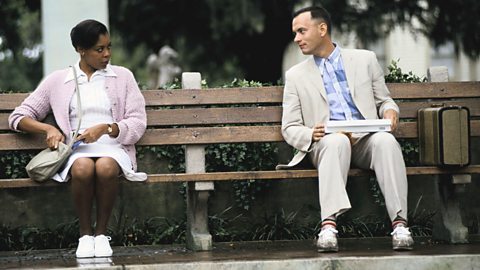
Forrest Gump (1994)
The sequel to the novel Forrest Gump, Gump & Co., begins with Forrest saying, “Don’t never let nobody make a movie of your life’s story.” It’s a sly dig by author Winston Groom at the Hollywood adaptation of the first book, which made changes with which Groom apparently wasn’t happy.
A huge number of Forrest’s adventures were cut out, including his time as an astronaut in which he is accompanied by an aggressive ape, crash lands in the jungle and is almost eaten cannibals.
Perhaps that’s understandable given the time constraints of a movie. Also, it’s just a bit weird. Less explicable is director Robert Zemeckis adding the fact that as a child Forrest had worn leg braces (and so the insertion of the famous ‘Run, Forrest, run!” opening sequence).
But maybe Groom can’t really object to the most significant change. The film’s most well-known phrase – “Life is like a box of chocolates, you never know what you’re gonna get” – doesn’t actually appear in the book.
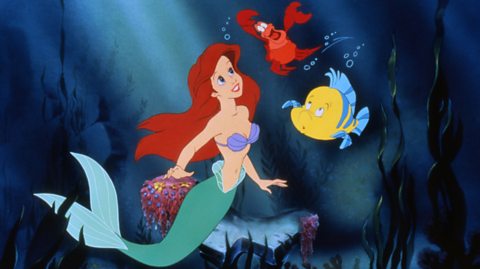
The Little Mermaid (1989)
People who have only seen the film adaptations of Hans Christian Andersen’s fairy tales are often surprised, and a little shocked, when they read the original stories. They tend to be much darker, and often more than a bit, well, weirder than the films.
Disney’s 1989 adaptation of The Little Mermaid is no exception. In the original tale, written in 1837, the mermaid (she has no name in the book) isn’t motivated by curiosity about the human world or ‘true love’. Instead she wants to gain a human soul and so be allowed into the kingdom of heaven (the alternative is living to 300 and then dissolving into sea-foam, so understandable really). She bargains with a sea witch for a pair of legs (which are agonisingly painful for her) in return for her voice, which involves having her tongue physically cut out.
It was all a bit dark for a Disney movie. So the writers made some changes. The legs were not painful anymore and her voice was simply stored in a seashell (no tongue-cutting required).
But the most radical change was the ending. In the book the mermaid, after refusing to kill the prince to survive, sacrifices herself becoming a ‘daughter of the air’, who will be allowed into heaven after a mere 300 years’ worth of good works. In the Disney movie, she rides off into the sunset with her handsome Disney prince – new legs and all.
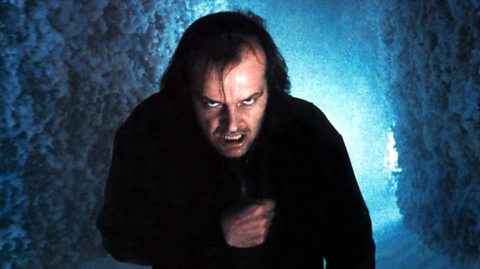
The Shining (1980)
Director Stanley Kubrick’s The Shining regularly features in ‘scariest movies of all time’ polls, but despite that you shouldn’t count the book’s legendary author, Stephen King, among its fans.
Kubrick made numerous changes to King’s story, including altering the lead character, Jack Torrance (played by Jack Nicholson), from a sympathetic family man with a drinking problem to an out-and-out psychopath. But most radically he completely ditched King’s ending, in which The Overlook Hotel explodes as the result of a faulty furnace, in favour of a more bleak, downbeat conclusion in which Jack freezes to death.
King was not at all happy with the result. "I kept my mouth shut at the time, but I didn't care for it much," he said.
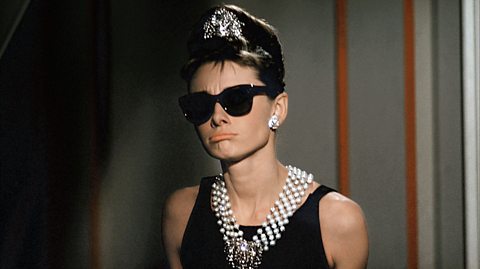
Breakfast At Tiffany’s (1961)
Director Blake Edwards’ adaptation of Truman Capote’s novella Breakfast At Tiffany’s, which was originally published in 1958, is often reckoned to be one of the best romantic films ever made. But significant changes were made to Capote’s story by screenwriter George Axelrod.
For one thing, Axelrod altered the character of Paul, the narrator of the book (played by George Peppard in the film), from a gay man to a potential love interest for Holly in the movie.
But his most controversial change was the ending. In the book Holly loses her cat and decides to quit New York for Argentina, staying true to her life as a permanent drifter. But in the movie she finds her moggy (it’s one of the most beloved scenes) and decides to stay, sharing a kiss with Paul.
Capote was disappointed with the new ‘happier’ ending: “I had lots of offers for that book, from practically everybody," he said. "And I sold it to this group at Paramount because they promised things, they made a list of everything, and they didn't keep a single one."
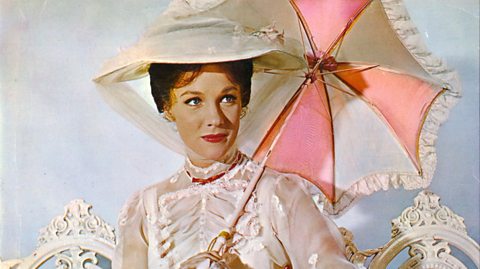
Mary Poppins (1964)
The battle between Mary Poppins author PL Travers and Walt Disney over the film adaptation of her books was so famous that it even got its own movie in 2013 called Saving Mr. Banks.
In the end Mary Poppins, which became a classic family movie, does deviate a lot from Travers’s original, much to her displeasure. In the books Poppins is sharp-tongued, mysterious and a bit of a tyrant. PL Travers said of her “she never wastes time being nice”, while in the movie Poppins describes herself as “never being cross.” The number of children is reduced from five in the book to two in the movie; Mrs. Banks isn’t a suffragette in the book, in fact her and Mary Poppins never speak. And the book’s Mary Poppins is no fan of animals. She suggests the pigeons surrounding St. Pauls should be baked in a pie rather than fed.
Travers was so appalled by the changes that she declared she’d never sell the rights to any of her books again.
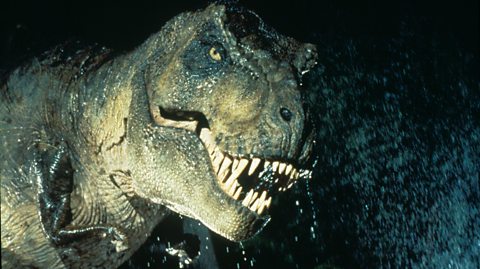
Jurassic Park (1993)
Steven Spielberg’s classic dinosaur adventure was adapted from a novel by Michael Crichton, and while Spielberg did stick to the essentials of the plot – a foolish scientist recreates living dinosaurs on an island theme park with disastrous results – there were lots of other changes.
Among the alterations was the ages of the two children being reversed and a huge amount of gory violence was removed – including a sequence in the book in which an unrepentant park-founder Hammond (played by with loveable sentimentality Richard Attenborough) is eaten alive by his creations. In the film he survives, learning an important lesson in the process.
But as is so often the case, it’s the ending that was retooled the most. In the book the conclusion is bleak, with Dr Ian Malcolm (played by Jeff Goldblum) dead, the island reduced to ash by napalm bombs, and most of the main characters detained by the Costa Rican police. The film however ends on an uplifting note, as, after being saved by the T-Rex, the key characters escape by helicopter.
This article was published in March 2021 and updated in December 2024
Looking for quizzes, amazing stories and fun facts?
Bitesize Topical has it all!

Six blockbuster films that got history wrong
From Bohemian Rhapsody to Titanic, movie-makers have been very creative with historical timelines.
Six times films got WW2 wrong
WW2 has more movies about it than any other war in history, but movie-makers still manage to get the history wrong.
Five times the UK pretended to be somewhere else in films
BBC Bitesize takes a look at the times Liverpool pretended to be Gotham City, North Wales stood in for China and more.