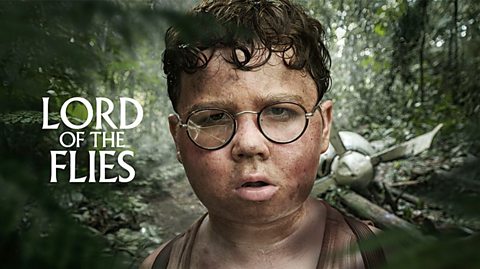
The BBC is bringing Lord of the Flies by William Golding to TV for the first time this month. It’s been adapted by writer Jack Thorne (he wrote the screen plays for Adolescence, His Dark Materials and Enola Holmes).
The series will see Ralph, Piggy, Simon, Jack and the gang battle to survive on an uninhabited island, and it got us thinking here at Bitesize about the books many of us read at school that have amazing on screen adaptations.
I distinctly remember loving 1984 and then slogging my way through Middlemarch. It did always help, especially come revision time, if there was a brilliant film or amazing TV version. Here are some of our favourites…

1. Frankenstein by Mary Shelley
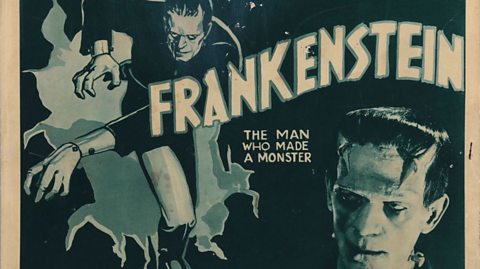
First published in 1818, this Gothic tale is about a gifted scientist 'Victor Frankenstein' who succeeds in giving life to a being of his own creation. However, it's not the perfect specimen he imagines, rather a hideous creature who is rejected by Victor and mankind in general. The monster seeks its revenge through murder and terror.
There are hundreds of film and TV adaptations of the Frankenstein story. The first was way back in 1910 - a short film called, you guessed it, Frankenstein, directed by J. Searle Dawley. But it was a 1931 Universal Pictures film, with actor Boris Karloff in the monster role, that gave us the Frankenstein imagery we recognise today.
Mary Shelley’s monster has been reimagined as female, an animal, in animation and in LoL comedies. Robert De Niro plays him in the 1994 film Mary Shelley's Frankenstein, directed by Kenneth Branagh and Jonny Depp’s character in Tim Burton’s Edward Scissorhands (1990) was also based on Frankenstein's monster. As was Lurch, butler to the Addams Family, who also appears in the Netflix series Wednesday. Frankenstein has even spawned a Pokemon origin story. In Pokeman: The First Movie (1998), Mewtwo is told they are a ‘creature of science’ made by man.
The latest incarnation, sees director Guillermo del Toro return to the original plot in Frankenstein (2025), starring Jacob Elordi.
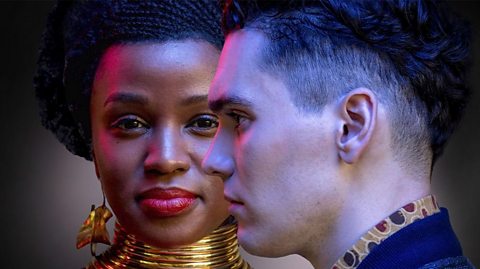 Image source, BBC/Mammoth Screen/Ilze Kitshoff
2. Noughts and Crosses, by Malorie Blackman
Blackman’s novel is set in a a fictional, futuristic society in which there is great suffering and injustice Britain in which society is divided by racism. Dark-skinned Crosses are privileged in society over the light-skinned noughts. Against the odds, the main characters, Sephy and Callum, fall in love across the divide which leads them into danger.
Malorie Blackman was inspired by real events from history and her own life when she wrote the novel. The tale of the star-crossed lovers is also inspired by Shakespeare’s Romeo and Juliet (see later in the list for that one).
In 2020 the book was adapted for TV by the BBC, starring Masali Baduza and Jack Rowan as Sephy and Callum. You can find both series on BBC iPlayer here.
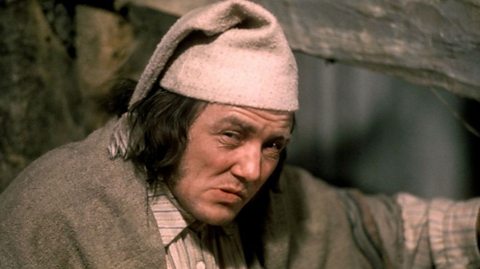
3. A Christmas Carol by Charles Dickens
In 1853 Dickens gave his first ever public reading of his work with a rendition of A Christmas Carol in Birmingham Town Hall. Newspaper reports from the time say it was a great success! The story has been performed on stage and screen in many guises ever since.
The first film version was made in 1901 called Scrooge, or Marley's Ghost, but a more classic take came 50 years later and starred Alistair Sim as Scrooge in A Christmas Carole (1951). This was followed by many more movies, including musical adaptations starring big names like Albert Finney as Scrooge and Alec Guiness as Marley's Ghost in 1970. And who could forget the incredible The Muppet Christmas Carol (1992), featuring the full Muppet gang and Michael Caine as Scrooge. An evergreen favourite every December when the big telly was wheeled out at my school.
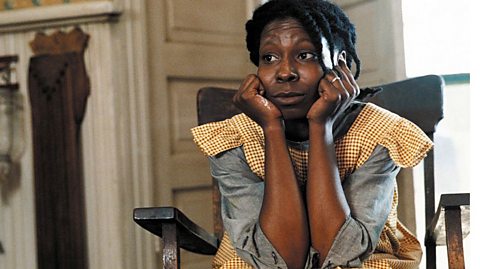
4. The Color Purple by Alice Walker
Written in 1982, Walker set her novel in the rural US state of Georgia, in the early 1900’s. It tells the tale of two black sisters, Celie and Nettie, born into a world of poverty and racial segregation. This is an epistolary novel, Walker uses the character Celie’s letters to God to tell the story of her struggles with abuse, a teenage pregnancy, gender inequality and racism. Purple symbolises the beauty of life and ultimately, Celie’s triumph over adversity.
Adapted for the silver screen, Steven Spielberg directed Whoopi Goldberg as Celie, Danny Glover as Mister, and Oprah Winfrey as Sofia in The Color Purple (1985). After a successful run as a Broadway theatre production, a musical version was also made into a film that features Fantasia Barrino as Celie, Taraji P. Henson as Shug Avery, and Halle Bailey as Nettie in The Color Purple (2023)
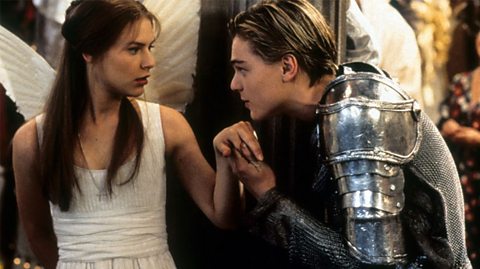
5. Romeo & Juliet, by William Shakespeare
We couldn’t compile this list of books from our schooldays without some Shakespeare, and who can forget the famous line, “O Romeo, Romeo, wherefore art thou Romeo?” Or sniggering at all the kissing?
The play was written by Shakespeare at some point between 1595-6, and first published in 1597. The two main characters, Romeo and Juliet, are supposed to be sworn enemies but fall in love. Due to their families' ongoing feud, they cannot be together, so they hatch a plan to run away. But a series of misunderstandings - that will have you shouting at the screen or script - lead to the famous tragic ending.
I can’t count how many times this play has been performed on stage, from school plays, to village halls to the grandest theatres around the world. One of the most famous film adaptations was director Franco Zeffirelli’s Romeo and Juliet (1968), actors Leonard Whiting and Olivia Hussey were aged 16 and 17 at the time of filming.
When Leonardo Di Caprio and Claire Danes filmed the Baz Luhrmann-directed version in 1996, they were 21 and 17-years-old. Despite the modernised depiction of two warring mafia-style families with their swords replaced by guns plus a superb soundtrack (choir boy singing When Doves Cry anyone?), Luhrmann did keep the Shakespearean-English dialogue.
Creating one of the world’s most recognisable and dramatic love stories, Shakespeare’s play has inspired huge numbers of creative projects, including these three:
West Side Story (1961 & 2021): The film and theatre productions move the action to 1950s New York City - full of high energy musical numbers and dance scenes portraying the love affair between Tony and Maria members of teenage gangs the Jets and the Sharks.
Gnomeo & Juliet (2011): An animated story of neighbouring garden gnomes who don’t get on, James McAvoy and Emily Blunt voice the lead roles.
The Lion King II: Simba's Pride (1998): Another animation, this Disney film is heavily influenced by the Romeo and Juliet plot. Simba and Nala's daughter Kiara falls in love with Kovu, a lion from an exiled pride once loyal to evil Uncle Scar.
All episodes of Lord of the Flies will be on BBC iPlayer from 6am on Sunday 8 February, and BBC One will air the series weekly from 9pm that night.
This article was published in February 2026
The Muppet Show: Things you didn’t know about The Muppets
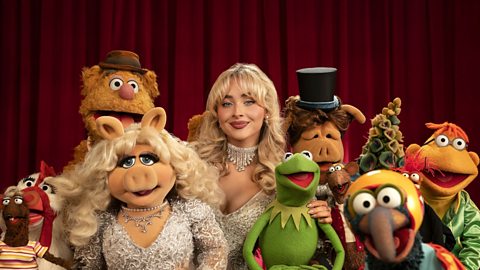
Ahead of the star-studded return of The Muppet Show, BBC Bitesize explores the history of Kermit, Miss Piggy and the gang
Director Steven Spielberg becomes an EGOT - so what does that mean?
BBC Bitesize takes you backstage to find out more
Four planned film sequels that never happened
BBC Bitesize explores the film follow-ups that never saw the light of day.