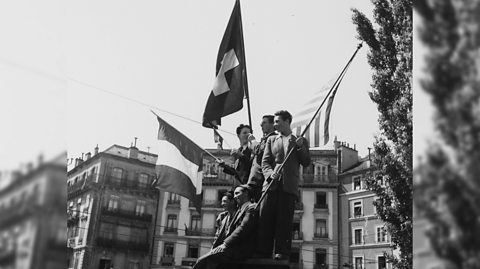
Facts about VJ Day and why it's so important
2025 marks the 80th anniversary of VJ Day, one of the most significant events of World War Two.
But what is VJ Day? And why is it so important? Well, here at BBC Bitesize, we've put together a guide on all you need to know about VJ Day!
1. What is VJ Day?
VJ Day stands for Victory over Japan Day, and 15 August marks the date that Japan announced its surrender in WW2 (though official documents were actually formally signed on 2 September).
Despite achieving Victory in Europe in May 1945, Allied forces - including the UK, US and USSR - were still locked in conflict with Japan in East Asia, who refused to follow Germany into surrender.
War in Japan took a lot out of Allied forces, killing an estimated 71,000 soldiers from Britain and the Commonwealth, including upwards of 12,000 prisoners of war held in Japanese captivity.
2. When is VJ Day?
Well, the official date of VJ Day actually varies from country to country.
In the UK, we celebrate Victory over Japan Day on 15 August, marking the date that Japan officially announced its surrender during WW2.
Americans, on the other hand, celebrate VJ Day on 2 September - which was the date Japan signed their document of surrender aboard the USS Missouri in Tokyo Bay.
This year, VJ Day falls on Friday 15 August, marking 80 years since Japanese surrender.
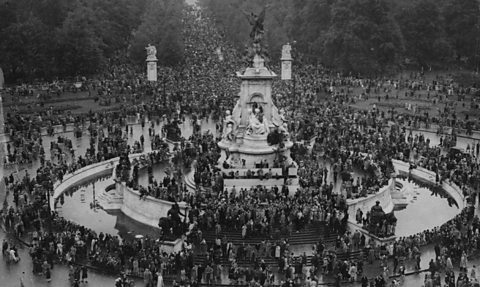
3. What happened on VJ Day?
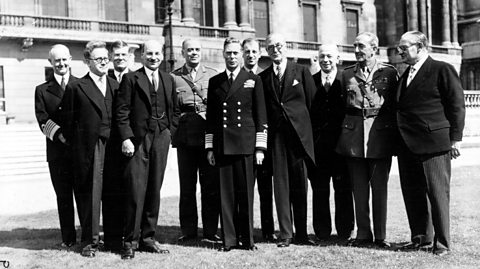
Rumours of a Japanese surrender had been swirling for a number of days when then US President Harry Truman broke the news at a White House press conference at 7pm on 14 August 1945.
UK Prime Minister Clement Attlee confirmed the news at midnight, announcing the surrender of Japan and two days of national holiday in celebration.
Naturally, the day took on a more sombre tone in Japan, with Emperor Hirohito speaking on a live radio broadcast for the first time ever, announcing Japan's surrender.
On 2 September 1945, Japan's official document of surrender was signed aboard the USS Missouri in Tokyo Bay - bringing an official end to conflict in the region.
4. What led to VJ Day?
Victory over Japan came on the heels of a disastrous two weeks for Japan and its forces, which saw casualties of soldiers and civilians alike.
Following the end of fighting in Europe, the Allies gave Japan a 26 July 1945 deadline for surrender. The deadline passed and no surrender came, which escalated conflict in Japan even further.
One of the key factors in Japan's surrender was the dropping of two atomic bombs, on Hiroshima and Nagasaki, by the US government. Developed in the American desert by scientists, including J. Robert Oppenheimer, the use of nuclear weapons was a showcase of devastating power, shattering Japanese morale and changing the nature of warfare forever. The first bomb was dropped on Hiroshima on 6 August 1945, with the second dropping on Nagasaki on 9 August 1945.
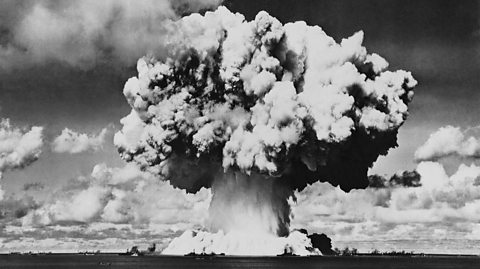
The detonations killed an estimated 214,000 people all told, be it through the immediate blast or the long-term after effects. Debate has raged ever since over whether the US was justified in using atomic weaponry - with some historians arguing it was the only choice, whilst others felt this was as much a show of power to the Soviet Union as it was Japan.
Additionally, the Soviet Union, with whom Japan had previously held a neutrality agreement, declared war on Japan on 8 August 1945 - in accordance with an agreement they made with the UK and US. Just hours after this declaration, the second atomic bomb fell on Nagasaki, leaving Japan reeling and ready to be overrun by Allied forces.
As such, Japan surrendered shortly thereafter, bring war in the East to a close.
5. Did VJ Day put an end to the war?
Japan's signing of their official surrender documents on 2 September 1945 marked the end of WW2, calling to a close six years of continuous warfare between the Allied and Axis powers.
Victory in Europe had already been declared in the UK on Tuesday 8 May 1945, following the surrender of Nazi Germany and the death of fascist dictator Adolf Hitler.
The following years saw the formation of the NHS and Welfare State in the UK, with no conflict on the scale of WW2 having been seen since.
Despite this, another conflict had already begun to brew, with a Cold War between the US and USSR set to bubble and fester across the proceeding decades.
Read more about the ongoing impact of VJ day with this article from BBC Bitesize Topical: VJ day: “It completely reshapes the identity of the world”