The 8th of May 1945, Germany surrenders.
VE – Victory in Europe – was complete.
But the Second World War was still raging in the Pacific. To end it, the most powerful weapon the world had ever seen was about to be unleashed, a watershed in world history: the atomic bomb.
The bomb’s colossal destructive power comes from the vast amounts of energy released when atoms are split.
The top secret project to create it was codenamed the Manhattan Project.
It was led by one of the most intriguing minds of the twentieth century.
J Robert Oppenheimer was a curious mix of a man.
He was fascinated by other cultures and the religions of the east, and in politics a man of the left.
In fact he even flirted with communism before the war, and so you might think a strange choice to head a project like this. But he was a brilliant theoretical physicist and a charismatic leader.
By the summer of 1945, Oppenheimer’s bomb, codenamed Little Boy, was ready. The target: Hiroshima.
After Germany’s defeat, Japan had fought on. Now Japanese civilians would pay for their leaders’ refusal to surrender.
The strike was set for Monday the 6th of August.
There were American scientists who didn’t believe in deploying the bomb but Oppenheimer argued strongly that it had to be used. There was a chance that the bomb would end all war, but for that to happen, the whole world had to see its full horrific potential. And so this man with his cultured sophisticated mind and his humanitarian values spent a great deal of time calculating the exact height at which to detonate the bomb so that it would kill the maximum number of people.
OPPENHEIMER:
Oppenheimer… Thank you.
This morning at 8:16 Japanese time, a V-29 bomber was successfully deployed above Hiroshima.
(cheers ad clapping)
Andrew:
Hiroshima is a big word.
This is a big story.
Let’s try and bring it down in scale a bit.
This is a woman’s watch, hands fused to the time of the blast.
Around four hundred young children were here with their ten teachers when the bomb went off and all but one was burned to death immediately. In a three mile radius of the blast, almost everybody suffered fatal burns and beyond that, there were mass blindings from the flash, and then of course came the radiation sickness killing many thousands in the days and weeks and years that followed.
Stubbornly, incomprehensibly, Japan still refused to surrender so three days later, a second atomic bomb was dropped, this time on Nagasaki.
In the two attacks, up to a third of a million people died.
Now Japan finally admitted defeat.
On the evening of the 14th of August 1945, the Second World War came to an end.
There are plenty of places around the world where terrible things happened.
What makes this one different is the thought that what happened to Hiroshima could happen almost anywhere else.
I certainly grew up in the 1960s and 70s thinking that my home town in Scotland and the people I loved could be nuclear victims, and people were thinking just the same all across America and in Russia, in France and Germany and many other places.
We shall not repeat this evil, says the monument behind me.
But was this the end of something, or was it the beginning? We still cannot be sure.
Dropping the atom bomb changed the world for ever and nobody thought about the consequences harder than its creator.
A few weeks afterwards, Oppenheimer resigned his post on the nuclear programme. Later he reflected openly on his achievement.
OPPENHEIMER:
We have made a thing, a most terrible weapon, that has altered abruptly and profoundly the nature of the world, a thing that by all standards of the world that we grew up in is an evil thing. And so by doing, we have raised the question of whether science is good for man.
Andrew:
In later life, Oppenheimer described on television how he was haunted by a line he had once read in an ancient Hindu scripture.
OPPENHEIMER:
“Now I am become death, the destroyer of worlds.” I suppose we all thought that one way or another.
Video summary
Andrew Marr explores the development and deployment of the first atomic bomb.
He describes the moral dilemma faced by the scientists of the Manhattan Project, and the fallout from the detonation of the bomb over the Japanese city of Hiroshima.
Warning: Contains some upsetting and disturbing scenes.
This is from the series: Andrew Marr's History of the World.
Teacher Notes
Students could write a series of haiku poems (5-7-5 syllables) justifying or challenging the dropping of the Atomic bombs on Japan, or discussing the effects of the bombs.
Students could hold a debate to discuss the following motion 'The dropping of the Atomic bombs on Japan was justified because they brought a faster end to World War Two'.
This clip will be relevant for teaching History at KS3 and KS4/GCSE in England, Wales, Northern Ireland and National 5 and Higher in Scotland.
This topic appears in OCR, AQA, WJEC in England and Wales, CCEA GCSE in Northern Ireland and SQA Scotland.
The French Revolution. video
Andrew Marr tells the story of the French Revolution.
The Industrial Revolution. video
Andrew Marr tells the story of Britain’s Industrial Revolution.
Alexander the Great. video
Andrew Marr explores the life of Alexander the Great.
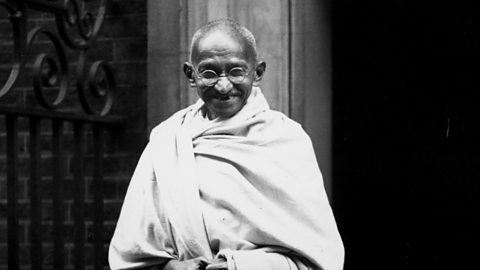
Gandhi video
Andrew Marr explores Gandhi’s campaign of civil disobedience against the British.
Development of the contraceptive pill video
Andrew Marr explores the birth control movement in the USA in the early 20th century.

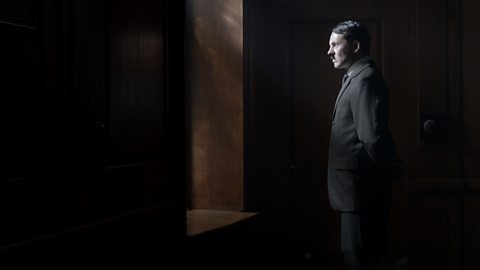
Hitler's rise to power. video
Andrew Marr tells the story of Hitler’s rise to power in Weimar Germany.
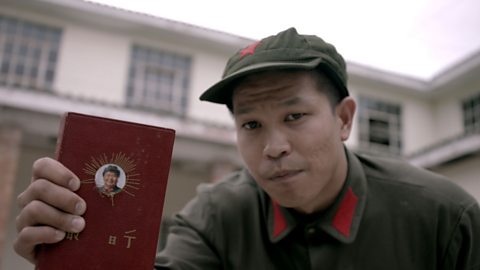
China's Cultural Revolution. video
Andrew Marr explores the Chinese Cultural Revolution.
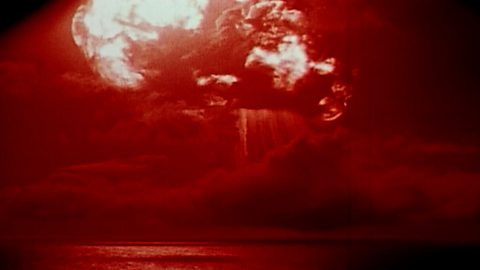
The Atomic bomb video
Andrew Marr explores the development and deployment of the first atomic bomb.
American Civil War. video
Andrew Marr analyses 1860s America and the American Civil War, explaining how the conflict, and Abraham Lincoln, changed American history forever.