November 1918.
The first global war had ended.
The emperors and the top-hatted politicians had failed.
They’d shattered the optimism of the modern world.
For many, especially on the losing side, it seemed that a new order must rise from the ruins, a new kind of politics which needed a ruthlessness the older generation had flinched from.
Among the soldiers straggling home from the trenches of the western front was an angry and embittered twenty-nine year old corporal: Adolf Hitler.
Like many others, Hitler was looking for someone to blame for Germany’s humiliation.
HITLER:
Dies ist der Grund unseres langjährigen Zustandes.
[This is the reason why we’ve been in this state for such a long time]
Andrew:
This is the story of the revenge of the nobody. When Adolf Hitler arrived in Munich, he was a nothing.
He’d won a medal in the war but his fellow soldiers described him as a bit peculiar, a loner, and he’d never been promoted because the German officers realised that he lacked leadership qualities.
HITLER:
Das wissen sie doch. Er kannte das.
[You know that. He knew that]
Andrew:
This is also the most extreme example in human history of how one individual can unlock hell.
But how did this chaotic loser harness a big idea – fascism – and goose-step Germany into another world war?
In a single word, fear. We are all of us vulnerable to being scared by events and then feeling anger, so when people’s savings and jobs are destroyed which happened in the early 1920s in Germany, they panic and then they want revenge.
Hitler’s great good luck was that he offered up his recipe about who was to blame at just the moment when sky-rocketing inflation had brought Germany to its knees.
A loaf of bread for a billion Marks.
But there was also fear of a bloody communist revolution which for many seemed even more frightening than capitalism’s collapse. In southern Germany, Munich had been shaken by a communist uprising put down by troops.
Into all of this stepped Adolf Hitler.
He joined, and took control of, a tiny right-wing party. He even re-designed its curious emblem, based on an ancient symbol for good fortune: the swastika.
In this grey defeated city of small angry parties and big angry meetings, Hitler stood out as a star speaker because he simply went further. He said the unsayable.
The Jewish problem would be solved with brute force.
Germany would carve a new empire for herself in eastern Europe, a greater Germany, rising to be a world power. And the people listening to him were soon comparing him to Martin Luther, Mussolini, even Napoleon.
Right at the beginning, there was this leader cult.
Yet Hitler came across as crazily optimistic. He thought that by pushing Munich right-wingers into revolt, he could get them to march on Berlin and seize control of all democratic Germany.
SPEAKER:
Die Roten gedeihen im Chaos.
[The reds thrive in times of chaos]
Andrew:
On the night of November 8th 1923, a political meeting was being held in one of the city’s beer halls. Hitler hijacked the meeting, declaring “The national revolution has begun”.
HITLER:
Die Reichsregierung wurde gebildet.
[The Reichs government has been formed]
Andrew:
But few in the hall were impressed by the jumped-up extremist and the meeting ended in confusion.
The next morning, Hitler led armed supporters onto the streets but when police fired on them, this revolution by sheer bluff collapsed with embarrassing speed. Two days later, Hitler was arrested.
The beer hall revolution was a political shambles. It ended in humiliating failure but it made Adolf Hitler a hero far beyond Munich because he realised that he could use his trial as a much bigger platform than any that he’d get in a beer hall. He was defiant, completely unapologetic and he was heard all across Germany.
Sympathetic judges gave Hitler a soft sentence for treason. He was imprisoned in the nearby town of Landsberg.
Hitler’s rooms were soon crammed with unrestricted visitors and parcels and messages.
One particularly gushing letter came from a student in Heidelberg called Josef Goebbels. And as for the parcels, it was like a delicatessen.
One visitor said you could have opened up a flower fruit and wine shop with all the stuff stacked up in there, and Hitler began to become rather fat from all the chocolates and the cake. Eventually he had to usher the visitors out so that he could settle down and dictate his memoirs to a man called Rudolf Hess.
The Führer was emerging…
HITLER:
Der Jude ist und bleibt.
[The Jew is and remains]
Andrew:
But he had a truly terrible title for his book: Four and a half years of struggle against lies, stupidity and cowardice… shortened by his shrewder publisher into My Struggle or Mein Kampf. And in it, he said exactly what he thought.
HITLER:
The Jews are a pestilence, worse than the Black Death.
They will come when a nation will arise which will be welded together but shall be invincible and indestructible for ever.
Andrew:
Mein Kampf argued that capitalism and communism were equally dangerous and that Jews were behind both, pulling the strings from Wall Street in New York to Moscow’s Red Square. In other times and places, few would have listened to such a crackpot theory but by the early 1930s, the great depression starting in America had thrown people out of work across the world while the looming menace of Stalin’s communist state haunted millions.
There are times when the politics of fear become irresistible, and nonsense seems common sense.
Eventually the Nazi party did very well in elections. Hitler came to power not as a tyrant but entirely legally.
During the 1930s, no other major political leader had his level of popular support.
It was support based on the violent creation of a new German empire in Europe, the destruction of Europe’s Jews which was all laid out in black and white.
History is full of nasty surprises.
Adolf Hitler did his very best not to be a surprise.
Video summary
Please note that this video contains scenes which some viewers may find upsetting. Teacher review recommended before using in class.
Andrew Marr tells the story of Hitler’s rise to power in Weimar Germany from 1919 to 1933.
He explores Hitler’s years in the wilderness after the First World War, the Munich Putsch and the reason for his electoral success in 1933.
This is from the series Andrew Marr's History of the World.
Teacher Notes
Pupils could use the clip to write a news report or fact file about Hitler’s background.
They could discuss the appeal of Hitler and the Nazi in their ascent to power.
Students could also record factors that helped Hitler become increasingly influential in German politics between 1919 and 1933.
Students could be asked to identify which parts of the chronology represented turning points in the rise of Hitler.
The narrator comments that though history is full of nasty surprises, Hitler did his best not to be a surprise.
A guided discussion could focus on how fair an assessment this is of Hitler's rise to power.
This clip will be relevant for teaching History at KS3 and KS4/GCSE in England, Wales and Northern Ireland and also National 5 and Higher in Scotland.
This topic appears in AQA, OCR , EDEXCEL, WJEC GCSE (Wales), CCEA GCSE (Northern Ireland) and SQA (Scotland).
Gandhi video
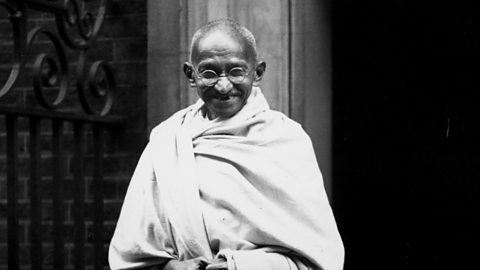
Andrew Marr explores Gandhi’s campaign of civil disobedience against the British.
Development of the contraceptive pill video
Andrew Marr explores the birth control movement in the USA in the early 20th century.

American Civil War. video
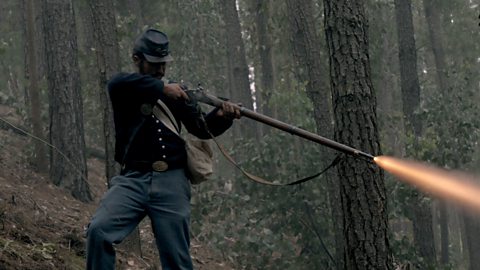
Andrew Marr analyses 1860s America and the American Civil War, explaining how the conflict, and Abraham Lincoln, changed American history forever.
Russian Serfs video
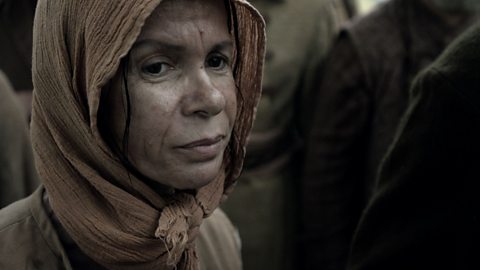
Andrew Marr outlines the abolition of serfdom in Russia in the 19th century.
The Atomic bomb video
Andrew Marr explores the development and deployment of the first atomic bomb.
China's Cultural Revolution. video
Andrew Marr explores the Chinese Cultural Revolution.
The French Revolution. video
Andrew Marr tells the story of the French Revolution.
The Industrial Revolution. video
Andrew Marr tells the story of Britain’s Industrial Revolution.
Alexander the Great. video
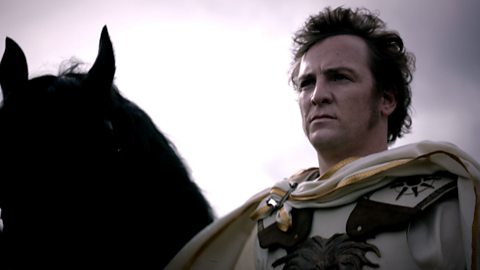
Andrew Marr explores the life of Alexander the Great.