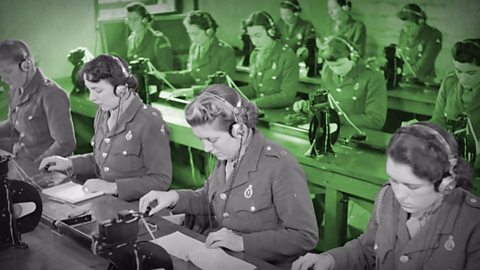
Narrator: By 1945, the Second World War had gone on for nearly six years of bloodshed and sacrifice, but things were beginning to change.
Following the success of D-Day, the Allied armies in Western Europe from Britain, France, Canada and the United States started to advance on Berlin from the West. Meanwhile, Soviet forces were attacking from the East, leaving Nazi Germany surrounded.
On the seventh of May 1945 Nazi German officials agreed to a complete surrender. Special issues of newspapers were printed to announce the surrender and news that the war in Europe was finally over spread very quickly.
Details circulated that the next day, the eighth of May, would be a public holiday known as Victory in Europe Day, or VE day.
On VE Day the Prime Minister Winston Churchill and the royal family appeared on the balcony of Buckingham Palace. They were met by a huge crowd and chants of we 'want the king' for the reigning King George the sixth.
The royal family made eight appearances on the balcony that day to celebrate with the people and dancing, music and other celebrations continued into the night.
Alan recalls seeing the celebrations in London as he went on his paper round the next day.
Alan: People had had sing songs, bonfires, no bonfires allowed for six years and here we are with all this timber. People have carried a piano and other musical instruments out into the street and there had been a lot of jollity. But I went to bed reasonably early because I've got to get up at six and get this news out. And I went round my paper round where everyone had had a fire, a bonfire in the street. I kicked the embers back in and got all the fires going again and that was my contribution to VE Day.
Everyone had one thing in common, they had all survived and it was very very happy.
Narrator: But even though the war had ended in Europe VE Day was not the end of the Second World War. Fighting continued in the Asia Pacific region. While Germany had surrendered, Japan continued to fight.
The US had developed a terrifying weapon called the Atomic Bomb. In August 1945 they used this bomb on the city of Hiroshima in Japan, destroying almost the entire city. Three days later another atomic bomb was dropped on the Japanese city of Nagasaki, resulting in even more devastation.
On the same day, troops from the Soviet Union fought their way into Northern China, which had been ruled by the Japanese since 1931. Wanting to avoid further destruction and unable to stop the Soviet advance, Japan called for an end to the war and surrendered on the fifteenth of August 1945. This became known as VJ Day, Victory over Japan day.
Did you know? VE Day and VJ Day mark the end of hostilities and that soldiers, sailors and airmen would soon be coming home. But just because the fighting was over didn't mean everything had been fixed. Rationing continued until 1954, nearly ten years after the war had ended. And many women were not allowed to keep the important roles they had taken on during the war.
Despite the widespread celebrations after the war, many people also had bittersweet reactions. They had lost so much in the conflict, their homes, their friends and, for some, their family. Alan lost his mother in the war, during a bombing.
Alan: At the time, the feeling was keep a stiff upper lip, you are not to show them that you are upset and I didn't. But years later, I was. There is nothing like your mother, in terms of warmth and encouragement and that we missed.
Narrator: The war had come to an end and the Allies had been victorious but for everyone who survived, their lives had been changed forever.
Video summary
This short film explains what VE Day and VJ Day were, and the events that led to the end of the war.
An eye-witness called Alan, who was a child at the time, recalls seeing the celebrations in London as he went on his paper round, and his bittersweet reaction, having lost his mother during the war.
The ‘Did You Know’ section talks about the years following the war, and how rationing continued until 1954.
Created in partnership with Imperial War Museums.
Stewart MacPherson on microphone meets the people for Victory Report, 8 May 1945.
Teacher Notes
If your class has watched all ten episodes, they could celebrate the end of the unit by organising a 1940's style street party.
They could use their maths skills to work out a budget, DT skills (cooking and nutrition) to prepare some food, and play or dance to 1940s music.
Additional fact for class:
- At the end of the war, there was an expectation that the important roles women played during the war were only temporary. The number of working women gradually declined to pre-war levels, while married women were barred from working in many jobs. Women were also restricted to supporting roles in the military and could no longer fly aircraft or command ships. However, over the course of the next 20 years, this continued inequality, despite the vital role that woman had played during the war, helped to inspire the Feminist movements in the 60s and 70s.
Suitable for teaching history at KS2 in England, Wales and Northern Ireland and 2nd Level in Scotland.
This short film could also be incorporated into different subjects as part of a cross-curricular lesson, especially when teaching:
- Maths
- Design and Technology
- Physical Education
- Music
More from World War Two:
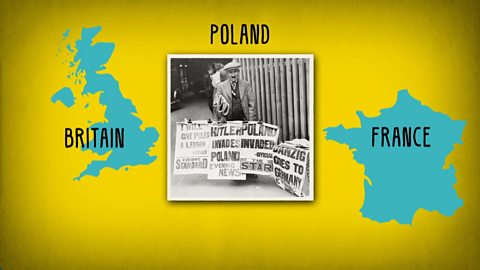
Britain declares war on Germany. video
This short film offers an overview of the events that led to Britain declaring war on Germany in 1939.
Rationing in the UK. video
This short film explains rationing in simple terms, offering a glimpse of a world that pupils may not be accustomed to.

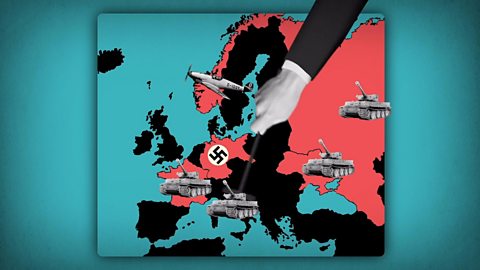
Geography of World War Two. video
This short film provides insight into the scope of the war and how many countries were involved.
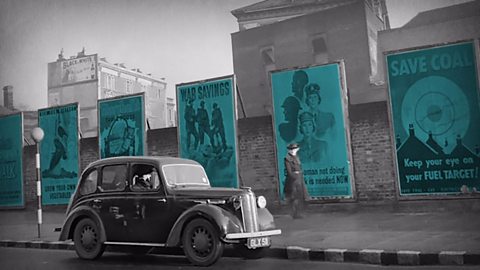
How propaganda was used during World War Two. video
This short film explains how people were persuaded to join the war effort, and the importance of motivational campaigns.
The Blitz. video
This short film offers a digestible insight into the blitz and how the British people responded.
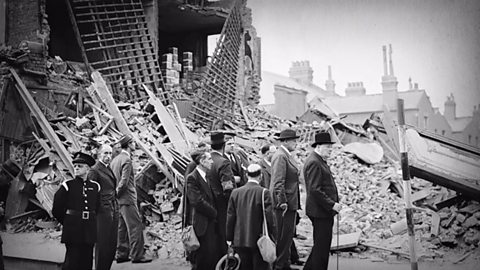
The Battle of Britain and beyond. video
This short film explains what the Battle of Britain was, who was involved and how radar was used throughout the battle.
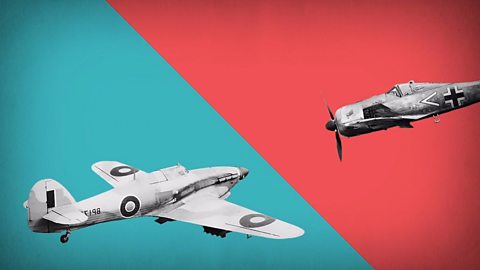
Machines of the military. video
This short film highlights the importance of technology in the war effort and the key roles that tanks, planes and ships played.
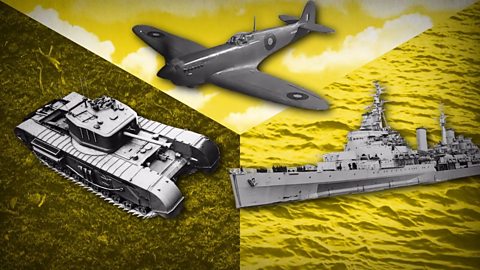
D-Day. video
This short film explores the significance of D-Day as well as highlighting what took place that day.
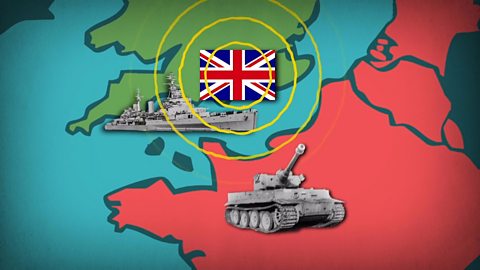
Codebreaking during World War Two. video
This short film explains how cracking Nazi Germany's coded messages helped win World War Two.