Narrator: Once Britain was at war, food quickly became a lot more difficult to get hold of. Traditionally, Britain had been able to grow some of its own food but a lot of it still needed to be imported into Britain from other countries by ship.
The Germans now tried to sink these ships and stop food coming into Britain. All with the aim of starving the British public in to giving up. In order to prevent shortages, the British government gradually introduced rationing to make sure there was enough to go round for everyone.
This was done by limiting how much of certain foods people could take. For example, this is how much milk, sugar, bacon, cheese, butter and chocolate two adults might have to share, for a whole week.
To keep track, everyone was issued with a ration book of coupons that their local shopkeeper would cross out each timethey bought something. Some foods weren't rationed such as fish, fruit and vegetables. However, as supplies decreased, they became expensive and difficult to find.
People would often stand in queues for hours to get these luxury items. To combat shortages, the British government encouraged everyone to 'dig for victory' and grow their own fruit and vegetables. Allotments, small gardens for growing food, popped up everywhere, even in public parks. Like this one in Kensington Gardens.
It wasn't just food that was rationed, clothing, soap, paper, fuel, and therefore hot water, were also limited. The public was encouraged to 'make do and mend' by sewing up old torn clothes or to save water, by having baths with only a few inches of water in the tub.
Graham was nine year's old when rationing began in 1940.
Graham: Well as far as I was concerned there wasn't a shortage. Well, I mean there was rationing of course and what you got in a ration for some foods was less than you would like to have.
Narrator: For example, this is how much chocolate you might get for a week.
Graham: But the whole point was, nobody went hungry in World War Two.
Narrator: But rationing did limit the foods that were available. Gladys remembers her father's inventive cooking one Christmas during the war.
Gladys: My dad made a carrot Christmas pudding because you couldn't get dried fruit and he said after us, 'what was that Christmas pudding like?' 'Oh nice', but it wasn't, we hated it.
Narrator: For special foods, you might go to extreme lengths to get hold of them.
Graham: Ice cream wasn't rationed but what was made was awful. It was powdery and not worth buying. But there was one shopor tea room in the whole area, that made their own ice cream in a machine at the back of the shop. And it was wonderful.it was normal, you know, real ice cream. So, every Saturday that they were open, my two school friends and I would get on our bikes and we'd cycle ten miles to this shop, sit down and eat this beautiful ice cream.
Narrator: Did you know? Rationing actually had a positive impact on the country's health. Rationing meant that access to unhealthier foods like processed meat, fats and sugar, was restricted.
During Easter for example, some shops sold carrots on a stick instead of selling chocolate eggs. Meanwhile, you could eat as many vegetables as you could find in the shops or grow yourself.
Traditional British white bread was replaced with the national loaf, which was made with healthier whole grains and added vitamins. All of this meant that although, the British diet under rationing was limited, it was actually very healthy and nutritious. Nevertheless, people still missed their sweets.
Video summary
This short film explains rationing in simple terms.
The notion of rationing and food shortages offers a glimpse of a world that pupils may not be familiar with.
We hear from an eye-witness called Graham, who recounts how he cycled ten miles because he heard there might be ice-cream.
We also hear from Gladys, who describes how her dad made a carrot Christmas pudding as they couldn’t get dried fruit.
The ‘Did You Know’ section explores how during Easter, some shops sold carrots on a stick instead of selling chocolate eggs. It also discusses the positive impact rationing had on the country's health.
Created in partnership with Imperial War Museums.
Teacher Notes
This short film contains a number of elements that could be incorporated into different subjects as part of a cross-curricular lesson.
Design and Technology:
- Pupils could grow vegetables in a kitchen garden and use them to cook.
- They could cook recipes using 'rations' and vegetables.
- Your class could plan a week's worth of meals using rations and vegetables that could be grown during World War Two.
This touches on the following parts of the national curriculum in England under 'Cooking and Nutrition':
- Understand and apply the principles of a healthy and varied diet.
- Prepare and cook a variety of predominantly savoury dishes using a range of cooking techniques.
- Understand seasonality, and know where and how a variety of ingredients are grown, reared, caught and processed.
Maths:
- Pupils could be given a hypothetical budget and use it to purchase food at a ‘shop’.
- Your class could compare prices, add up amounts and work out change when purchasing different items.
- _Using a 1940's style shop pupils could weigh and measure ingredients, converting between imperial and metric measures.
This falls under Money for years 3 and 4 and Measurement (conversion) for years 5 and 6 in the national curriculum in England:
- Y3 - add and subtract amounts of money to give change, using both £ and p in practical contexts.
- Y4 - estimate, compare and calculate different measures, including money in pounds and pence.
- Y5 - understand and use approximate equivalences between metric units and common imperial units such as inches, pounds and pints.
- Y6 - use, read, write and convert between standard units, converting measurements of length, mass, volume and time from a smaller unit of measure to a larger unit, and vice versa, using decimal notation to up to three decimal places.
Additional fact for the class:
- A study has found that children who grew up in World War Two became more intelligent than those born 15 years earlier. The theory is that rationing made those growing up in the war cut out rich, sugary and fatty foods, which had a positive impact on their growing brains.
Suitable for teaching history at KS2 in England, Wales and Northern Ireland and 2nd Level in Scotland.
This short film could also be incorporated into different subjects as part of a cross-curricular lesson, specifically when teaching:
- Maths
- Design and Technology
More from World War Two:
Britain declares war on Germany. video
This short film offers an overview of the events that led to Britain declaring war on Germany in 1939.
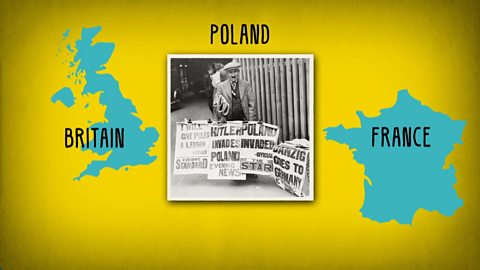
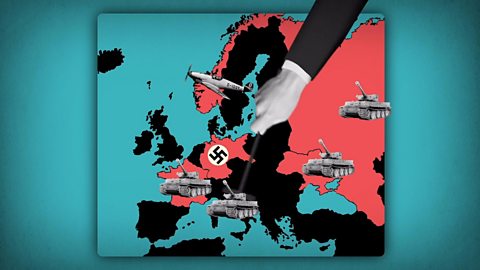
Geography of World War Two. video
This short film provides insight into the scope of the war and how many countries were involved.
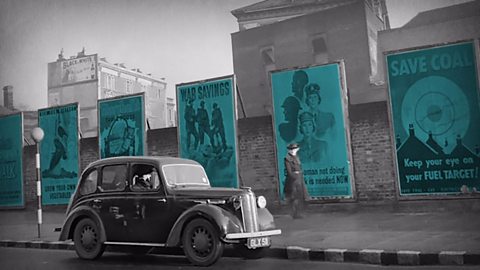
How propaganda was used during World War Two. video
This short film explains how people were persuaded to join the war effort, and the importance of motivational campaigns.
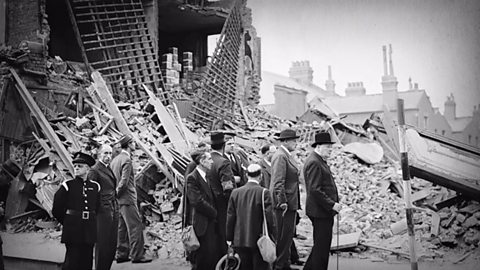
The Blitz. video
This short film offers a digestible insight into the blitz and how the British people responded.
The Battle of Britain and beyond. video
This short film explains what the Battle of Britain was, who was involved and how radar was used throughout the battle.

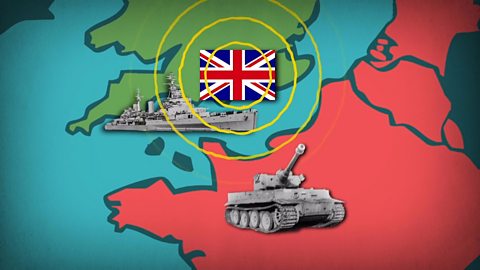
Machines of the military. video
This short film highlights the importance of technology in the war effort and the key roles that tanks, planes and ships played.

D-Day. video
This short film explores the significance of D-Day as well as highlighting what took place that day.
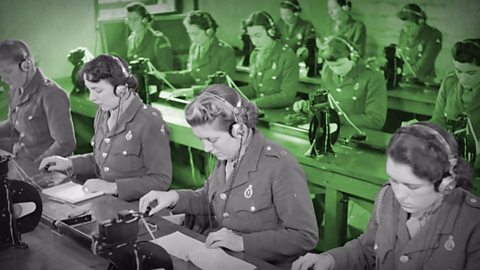
Codebreaking during World War Two. video
This short film explains how cracking Nazi Germany's coded messages helped win World War Two.
VE Day. video
This short film explains what VE Day and VJ Day were, and the events that led to the end of the war.